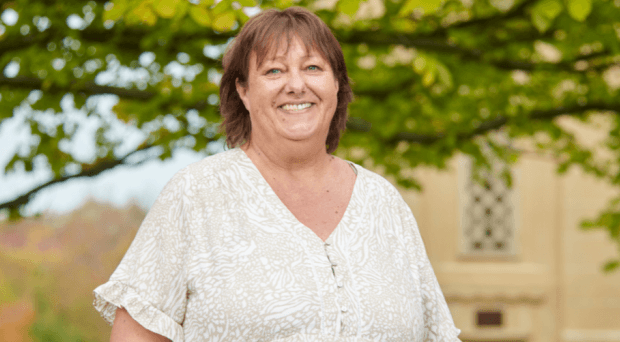
The new Hinchingbrooke Hospital is set to have the same number of car parking spaces as there are on the current site.The hospital in Huntingdon, Cambridgeshire, was one of four in the East of England found to have crumbling reinforced autoclaved aerated concrete (Raac).North West Anglia NHS Foundation Trust announced on Thursday that it had appointed a company to build the new hospital.Project manager Deborah Lee said: “We’ve got to replace all the car parking that will be displaced, so we’ve committed to not reduce the amount of car parking as that was really important to local residents in particular.”The hospital has been included in the first wave of the government’s New Hospital Programme.A consultation giving people the opportunity to share their thoughts on the plans is open until 16 August.Lee said the issue of parking had been raised by local residents, and she added that the hospital would have to “replace all of the car parking”.”We’re quite far down the process of acquiring the land adjacent to us… which is currently owned by the Cambridgeshire Constabulary,” she said.
Category: Cambridgeshire

Pledge made over parking at new Hinchingbrooke Hospital

Water resilience grant scheme set up for farmers and growers
If nothing else, this summer has shown that improving food resilience is essential if we are to survive – so a new water resilience grant scheme for farmers and growers in the region is very timely.Funded by the Ministry of Housing, Communities and Local Government, the scheme to boost water resilience countywide is delivered by Water Resources East and Cambridgeshire County Council as part of its water efficiency agenda.Carrots growing in healthy soilFarmers, growers and horticultural businesses across Cambridgeshire can now apply for grants of between £2,000 and £50,000 from a £1.3million grant scheme designed to improve water efficiency, strengthen resilience to drought and support sustainable food production.Water supply in the region has long been flagged up as inadequate to the challenge of building tens of thousands of new homes – along with population rises and the climate change challenges which this month lost farm estates across south-west France and Spain to wildfire. Fires have destroyed 100,000 acres of land in France following the outbreak of wildfires, and in Spain 295,000 acres have been lost since the fires commenced on 22 July – and a fire is currently raging at Dunwich Heath in Suffolk, just 75 miles east of Cambridge.A major incident has been declared following a fire at Dunwich Heath. Picture: Suffolk Fire and Rescue ServiceDaniel Johns, managing director at Water Resources East, said: “Water availability is becoming an increasing challenge for agricultural businesses across the region. This scheme provides a practical opportunity for farmers and growers to invest in solutions that improve water efficiency, strengthen resilience and support sustainable food production for the future.”The first window for applications for the scheme is now open to agricultural and horticultural businesses operating within Cambridgeshire. Applications will be reviewed at three intervals, based on applications received before midnight on: 27 September 2026, 29 November 2026 and 17 January 2027.Cllr Ros Hathorn, chair of the environment and green investment committee at Cambridgeshire County Council. Picture: Hannah Brown, LDRCllr Ros Hathorn, chair of the environment and green investment committee at Cambridgeshire County Council, said: “With our farmers and growers facing hotter, drier summers, we want to support them to create a balanced, long-term approach to water management and make the sector more resilient to these pressures.“This funding will enable farmers and growers to take practical action to improve water resilience while supporting the sustainable management of our water resources. Local projects such as this highlight our work to support a green and sustainable county, by managing the effects of a changing climate securing the future of water, food and farming.”Further information, including eligibility guidance and the application form, is available here.

“I dream to be…” – Cambridge News
The Bible
Our community has many commendable social initiatives, often under the radar and unheralded and motivated purely to support and enhance other’s lives.
The collective positive impact and difference made by all the dedicated people involved is invaluable – their efforts matter and raise the goodwill ‘water-table’ of our township.
Murray Smith
The dedicated Te Haerenga (The Journey) teaching team at Cambridge High School cater for young adults with unique challenges and individual needs. Equipping these students with life-skills through offering practical experiences, in and outside of the classroom, enables them to become more confident, connected and actively involved lifelong learners. Various opportunities include participating in the arts, work experience, cooking, reading, financial literacy, team sports, excursions and opportunities to develop social interactions.
My attendance at a stage production prepared by Te Haerenga class last week was second time I had joined an enthralled audience cheering these kids on. Their creative, energy packed show was titled, “I dream to be…”
The entire class played a part with everyone costumed as native birds. Their teacher was ‘Mr Maye’, a Moa. His class of pukeko, kiwi, fantail, kea, ruru, sparrows and a robin were assigned to originate a response to the proposal “I dream to be…”
The birds identify goals, pursuing a dream… except for Paulie Pukeko. Paulie dismally witnesses everyone implementing their dreams while he remains stuck, unable to nail what his dream or skill might be. In the end he realises his dream is to be an entertainer and, demonstrating a dream fulfilled, introduces a full-cast, bouncy musical finale
Education done right provides opportunities and enduring memories for ‘building’ young people. Learning environments where our youth are encouraged to become more whole, thoughtful and caring of others, contributing and making a positive difference, have a needed place. Ka pai Te Haerenga, for being that place for many.
A student in an altogether different context, Monty Roberts found high school crushing. It climaxed when a final assignment required students to write about what they wanted to accomplish after graduation. Monty’s Dad was a traveling horse trainer who visited ranches and stables training horses. Against that background, Monty prepared a highly detailed seven page description of a horse ranch he would establish. Expectantly, he waited days for his grade. His teacher returned it with an ‘F’ and called him to a meeting after school.
“Why did you fail me?” Monty asked in frustration. The teacher replied, “This dream is entirely out of reach with your background and limited resources… I’ll consider changing your grade if you’ll re-write a more realistic dream.”
Monty thought about it for a week – then turned in the same paper stating, “Keep your ‘F’ and I’ll keep my dream”. Years later that same teacher bought 30 kids to camp at Monty’s ‘Dream Ranch.’ Departing she tearfully said, “I’m sorry… years ago I stole many youthful dreams. I’m glad you had the guts not to give up on yours.”
Dreaming the impossible requires seeing the invisible. God bless our ‘dreamers’.
Ask the right question – Cambridge News
Kelly Bouzaid
The debate around the future of local government is one of the most important conversations our region has had in decades. It will influence how we plan for growth, invest in infrastructure, deliver services and represent our communities well into the future.
Yet, as I have watched the discussion unfold, I can’t help but feel we have become preoccupied with how local government should look, rather than what we want it to achieve.
Waipa CEO Steph O’Sullivan, left, with Chamber CEO Kelly Bouzaid
Business leaders understand that changing an organisational chart rarely changes organisational performance. Mergers, restructures and new governance models create opportunities, but they are not strategies in themselves. Without a clear vision and exceptional leadership, they simply become structural change. That is where I believe the conversation needs to evolve.
Whether Waikato ultimately retains its current structure, adopts a unitary authority or pursues another model is, in many respects, secondary. The more important question is this: What kind of region do we want the Waikato to become over the next 20 or 30 years?
Only once we can answer that question should we decide what governance model is best placed to deliver it.
To date, I have seen considerable discussion around options, governance frameworks and comparative models from elsewhere in New Zealand. What I have seen far less of is a compelling regional vision capable of uniting our communities around a common purpose.
Great leadership creates confidence. It brings diverse communities together, makes difficult decisions, builds trust and inspires people to think beyond district boundaries and electoral cycles. It asks what is best for the future prosperity of the entire region.
That is the leadership conversation I believe is currently missing.
From a business perspective, the outcomes are remarkably clear. We need infrastructure that keeps pace with growth, financially sustainable councils, responsive decision-making, efficient consenting processes and long-term investment that supports productivity and economic confidence. Businesses are not particularly interested in the logo on the council building; they are interested in whether the system delivers.
Cambridge is one of New Zealand’s fastest-growing communities and an increasingly significant contributor to the Waikato economy. Growth presents enormous opportunity, but it also places pressure on transport, housing, water, community infrastructure and the pace of decision-making. Whatever model emerges must preserve strong local representation while providing the strategic capability to respond to regional challenges.
The Cambridge Business Chamber is not advocating for a predetermined outcome. We are advocating for a robust, evidence-based discussion that objectively weighs the benefits, risks and long-term implications of any proposal.
Structural reform should only occur when there is compelling evidence that it will deliver demonstrably better outcomes for communities, businesses and ratepayers.
Ultimately, the success of local government will not be defined by the number of councils we have. It will be defined by the quality of the leadership we show, the courage to think beyond today’s challenges, and our collective willingness to build a shared vision for the Waikato’s future. In the end, the structure is simply the vehicle.
Kelly BouzaidHolme Fen fire could take days to extinguish, says firefighter
“The fire itself is incredibly deep seated in the nature reserve, tricky to access and extremely hard work for our firefighters,” Burgess said.It was “incredibly difficult” to know the exact location of peat fires “because it burns under the surface and it burns quite fiercely”, he added.He estimated the blaze was at least 1m (3.3ft) below the surface.The senior firefighter said there were currently no plans to close the nature reserve to the public, but he asked visitors to stay away from the area immediately around the fire.He said the fire service and police were “still actively investigating the cause”.Cambridgeshire Police confirmed it was investigating the fire as a suspected arson attack and urged anyone with information to contact the force.The site is managed by Natural England and is home to a variety of wildlife species, including 500 types of fungi, enabling the reserve to be declared a site of special scientific interest (SSSI).Natural England said it was supporting the fire service.Do you have a story suggestion for Cambridgeshire? Contact us below.
March Iceland store roof collapses but no injuries reported
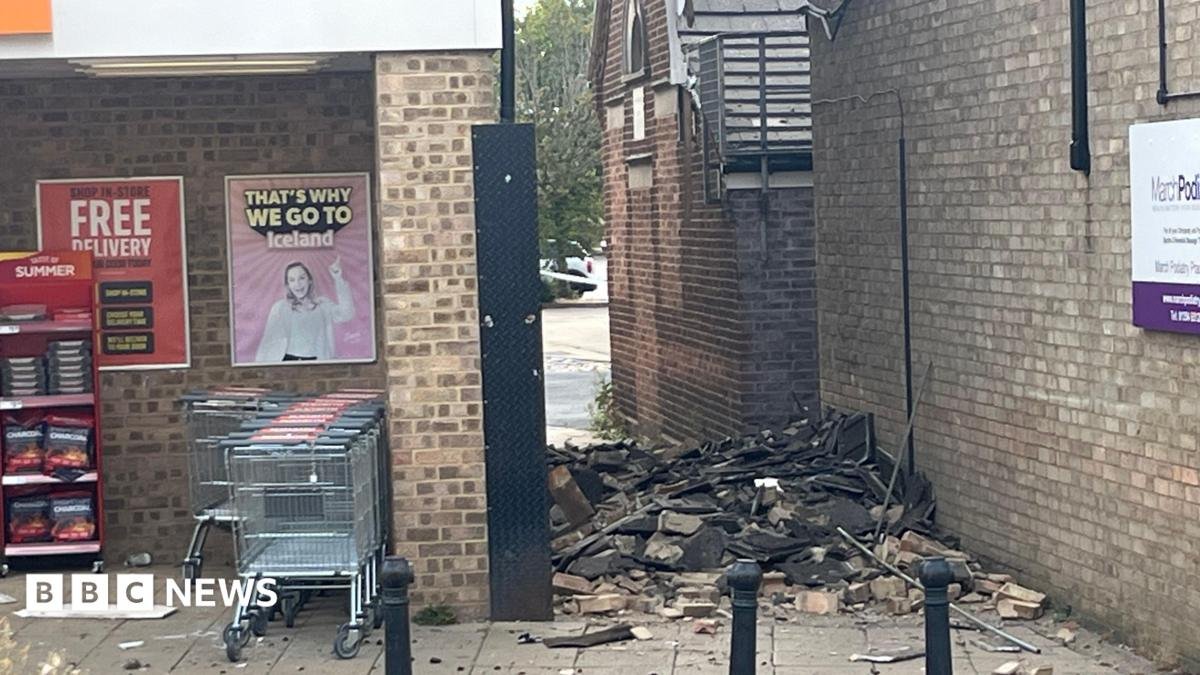
A building was evacuated after a supermarket roof collapsed in a busy high street.The roof above an Iceland store, in March, Cambridgeshire, came tumbling down with debris falling into an adjacent alleyway.Cambridgeshire Police was called just before 15:00 BST and said the building next door was evacuated. No injuries were reported, a spokesperson said.Mandy Reeve, who works in a chip shop opposite the store, said one of her customers described hearing a “very loud explosion” before seeing the roof “falling on the floor”.Police placed a cordon around the scene and were awaiting structural engineers to arrive.The fire service said a crew from Chatteris assisted police colleagues.Iceland was asked to comment. Another floor of the building separates the roof from the store.
Wonky Fenland church spire to be taken down
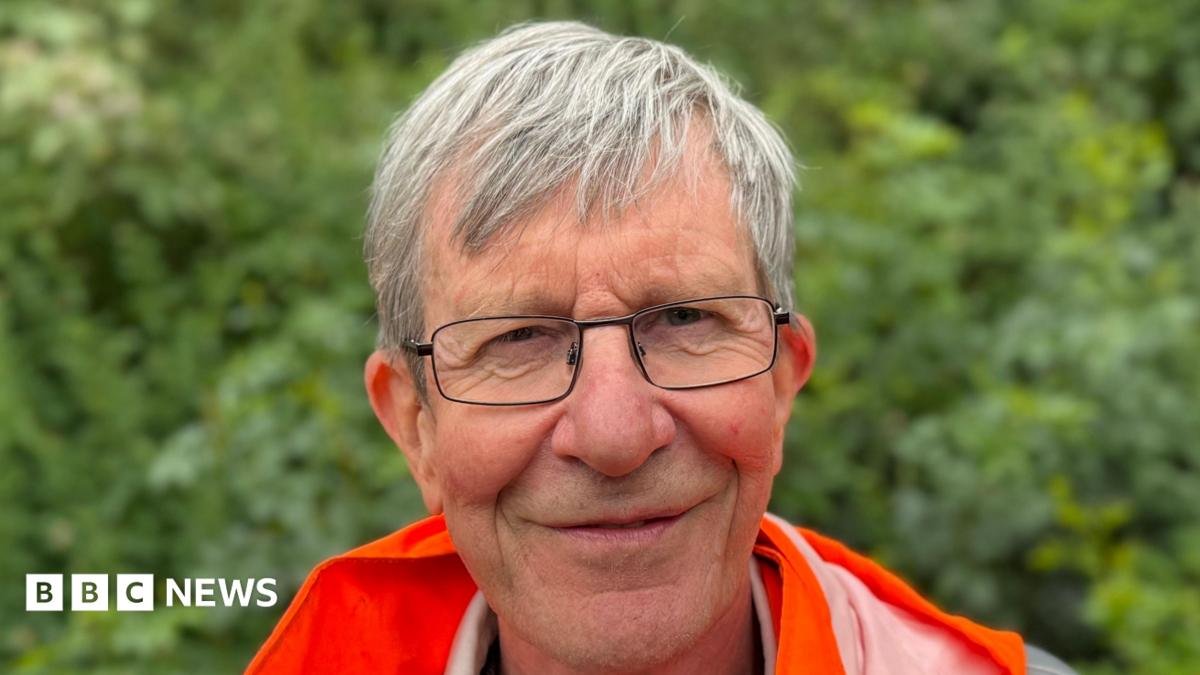
The building was put on Historic England’s Heritage at Risk register last year.Reverend Dr Richard Hines, rural dean for Wisbech Lynn Marshland Deanery, said: “If you take a look outside, you quickly see it’s the tower which is leaning right over.”It is the brickwork which is our big problem.”The district council granted the plans to remove the spire on condition the work began within three years.Do you have a story suggestion for Cambridgeshire? Contact us below.
Dozens of firefighters tackle Cambridgeshire nature reserve blaze
Dozens of firefighters are tackling a blaze at a nature reserve on the Cambridgeshire Fens.The fire broke out at about 15:15 BST at Holme Fen, south of Peterborough.Crews were sent from Peterborough, Whittlesey, Chatteris, Ramsey, Thorney, Huntingdon, Manea and Oundle, Northamptonshire.A fire service spokesperson said crews arrived “to find a fire in the woods… good progress is being made”.Do you have a story suggestion for Cambridgeshire? Contact us below.
Fines Plummet as Cambridgeshire Councils Pocket KES 17M from Litter Penalties
A steep, unexplained drop in fixed penalty notices for littering across Cambridgeshire has raised sharp questions about local enforcement priorities, even as municipal councils have quietly pocketed nearly £100,000 (KES 17 million) in fines since early 2023. The uneven application of the law suggests a disjointed approach to civic hygiene across the county.
Data obtained through Freedom of Information (FOI) requests by the BBC reveals a stark geographic divide in how environmental laws are enforced. While Cambridge City Council aggressively pursued offenders to generate the vast majority of the county’s revenue, neighboring authorities have virtually abandoned the practice, leaving frustrated citizens and volunteers to clean up the mess.
The Revenue and the Retreat
Since the beginning of 2023, local authorities across Cambridgeshire have issued a total of 889 fixed penalty notices specifically for littering. However, the data exposes a massive concentration of enforcement in one single jurisdiction:Cambridge City Council: Issued 776 fines, generating approximately £83,000 (KES 14.1 million), representing a staggering 86% of the county’s total revenue.
Peterborough City Council: Issued just 45 fines over the same three-and-a-half-year period.
South Cambridgeshire: Issued 33 fines.
East Cambridgeshire: Issued 22 fines.
Huntingdonshire and Fenland: Issued a combined total of just 13 fines.Despite Cambridge City Council’s historical dominance in enforcement, their own statistics reveal a precipitous decline in regulatory action. The council issued 374 fines in 2023, which dropped to 271 in 2024, plummeted to 82 in 2025, and sits at a mere 49 halfway through 2026. Authorities have not provided a definitive explanation for this 86% collapse in enforcement activity.
The Civic Response: Volunteers Stepping In
The vacuum left by retreating municipal enforcement has forced private citizens to shoulder the burden of public hygiene. In Peterborough, where the city council averaged barely one littering fine per month, community frustration has boiled over into direct action.
Harry Machin, a dedicated volunteer litter picker in Peterborough, successfully lobbied and raised private funds to purchase and install independent waste bins across the city to curb the crisis. Machin pointedly suggested that other councils across the county should study Cambridge City Council’s earlier, more aggressive enforcement models to deter widespread environmental degradation.
A Global Challenge: The Economics of Waste
The bureaucratic struggles in Cambridgeshire mirror complex waste management and enforcement challenges in rapidly expanding global municipalities. In Nairobi, Kenya, the National Environment Management Authority (NEMA) frequently wrestles with the exact same dynamic: balancing the deployment of enforcement officers against the severe economic costs of urban pollution.
When municipal authorities in the UK or East Africa signal that littering carries no financial penalty, compliance evaporates. Uncollected waste severely compromises urban drainage infrastructure, directly contributing to localized flooding and escalating public health risks.
While fly-tipping (illegal dumping of large-scale waste) reportedly doubled last year in Peterborough, the BBC investigation deliberately focused purely on casual littering. The data clearly indicates that without sustained, aggressive financial penalties, the cost of maintaining public cleanliness is simply transferred from the perpetrators directly onto the shoulders of exasperated taxpayers and volunteers.
Large fire rips through field in Whittlesey
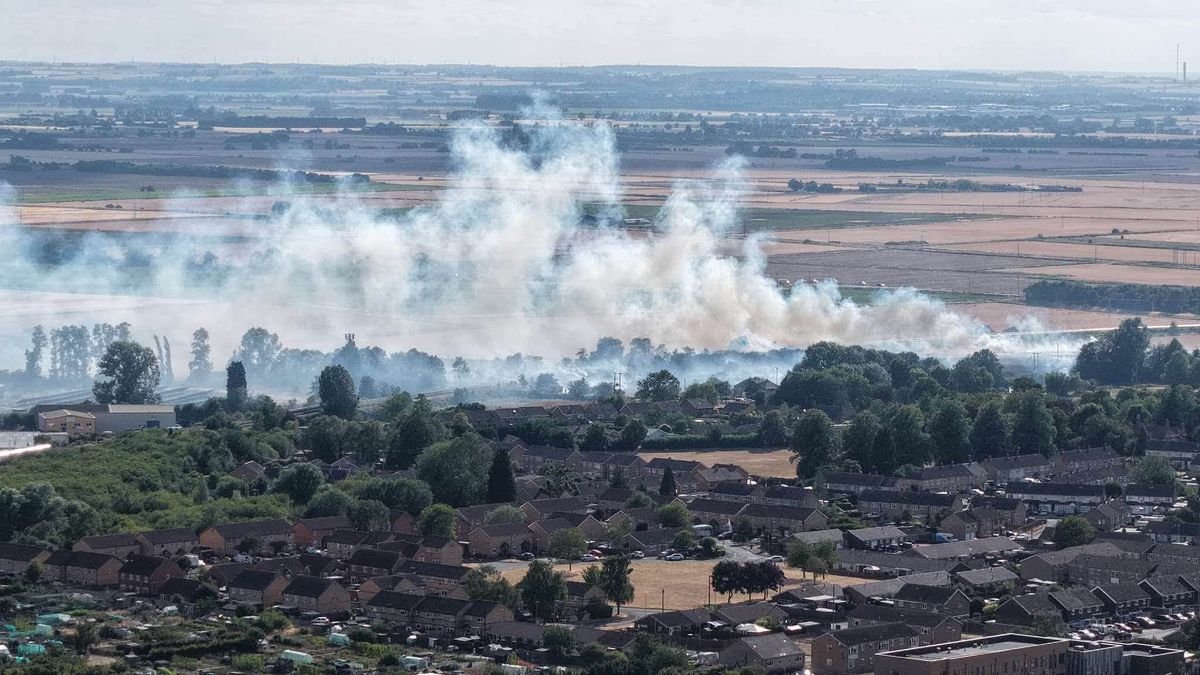
Firefighters will remain in the area tonightA large field fire in WhittleseyAuthor: Dan MasonPublished 27 minutes agoSeveral firefighters have been tackling a large field fire which almost spread to nearby homes in Whittlesey.Crews were called at 4.29pm today (Sunday) to the fire near to Aliwal Road.”Crews from Stanground, the north roaming fire engine, Dogsthorpe, March, Thorney, Whittlesey, Wisbech, the Peterborough Volunteer Brigade, along with a specialist 4×4 vehicle from Thorney and the water carrier from Ramsey attended the incident,” a spokesperson for Cambridgeshire Fire and Rescue (CFRS) said.”Firefighters used hose reels and beaters to extinguish the fire and prevent further spread. “Crews are still on scene and are working hard to find hotspots and dampen them down.”The CFRS spokesperson said Ramsey Road heading into Whittlesey has been closed because the level crossing has been shut off.The service said crews will reinspect the area throughout the night.One eyewitness told us they were walking along the Bower river in Whittlesey when they spotted a fire in the distance.They said “three students initially tried to douse it (the fire) with water from the Bower” before they saw a gas canister close by, which then exploded shortly after.Cambridgeshire Police have been asked for comment.Hear all the latest news from across the UK on the hour, every hour, on Greatest Hits Radio on DAB, smartspeaker, at greatesthitsradio.co.uk, and on the Rayo app.