Man in his 20s killed, woman hospitalised in three-car collisionAuthor: Maisie NorrisPublished 6 hours agoLast updated 4 hours agoA fatal collision near Stewartby on Friday night resulted in the death of a man in his 20s and serious injuries to a woman in her 30s.The crash, involving a blue Vauxhall Astra, a black Audi A6, and a white Audi TT, occurred just before 11.50pm on the B530 Ampthill Road, near Stewartby Way junction.Emergency services attended the scene, where the young man was pronounced dead, and the injured woman was transported to hospital for treatment.Police from the Bedfordshire, Cambridgeshire, and Hertfordshire Road Policing Unit are appealing for information from the public, especially from anyone who saw the vehicles before the collision or possesses dashcam footage.Sergeant Claire Marland expressed condolences to the deceased’s family and emphasised the importance of any information that could shed light on the circumstances of the crash.People with relevant information or footage are encouraged to report it online or by calling 101, quoting Operation Gannett.Hear all the latest news from across the UK on the hour, every hour, on Greatest Hits Radio on DAB, smartspeaker, at greatesthitsradio.co.uk, and on the Rayo app.
Blog

Police seek witnesses after fatal car crash near Stewartby

Fleadh Cheoil na hÉireann 2026 kicks off with musical celebration in Belfast
Performers for 2026 Fleadh in BelfastMore than 200 events and 180 traditional music competitions are taking place.Fleadh Cheoil na hÉireann 2026 has officially opened in Belfast kicking off a week of song, dance and culture as part of the world’s largest celebration of traditional Irish music.More than 200 events and 180 traditional music competitions are taking place across venues, pubs, and streets throughout the week-long celebration from August 2-9.It is the first time the annual music festival has been held in Belfast and only the second time it has been held in Northern Ireland, after being hosted in Londonderry in 2013.The 2026 event is set to be one of the most culturally diverse in its history, with cross-community participation and a celebration of traditions from across Northern Ireland and beyond.A performance at Belfast Fleadh (Jago Communications/PA)The opening event at Fleadh 2026 will include a special collaborative performance from host branch, Ards CCÉ, South Asian Dance Academy, Belfast Bands Forum, as well as an array of highland pipers and champion Irish dancers led by Riverdance lead, Lauren Smyth.They will play at the Gig Rig set up outside City Hall, where musicians and dancers will play from 11am to 11pm every day of the week.On Sunday the outdoor stage will also welcome over 100 children from primary and secondary schools across North Down and Belfast as part of a schools choir project, continuing to the evening with Goitse, Blackwater Céilí Band and accordion virtuoso Sharon Shannon and her Big Band.Musicians and dancers from across the world flock to the host city with the aim to compete in the All-Ireland Fleadh music competition with hopefuls from Ireland qualifying from county and provincial Fleadhs to earn their place.But, many others come for music workshops as well as open music sessions that will emerge in a variety of venues and spaces across the city.Continue Reading
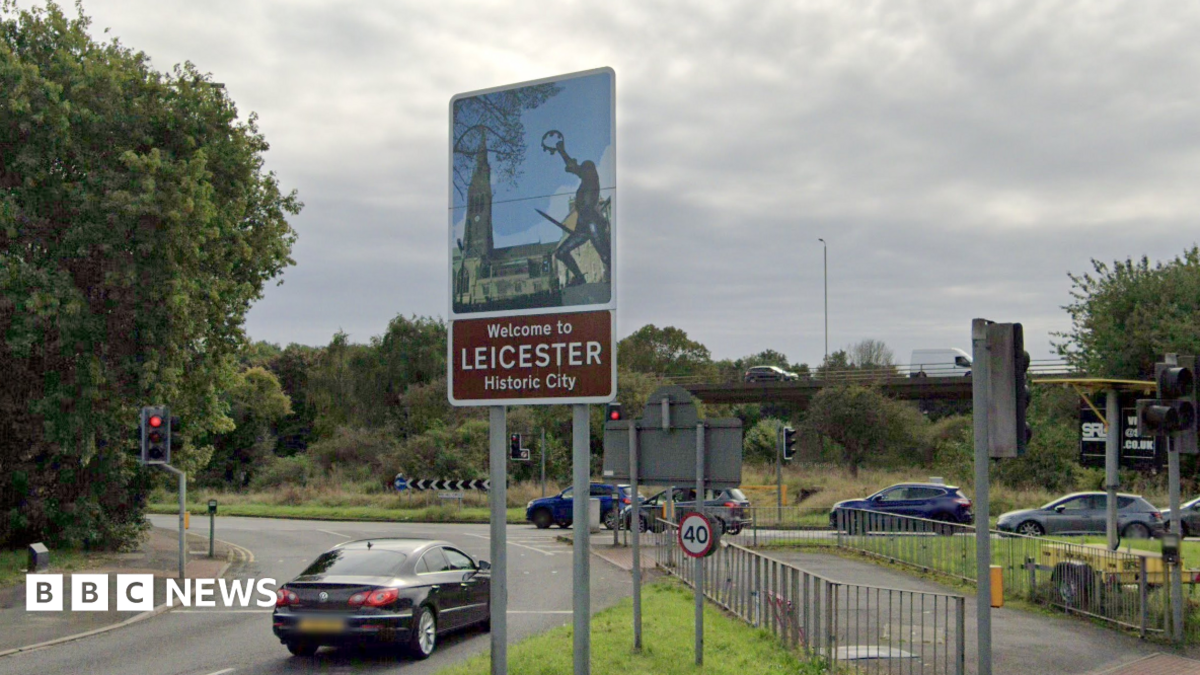
Ministers ‘ignored’ public over Leicester expansion – MPs
Steve Reed, former Secretary of State for Housing, Communities and Local Government, has been replaced by new Prime Minister Andy Burnham since making the announcement.However, before he was sacked, he wrote to Leicestershire council leaders, saying: “I judge that there is a strong public services and financial sustainability-related justification for the boundary change. “It strengthens alignment with the functional economic area and geography, improves the city’s ability to support housing delivery at scale, and provides a clearer governance footprint for strategic growth and devolution.”Leicester’s Labour mayor Sir Peter Soulsby said expanding the city made sense and was a move that was long overdue.The consultation results further revealed a proposal to keep the city’s current boundary in place and surround it with two unitary councils, one in the north of the county and one to the south, was the most popular choice, with 70% of respondents saying they were positive about the idea, compared with 21% who were against it.A third proposal, from the Reform-led Leicestershire County Council, saw 54% of respondents say they were negative about it and 35% positive.

HGVs are ‘destroying the roads’ when diverted off main routes, Cambridgeshire county councillors warn
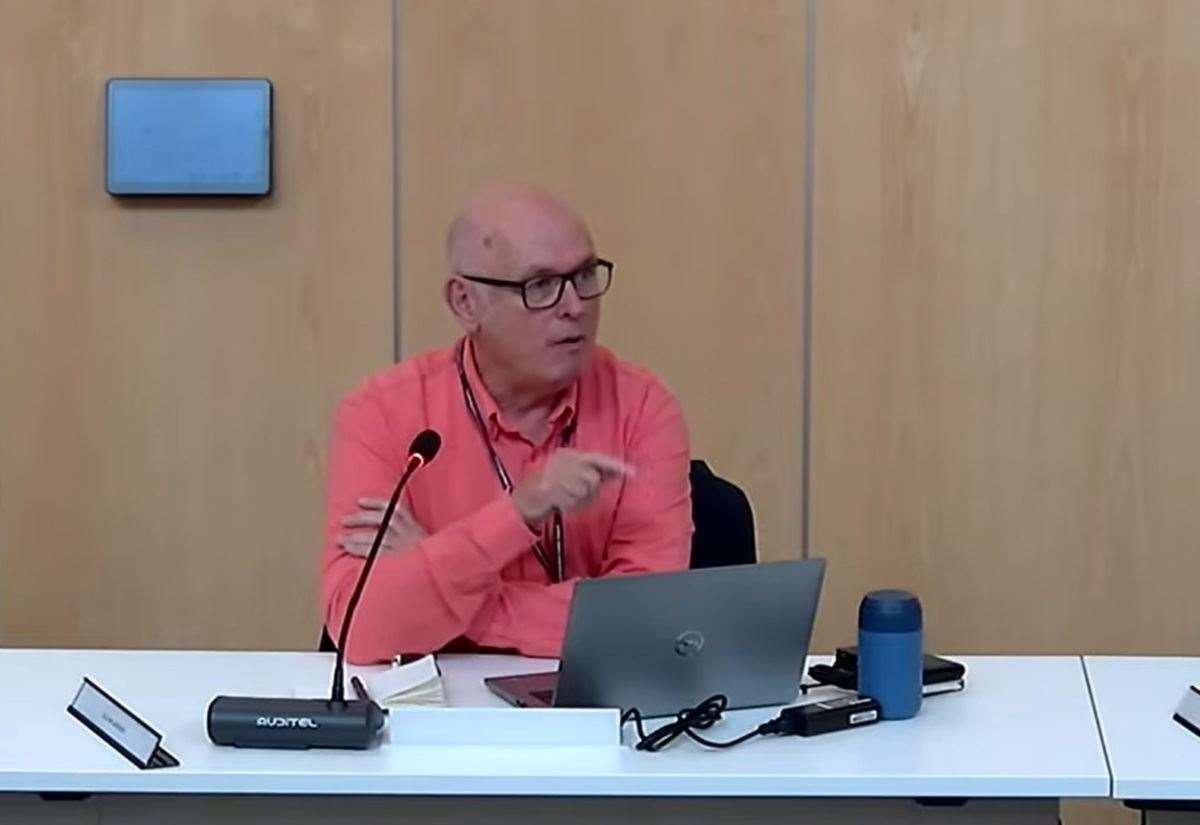
Lorries being diverted into rural areas are damaging the roads, a Cambridgeshire County Council meeting was told.Cllr Mark Goldsack (Con, Soham North) argued the council should “totally avoid” using “peat-damaged Fenland roads” as diversions when major A roads are closed.He said he was “very pleased” that repairs to the A142 Soham Road had been scheduled, but raised ussues with the plans to handle the traffic.Cllr Mark Goldsack speaks at a Cambridgeshire County Council meetingSpeaking at a council meeting on 28 July 28), he said: “We were told there would be at least four weeks’ notice before we know what’s going on.“That’s impossible, because there was 10 days between the actual original notice and the actual proposed start date.“And the diversionary routes were… quite frankly, I think my eight-year-old granddaughter could have come up with better ideas.” Cllr Goldsack added: “The local drivers know where the dips are, know where the bumps are and know where the problems are and drive accordingly. The other drivers, who are on diversionary routes, don’t.“They go at excess speeds and they’re the ones that cause the problems and, exactly as the chairman said, where there’s water and there’s a bumpy road – the logical outcome often occurs.” Josh Rutherford, head of asset management, said: “In an emergency situation the police would be able to divert onto the nearest possible viable route.“If it was a highways diversion – then we would divert onto a road of the same class.”Cllr Ian Gardener (Con, Alconbury and Kimbolton) asked if signs could be put up to divert HGVs away from rural roads that can’t handle their weight.Cllr Ian Gardener speaks at a Cambridgeshire County Council meetingThe Conservative councillor said every time the road is closed – for a crash on 27 July on the A14 at Bythorn in one recent example – the huge lorries “come off the A14 and they’re on our rural roads”. He said: “They are destroying the roads and it’s creating a much greater maintenance cost for the county council.“To spend a few hundred pounds on a few signs might help the situation.“I know drivers follow their satnavs and what have you, but if they were to see ‘not suitable for HGVs’, it might reduce some – I’m not saying it would reduce all, but I just think that might help and would alleviate the issues that I get with residents saying, ‘I’ve now got lines of HGVs coming past my house.’“We really can’t keep on with it because it’s just destroying the roads and the rural roads never seem to get that much expenditure on them.” Mr Rutherford said that “year-on-year” the amount spent on rural roads across the county is a “significant part of the highways maintenance budget”.He said: “I do appreciate that the rural road network is huge – there are a lot of roads out there and there is a lot that needs doing.”He said he agreed with looking at a “more holistic approach to highway maintenance” as alternatives to just patching up potholes after the roads are already damaged.Mr Rutherford said: “You know we’ve done that probably 50 times – the definition of insanity and everything else.”
Feyenoord vs Atalanta: Club Friendlies stats & head-to-head
Head to HeadSkip to form guideKey, Feyenoord v AtalantaSkip back to season so farFeyenoordAtalantaWFeyenoord wonv Sporting Charleroi3Club Friendlies3Club FriendliesWFeyenoord wonv Club Brugge31Club FriendliesDAtalanta drawv Fiorentina11Serie AWFeyenoord wonv Dordrecht6Club Friendlies01Serie AWFeyenoord wonv PEC Zwolle2Eredivisie23Serie A11Eredivisie00Serie APlease note: All times are UK. Some content is provided by third parties, is subject to change, and is unverified.

Animals killed as Cannock Chase wildfire devastates heathland
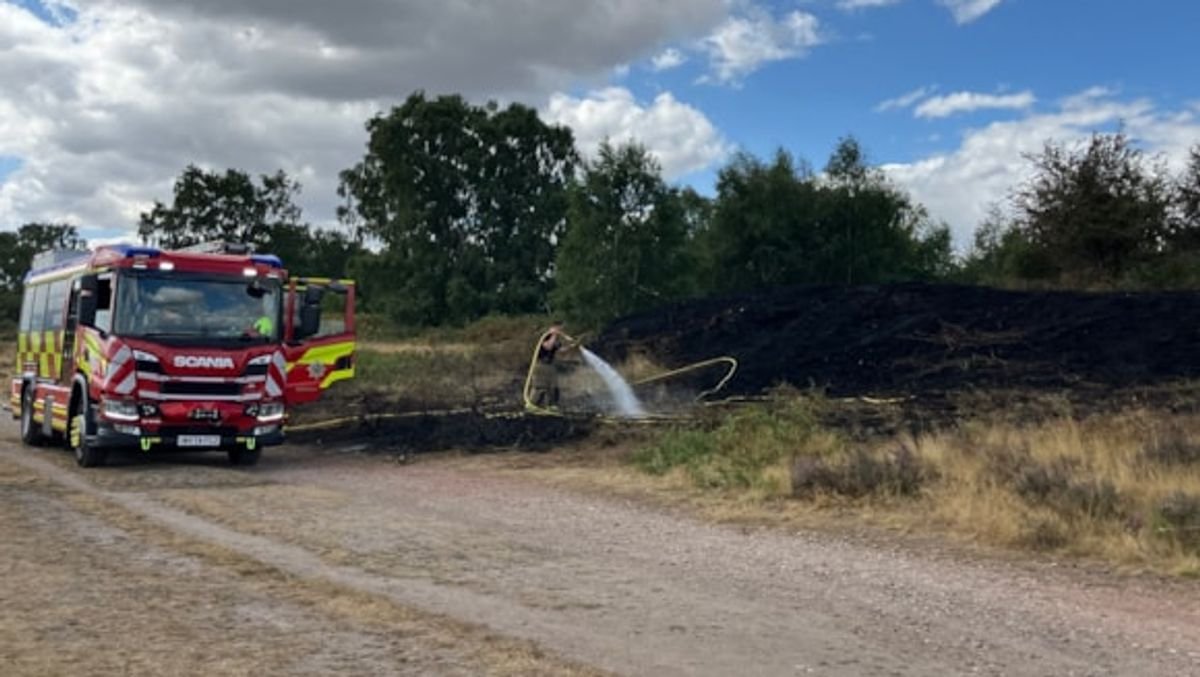
Disposable barbecue blamed for blaze at Sherbrook ValleyAuthor: Adam SmithPublished 8 hours agoA devastating wildfire, ignited by a disposable barbecue, has scorched a significant area of heathland in Cannock Chase, causing severe harm to the environment and local wildlife.The blaze, which erupted at 6pm on Thursday, 30th July at Sherbrook Valley, destroyed an area comparable to a football pitch, leaving a tragic impact on the site’s ecosystem. Sherbrook Valley is recognised as a Site of Special Scientific Interest (SSI) and a Special Area of Conservation (SAC), making the loss of habitat even more profound. Many animals perished in the fire, including reptiles like adders and amphibians such as toads, marking a significant setback in conservation efforts. Rich Williams, Group Manager at Staffordshire Fire and Rescue Service, attributed the fire to a discarded disposable barbecue and emphasised the importance of adhering to the ban: “We believe this fire was caused by a disposable barbeque, which are banned on Cannock Chase due to the dangers they pose. It is absolutely crucial that people adhere to this ban, as incidents like this place significant demand on resources during an already very busy period.” Hayley Coles, Staffordshire County Council’s Deputy Leader and Cabinet Member for Communities and Culture, expressed her distress at the loss: “I was particularly sad to learn that animals lost their lives in the blaze, and a large amount of rare heathland habitat was lost. The fire service was fortunately able to bring the fire under control but we may not be so lucky next time.” Residents are urged to take precautions following the declaration of a drought in the region by the Environment Agency. Preventative measures include avoiding lighting open flames and using barbecues in country parks, and properly disposing of litter, especially glass, which can start fires when exposed to sunlight. Chase Road was temporarily closed as a precaution to mitigate the risk of the fire reigniting from smouldering areas. First for all the latest news from across the UK every hour on Hits Radio on DAB, at hitsradio.co.uk and on the Rayo app.

Simon Houfe, eccentric student of the past who inherited a Regency townhouse in Bedfordshire – AOL
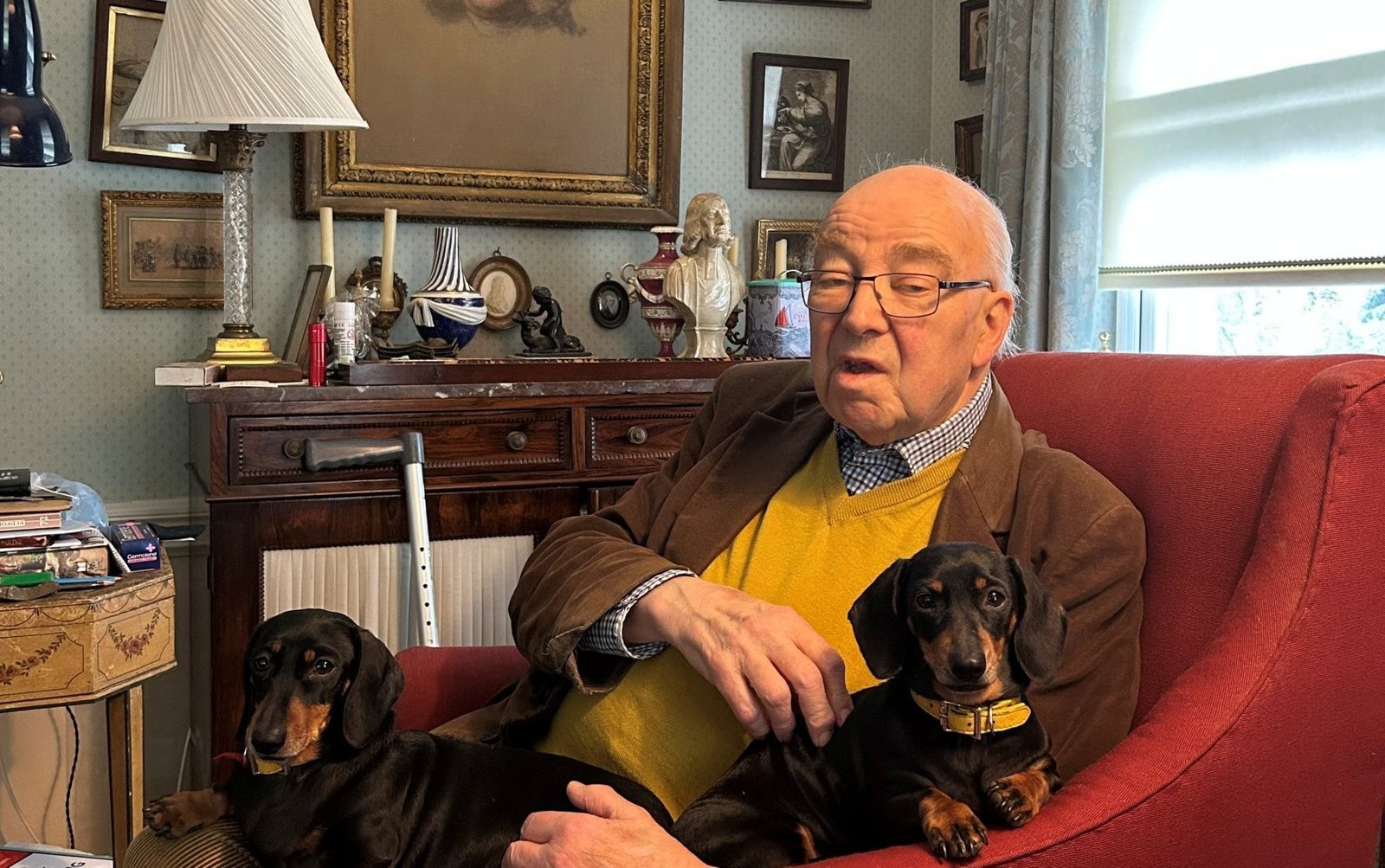
Simon Houfe, who has died aged 84, was a Bedfordshire antiquary, an authority on 19th-century book illustrators, and guardian of the legacy of his grandfather, Sir Albert Richardson, the architect, conservationist and president of the Royal Academy.Simon Richard Byers Houfe was born on September 13 1942, the son of Eric Houfe, an architect, and his wife, Kathleen, the only daughter of the formidable Sir Albert Richardson. “The Professor”, as he was invariably known, dominated the upbringing of young Simon, who was brought to live in his grandfather’s atmospheric Regency townhouse, Avenue House in Ampthill, Bedfordshire, when he was only six days old. An only child, Simon, idolised his eccentric grandfather and inherited his Edwardian outlook and mannerisms.Both his grandfather and his father clearly hoped that Simon would follow them into the architectural profession, but that was not to be. He hated Stowe School, despite its Arcadian beauties, and on leaving was briefly sent to Florence as secretary to the elderly Violet Trefusis at Villa dell’Ombrellino – a rather alarming experience, from which he returned home early.No one was quite sure what to do with Simon, but he loved Avenue House, living there as caretaker and curator of its myriad collections after his grandfather’s death in 1964 – the Professor had strictly forbidden the installation of electricity, and there was very little heating, so Simon’s parents had long decamped to a more comfortable property elsewhere in Ampthill.Somehow, he obtained a job in the Department of Prints and Drawings at the Victoria and Albert Museum, where he developed a fascination that culminated in his Dictionary of 19th-Century British Book Illustrators and Caricaturists (1978), revised in 1999. His enthusiasm for local antiquarian curiosities, meanwhile, led to an authoritative guide to his home county of Bedfordshire (1995). In the early 1970s Houfe was appointed editor of The Antique Collector, a venerable magazine devoted to art and antiques, but this came to an end when the title changed hands.Avenue House – Tim KnoxOn inheriting Avenue House, he withdrew to pursue the life of a gentleman-antiquary amid the increasingly dilapidated splendours of his grandfather’s collections. Money was short, eked out by the rent from some cottages in Ampthill, and the occasional sale of works of art, although he always managed to maintain a grand old-fashioned car.He loved showing the house, entertaining friends in the Servants’ Hall, by now lit with electricity and warmed by a three-bar electric fire. Occasionally the Dining Room or the Great Drawing Room was pressed into service, lit only by candles.Avenue House became a shrine to the Professor, and Houfe’s tours of the house were peppered with anecdotes about his eccentricities, which he eventually collected into a comprehensive biography, Sir Albert Richardson: The Professor (1980). In 1999 he collaborated with Alan Powers on an exhibition on Richardson’s work at the RIBA Drawings Collection’s Heinz Gallery.As the years wore on, however, the upkeep of Avenue House and its extensive gardens became increasingly arduous. Negotiations with the National Trust, who were initially keen to take it on, foundered on the lack of endowment and the difficulty of accommodating large numbers of visitors.With deep reluctance, Houfe sold the contents of the house in a great sale orchestrated by Christie’s in 2013, and moved to a smaller house nearby that had been remodelled by his grandfather. Here he surrounded himself with favourite items from his grandfather’s collection – an Avenue House in miniature – while downstairs, in a former garage, he installed his library.A few years later the future of Avenue House, then lying empty, was secured after old friends acquired the house and its garden. He enjoyed watching the progress of their restoration, but he never really got over having to sell Avenue House.Simon Houfe, born September 13 1942, died July 27 2026Try full access to The Telegraph free today. Unlock their award-winning website and essential news app, plus useful tools and expert guides for your money, health and holidays.
Thousands turn out to celebrate Caribbean Carnival in Leicester
Thousands of people turned out to celebrate Leicester’s Caribbean Carnival. The theme for this year’s edition was Crowned by Culture – Caribbean Queens and Kings.The annual event – held at Victoria Park on Saturday – involved a colourful carnival parade starting at the park, before heading into the city centre and back again.Meldin Thomas, High Sheriff of Leicestershire, told the BBC the event “celebrates everything about the Caribbean”, and was “open to all communities”.

Playbooks, plagiarism and a pig’s head: new claims surrounding a star Cambridge professor
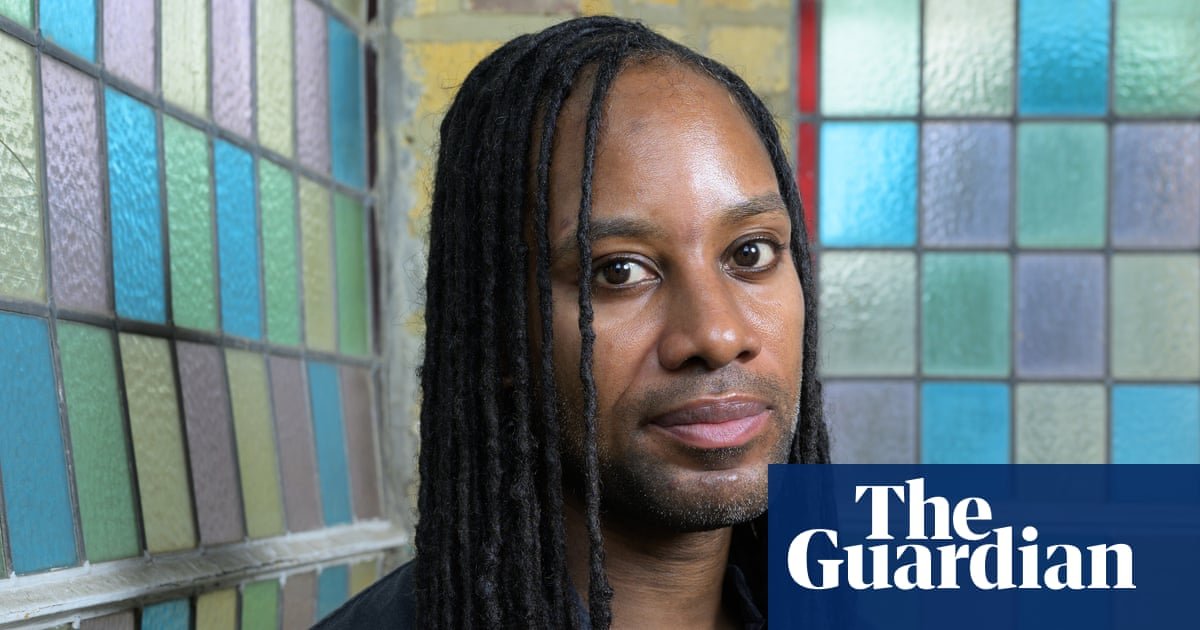
When the superstar academic Jason Arday took to the stage at the British Sociological Association’s 75th anniversary conference earlier this year, he delivered a talk called Wanted Dead or Alive: the Playbook.The youngest black professor in Cambridge University’s history told an audience of his peers that the playbook in question had helped bring down some of the biggest names in US academia. Conservative “activists” were trawling through the work of black academics, looking for anything to use against them: inconsistencies, citation errors, passages in their work that were similar to existing papers.Once an error was identified, rightwing media outlets and conservative politicians joined the pile-on – heaping pressure on universities to cut ties.Claudine Gay, the first black woman to become president of Harvard, was only in the post for seven months before she was forced out over plagiarism allegations. Others said they felt like “sitting ducks” as their work was pulled apart. Some academics have killed themselves after being hounded out of their positions.Claudine Gay speaking at her inauguration as Harvard University’s 30th president in 2023. Photograph: Boston Globe/Getty ImagesThe playbook was not restricted to the US, Arday explained. The same tactics were being used to bring down some of the UK’s most high-profile black academics.“The instruments that are designed to protect academic integrity, designed to protect our wellbeing and our intellectual property, are weaponised,” he told the audience in April.He called for his peers to defend him. “There isn’t any room to sit there and watch your fellows suffer for no reason. It’s abhorrent, it’s a disgrace and, quite frankly, evil,” he added. “That’s the cancer that we need to eradicate from academia.”Some of the audience thought it was strange. Keynotes are usually places where academics talk about their work and discuss breakthroughs, yet here was Arday talking about racism and harassment. Some felt he must have been saying this for a reason.Then last week a row erupted concerning Arday’s academic work. The Telegraph reported that analysis had found more than 100 passages in his PhD were similar to another thesis by Paula Zwozdiak-Myers, a student at Brunel University in London, published six years earlier.The report followed a Substack post by Nathan Cofnas, an academic who was previously embroiled in a free speech row at Cambridge after he suggested in a blogpost that, in a meritocracy, there would be “close to zero” black professors at Harvard. The British politician and activist Simon Woolley called the post “abhorrent racism, masquerading as pseudo-intellect”.Cofnas, a self-defined “race realist”, was sacked by Cambridge’s Emmanuel College in 2024 and underwent a disciplinary investigation into the blogpost about black academics. The investigation concluded that Cofnas was not guilty of “discrimination or harassment”, and that his views, “while seen by many as offensive, did not breach the law and did not contravene university regulations designed to uphold free speech”. He now works at Ghent University, in Belgium.Cofnas claimed he had put Arday’s PhD through plagiarism detection software, which found that “many passages are lifted with minimal editing, sometimes retaining copy-editing mistakes from the original source”.Another critic of Arday was Dr David Harris, professor emeritus at Plymouth Marjon University, in Devon, who had previously written to Cambridge with claims about Arday’s work.Harris had been stripped of his professor emeritus title after he wrote a post about critical race theory that was deemed “controversial” by colleagues, but it was reinstated in 2026. After Harris’s earlier queries about Arday’s work, two corrections were made to papers released in 2018 and another in 2020.The fact that the two most vocal critics of Arday harboured controversial views on race appeared to inform Cambridge’s response, which was a robust defence of Arday. The university called the claims a “vile smear campaign to undermine his credibility”.An open letter in support of Arday, signed by the Green party leader, Zack Polanski, and the prominent black studies academic Kehinde Andrews, argued there was “an orchestrated and grim effort to delegitimise a brilliant, young, working-class academic for the sin of being successful while Black”.double quotation markProfessor Arday probably holds the top position in the world in sociology of education. It’s important for the whole discipline that he addresses these claimsProf John Preston, University of EssexCambridge said it had passed complaints to the university where Arday completed the PhD, Liverpool John Moores, which had reviewed the work and found he had not plagiarised it.“We take allegations of academic misconduct incredibly seriously,” a Cambridge spokesperson said. “It is university procedure that investigations are carried out by the institution at which the research was undertaken. This is standard practice in the sector because that institution has access to the information to ensure a full and fair investigation.”Arday told the Guardian he fully supported “fair investigation processes for genuine concerns” of academic misconduct. He added: “To clarify, there have been multiple thorough investigations across several institutions as a result of the allegations, and immense scrutiny, including with an academic misconduct panel who concluded that there was no plagiarism or academic misconduct.”But prominent academics of colour that the Guardian spoke to said the claims of plagiarism were legitimate, and that Arday’s alleged actions risked undermining others who study race.Some of Arday’s peers said the fallout from the row could send shockwaves through academia and set the study of race in Britain back 20 years.One academic, who has worked in the area of race and education for decades and spoke to the Guardian on condition of anonymity, said the accusations against Arday were worrying. “I think it’s plagiarism and it’s obvious,” they said.John Preston, an emeritus professor of sociology at the University of Essex, said: “Having seen the evidence, it triangulates and there is, in my judgment, a case to answer here.”Some have argued that Arday has come under unfair levels of scrutiny. But the academics the Guardian spoke to said it was “fair for someone at Cambridge”, in one of the most prestigious positions in academia.The tone of the coverage from rightwing publications has been a mix of outrage and “I-told-you-so” self-righteousness, with the Telegraph describing Arday as a “diversity poster boy”, and his online accusers all sharing a critical view of diversity, equity and inclusion policies.The stakes are high for all concerned. For Arday, the accusations are potentially ruinous – plagiarism is as serious as it gets for academic malpractice and the professor has consistently claimed he has done nothing wrong.In an interview with the Times on Friday, he suggested the issue had been blown out of proportion. “I am accountable for the mistakes I’ve made,” he said. “I hold myself accountable and other people should hold me accountable. We’re talking about academia here. I didn’t murder somebody. I think the cruelty that I’ve experienced, and the positioning of me as this kind of liar and fantasist, is totally unacceptable.”For Cambridge, there are questions about judgment over Arday’s appointment, which occurred when its own track record on race was being scrutinised in the wake of the Black Lives Matter movement. Cambridge had been criticised for the lack of diversity in its student body and faculty; when Arday was hired, there were only five black professors at the university.But the accusations of plagiarism are only one element of the Arday story.In March 2023, the sociologist’s arrival at Cambridge made headlines around the world. Not only was he the youngest black professor in the university’s history, but his backstory made that feat all the more impressive. His story is to be detailed in a memoir for Simon & Schuster this autumn.At the age of three, the south Londoner was diagnosed with autism and global developmental delay. He was unable to speak until he was 11 and could not read or write until 18. Despite that, he forged an impressive academic career, mostly focusing on race and education, with stints at Roehampton, Glasgow and Durham universities.From 17, Arday began completing charity challenges to raise money for various causes. They were often endurance challenges, which began when he was taking a BTec course in sport and development at Merton college in Morden, south London.Jason Arday claimed to have run 600 miles in six days. Photograph: Christian Sinibaldi/The GuardianHe has claimed in media interviews to have raised £5m for charities over a 20-year period (sometimes this figure has risen to £5.5m). He has done this, he says, by running 30 marathons in 35 days – a feat he has spoken about in media interviews and in his book. He also claimed at public events to have run 600 miles in six days.As his critics online have pointed out, £5m raised for charity would be a staggering amount for someone who is not already famous. In 2012, Arday said he hoped to raise £250,000 by the time he was 50.When asked if the £5m figure was accurate, Arday clarified to the Guardian that the money was raised with the help of “many fundraising collectives over a two-decade period”. When asked to identify other people who took part in these efforts, Arday said he had signed NDAs preventing him from disclosing that information.The Guardian also asked Arday about his claim to have run 600 miles in six days, an achievement that would make him one of the world’s most gifted endurance runners. (The first woman to achieve the feat, Megan Eckert, only managed it last year; the men’s record is 650 miles.) He said that because of the “cumulative wear and tear of training” from his previous running challenges he “had to put rest days in between the running days just to finish” the 600-mile challenge, which was actually completed over a 12-day period.Earlier this year, two universities that had given Arday honorary degrees and doctorates amended their websites, with Southampton Solent University removing the 600 miles citation, and Anglia Ruskin University changing the six days claim to 12 days.In 2012, Arday was a torchbearer for the Olympic Games and met the tennis player Andy Murray via the TV programme Surprise, Surprise.After the meeting, Murray said Arday had told him a story that inspired him to victory in his gold medal win against Novak Djokovic. “He is an epileptic who ran 30 marathons in 35 days,” said Murray. “He told me that on the 20th day he fell – he had a fit, a seizure – and had a hairline fracture in his leg, but he continued. He had asked to meet me, and that was pretty cool, speaking to someone like that.”When asked by reporters at the time why he carried on, Arday said: “When I fell over, I didn’t want to have to pay back thousands of pounds.”Doctors have told the Guardian that running nine marathons with a hairline fracture in a fibula would be incredibly painful, though technically not impossible. In his forthcoming memoir, Arday says he completed the distance by taking painkillers and despite his right leg swelling to twice its normal size. He previously said in a 2012 interview that he used ice baths to ease the pain between his runs.As well as scrutiny of his academic record and fundraising history, Arday claims to have been the victim of a campaign of physical abuse and intimidation.Arday began being sent racist emails as soon as he took up his position at Cambridge, becoming so intense that his emails had to be screened. But the messages paled in comparison to the other incidents the academic said he had faced.In an open letter to the government minister Jacqui Smith in July 2025, which outlined Arday’s experiences, he claimed to have been “threatened with a knife, physically assaulted and spat on; [had] rape and death threats being made to him and his family; bananas and bullets being posted to him via the university campus; and corrosive substances and mutilated animals sent to his family home”.double quotation markI always wanted to be a person who flew close to the sun. But sometimes I wonder: did I fly too close?Jason ArdayIn a subsequent interview with the Guardian, Arday claimed to have been confronted at his faculty building on two separate occasions by a masked man threatening to harm him if he did not resign, and evading detection both times. On the second occasion Arday said the intruder produced a knife and threatened him with it.The Guardian understands that after Arday reported the first intrusion to the university, enhanced CCTV was placed in the faculty and a panic alarm was installed in his office. The professor said he hit the panic alarm during the second confrontation, but that no one responded. It should have triggered an alarm alerting the faculty’s security team, all of whom were present at the time of the alleged incident.The intruder was not picked up by CCTV on either occasion and no one in the faculty reported seeing anyone suspicious. Arday did not report either intrusion at the time, telling the Guardian that after the second incident he continued his working day and even conducted a PhD viva for a student less than two hours later.He did not inform colleagues that a masked man with a knife was in the faculty building.Arday confirmed in an interview with the Guardian that the “mutilated animals sent to his family home” mentioned in the open letter was a severed pig’s head, delivered in a large cardboard box to his parents’ home address in south London. He claimed to have intercepted the package and immediately thrown it away, only telling the police several months later.In a subsequent interview he claimed the police investigated, checking with butchers in south London if they had sold a pig, eventually finding one that had sold a “whole hog” on the morning the head was left outside the family home.When the Guardian checked those details with the local butchers Arday named, they said no police officer had come in to ask them about a pig. When asked if they were sure, the butcher said “that’s the kind of thing we’d remember”.When the details Arday gave about the pig’s head investigation were checked by London’s Metropolitan police, the Guardian was told they were “categorically” incorrect and no investigation had taken place.Arday had contacted the Met to lodge a complaint of harassment against Harris after his plagiarism allegations and, because he was based in Plymouth, the case was handed over to Devon and Cornwall police. Correspondence seen by the Guardian confirmed that the force declined to pursue a case against Harris.Arday took no photographs of the bullet, the banana, the corrosive substance or the pig’s head. The only other people who saw any of the items were close family members, who told the Guardian Arday had shown them the bullet and the “poison”. Arday could produce no messages from the time in which he discussed any of the items with friends, family, colleagues or the police.A Cambridge University spokesperson said: “As soon as Professor Arday shared concerns with the faculty a number of enhanced security measures were urgently taken in response, with the advice and continuing engagement of university security and the police. These include the installation of panic alarms, screening of emails, post and packages, upgraded CCTV and revised security protocols.”There are many examples of prominent black figures being intimidated in recent British history.Black footballers, including Brendon Batson, reported being sent a bullet in the post during the 1970s after being selected for England. Bananas were often used by racists to insult black people. Severed pig heads have been attached to the walls of mosques by far-right groups. People have been attacked and intimidated at their place of work. Malicious communication is commonplace. Black academics are frequently hounded by organised groups.Brendon Batson playing for West Bromwich Albion in 1979. Photograph: Colorsport/Rex/ShutterstockBut the abuse and harassment Arday has outlined would be some of the most extreme any academic has been subjected to in the UK.When Arday was asked about his claims by the Guardian, he stood by them. “To be honest with you, I thought you’d just believe me,” he said. “Why would I lie?” He would be jeopardising his career.In Arday’s memoir, Great and Unfortunate Things, he references the scrutiny placed on him and his work.He writes that people have been “outraged and offended” by the idea of a black professor at such an elite institution, and that he has faced harassment and persecution as “the subject of targeted campaigns driven by racial animus”.“There have been days when I can only describe the experience as traumatising. It’s hard for people to even comprehend or imagine the toll this can take on a person,” he writes.But the row over his academic work and some of the claims he has made is far bigger than one person.“The whole area of the sociology of education, and particularly race studies within that, is very fragile,” said Prof Preston. “It is primarily Black, Asian and minoritised people who work and study in those subjects. Professor Arday probably holds the top position in the world in sociology of education. It’s important for the whole discipline that he addresses these claims.”In a recent interview to promote the memoir, Arday spoke about feeling like Icarus when he came under scrutiny after joining Cambridge. “I always wanted to be a person who flew close to the sun,” he said. “But sometimes I wonder: did I fly too close?”
Régis Le Bris issues Sunderland team news update and confirms selection plan
Sunderland conclude their three-game US tour when they face Championship side WrexhamRobin Roefs will make his first appearance of the pre-season campaign when Sunderland face Wrexham in the final friendly of their US tour on Sunday.The Black Cats face Phil Parkinson’s side in Pennsylvania (5pm KO BST) and will welcome back their goalkeeper following his World Cup commitments with the Netherlands earlier this summer. Having missed Sunderland’s 1-0 defeat to Leeds United, Wilson Isidor will also miss Sunday’s game. Head coach Régis Le Bris confirmed that Isidor had flown back to the UK to deal with a personal issue but should be back in training on Wearside next week.Le Bris is set to follow a very similar formula with his starting XI and subs to the Leeds United game, with a similar starting XI heavily rotated either at half time or the hour mark.“Yeah, Robin will play tomorrow,” Le Bris said.“Wilson has had a personal problem issue, not a major one at this stage but he had to come back to England. He will join the team early next week.“And for the lineup we’ll keep the same principles more or less, trying to manage the game time according to different situations. So we are a bit further along now. So probably tomorrow we’ll have a strong XI to start again from an experience perspective in the Premier League and in the squad, progressively, we’ll manage 45 if needed or 60 if it’s possible. And it’s still possible to check during the half-time, if it’s good to go further or if it’s needed, to stop.”Le Bris says he expects there to be some fatigue in his team’s performance on Sunday having had a heavy workload in training of late, but is pleased with the progress they are making ahead of the start of the Premier League this season later this month.“We have this season the privilege to build on something,” Le Bris said.“Because last season, we created, I think, a strong culture throughout the year. We started with the idea to stay in the league and we were really focused on our defensive shape, with the ability to counter-attack, to create a situation for fast attacks after our regains and we were good on set-pieces as well. “And progressively, we built other layers,” he added.“And I think at the end of the season, we were really balanced with the ability to manage different situations properly. So we have this advantage this season and even with the World Cup players [absent], we felt from the beginning that this culture is stronger. And with their comeback, gradually, they will get more game time. Then we’ll be back in England with four or five new players, Granit, Chemsdine and so on. We build progressively the reconnection“So it’s very positive from the beginning of the season. I think the fitness level is getting better, the energy is stronger now and e might be a bit tired tomorrow because the camp was focused also on the energy. So maybe the tank won’t be full tomorrow but it’s still positive.”Continue Reading