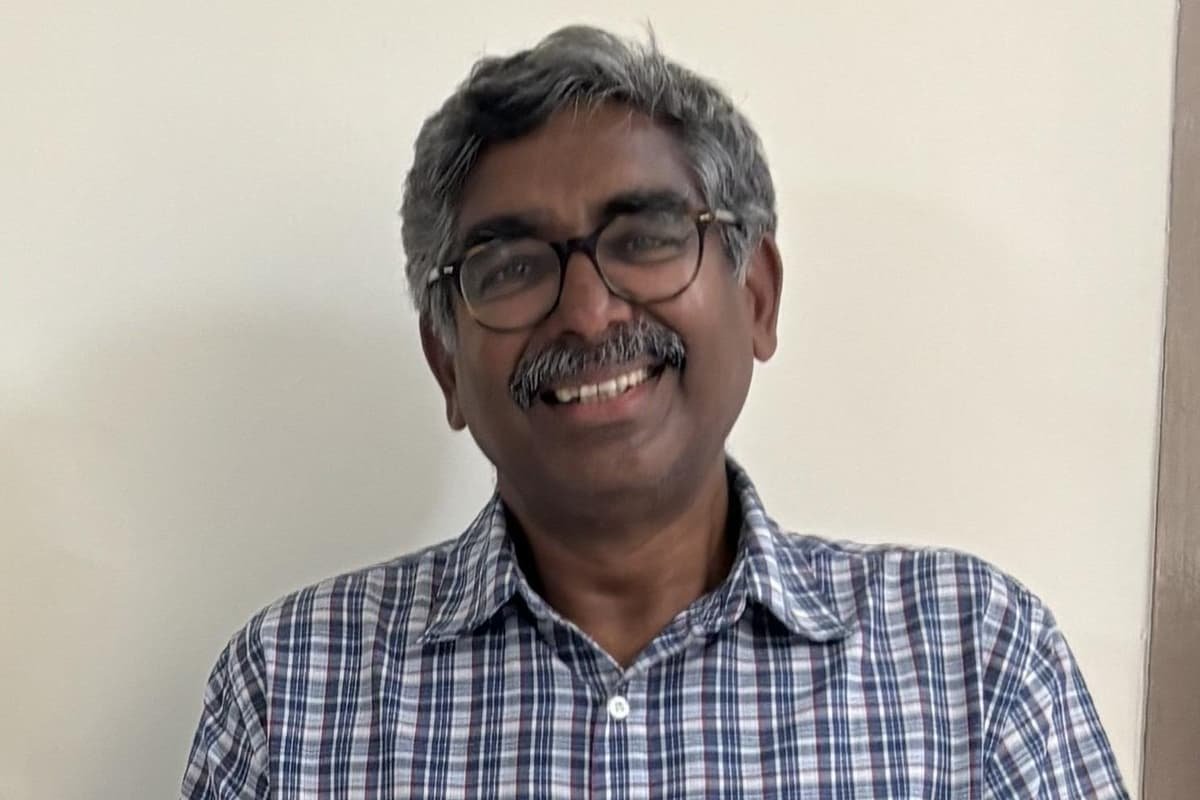
After attending a local talk by Medical Aid for Palestine (MAP), Dr Dayalan Clarke, who works at Warwick Hospital, was inspired to register as a volunteer to help those in medical need. However, he was refused entry to the West Bank, where he had gone as the leader of a team of breast cancer specialists hoping to spend a week operating, teaching and mentoring in Nablus. Here is his experience in his own words.My wife Vinodhini, a Paediatrician, and I, a Surgeon, both work in Warwick Hospital. Last year we attended an event organised by Justice for Palestinians, Leamington Spa, to raise funds for Medical Aid for Palestine (MAP). The MAP guest speaker for the event was Rohan Talbot, who grew up in South Warwickshire. After listening to an inspirational talk by Rohan on the work that MAP was doing in Gaza and the West Bank, we registered to be volunteers for MAP’s work.Dr Dayalan Clarke, who works in Warwick Hospital, was inspired to register as a volunteer to help those in medical need.I was approached by MAP last year and invited to be involved in a Breast Cancer Mission that was being organised in Nablus, on the West Bank. I had no hesitation at all in signing up to this mission, and it was arranged that I would lead a team of three breast cancer professionals from the UK going out to Nablus to operate, teach and mentor for a week.The following few weeks involved intense discussions with MAP UK on the process and procedures for this assignment, which came with some risks. The greatest hurdle was the entry into the West Bank, a process that was controlled at the border by the Israeli authorities. It was decided by MAP UK that the safest route of entry would be through Jordan, entering Israel through the Sheikh Hussein Bridge crossing. We went through practice interviews with questions that would be asked by the Israeli authorities at the border crossing.Having been prepared for the mission, I set off for Amman from London and was met at the Amman airport by MAP Jordan and checked in to our hotel in Amman. The next morning was an early start to the Sheikh Hussein Bridge crossing. The three British volunteers who were part of this breast cancer mission met up at breakfast in the hotel and made a prompt start at 7am. The drive to the border crossing was rather tense and I was filled with apprehension as to what the next few hours would hold.We were advised that it would be best to cross the border individually, one after the other, and it was decided that I would go first. The passage through the Jordanian passport control was smooth and then we took a bus to the Sheikh Hussein bridge crossing where I was interviewed by a female Israeli officer. The next hour of intense, aggressive interrogation by the Israeli authorities is something I will struggle to forget. It started with the official behind the counter, who then handed over the interrogation to her senior. It involved a series of questions about my visit to the West Bank and my credentials for the visit, followed by long spells where I was left alone in the waiting room and investigations were apparently being carried out with my passport and papers. After an hour of uncertainty and waiting, I was informed that I was being refused entry to the West Bank and was coerced into signing a document that I had been refused entry. Dejected, disappointed and angry, I was put on a bus by the Israeli authorities to return to Jordan. I returned to Amman and was booked on the first available flight back to the UK by the MAP team who were incredibly kind and helpful throughout this process.We do not believe that breast cancer surgeons could possibly represent a threat to Israeli security. The whole process left us feeling that the Israeli authorities would do anything to prevent any form of humanitarian aid being delivered to the Palestinian people, even preventing British medical volunteers entering the West Bank.Continue Reading
Warwick Hospital doctor describes his experiences after being refused entry to the West Bank