Stoke-on-Trent offers £10 million to electrify bus fleetsAuthor: Adam SmithPublished 7 hours agoStoke-on-Trent bus operators are invited to apply for a £10 million grant to support the transition to zero-emission electric buses, aiming to improve air quality and modernise local transport infrastructure.The initiative aims to support sustainable transport, as road transport remains a significant contributor to air pollution and carbon emissions.Replacing diesel buses will reduce pollutants like nitrogen dioxide and particulate matter, linked to health problems, while using energy sources aligned with local air quality objectives.Councillor Finlay Gordon-McCusker, cabinet member for Growth, Regeneration and Transport, highlighted the importance of clean transport: “Buses are a lifeline for thousands of people… Replacing diesel buses will mean fewer harmful emissions on our streets and better air quality.”Applications for the grant are now open, with funding awarded based on eligibility and availability, encouraging operators to propose ambitious electrification plans and develop a sustainable bus network for the future.Hear all the latest news from across the UK on the hour, every hour, on Greatest Hits Radio on DAB, smartspeaker, at greatesthitsradio.co.uk, and on the Rayo app.
Author: admin

Buses are going electric in Stoke-on-Trent!
Planners ‘minded to refuse’ Liverpool FC bid to keep road closed
Savannah Shellard, 17, a sixth-form student from Anfield, said Walton Breck Road had become busier and harder to cross after she got off the bus.She said getting home could be “quite intimidating for a young girl like me”.Savannah said the vote made her feel residents had been heard.Councillors proposed refusing the application because of traffic flow, the effect on residents and environmental nuisance.The application also said opening the road could endanger pedestrians and leave part of the stadium perimeter without barriers against a vehicle attack.Counter Terrorism Policing North West supported keeping it closed.The council’s building control service said opening it could affect the safety certificate needed to operate the stadium.Planning officers said the effects on traffic levels and journey times were not serious enough to make the closure unacceptable.Council air quality specialists said the predicted effect on air quality was not significant.Anfield ward councillor Billy Marrat said the road could close on match and event days but open at other times.”The rest of the days of the week, that road should be open to residents,” he said.Marrat said the application had been “very damaging” to relations between the club and residents.

UK Court Hears New Evidence In Tshuma Family Deaths As Murder Case Advances
UK Inquest Reveals More Details On Death Of Family Allegedly Killed By Ndodana Tshuma
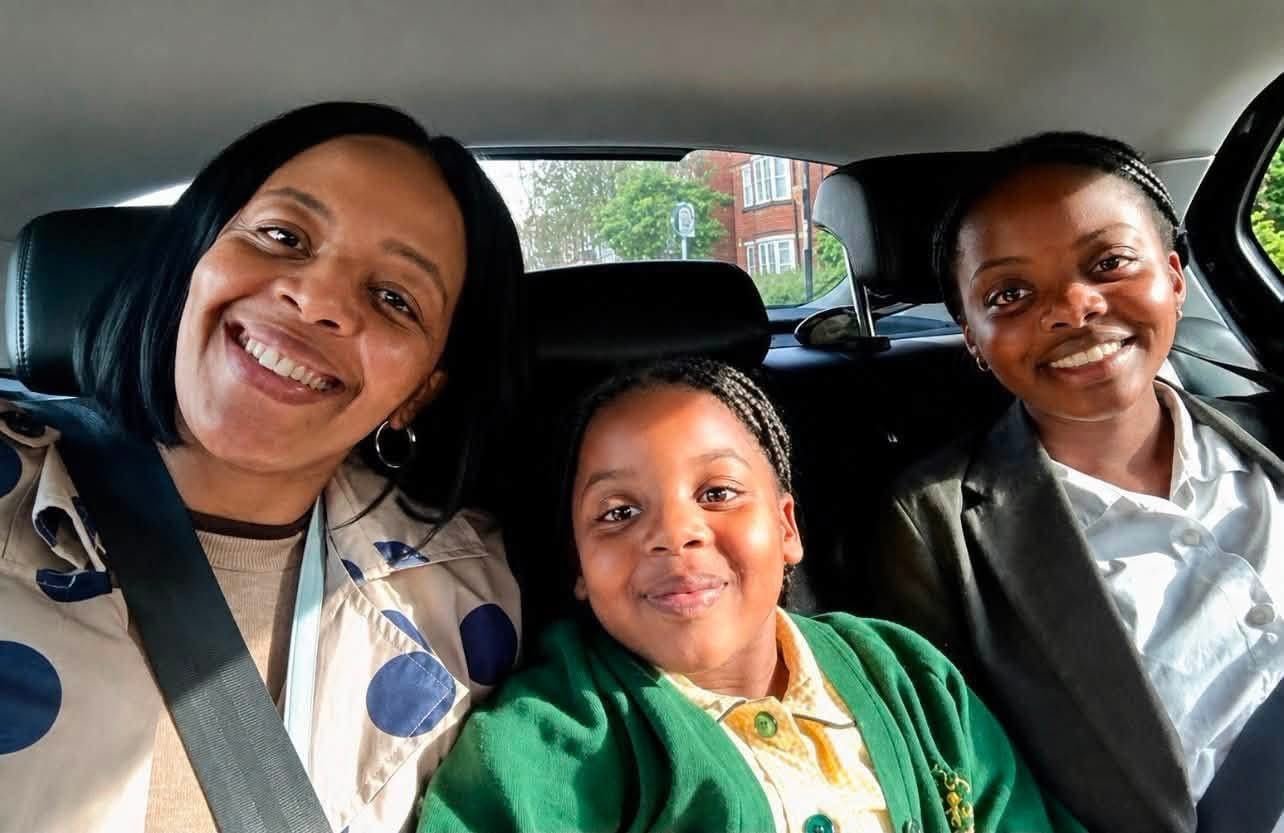
A UK inquest has revealed more details about the deaths of Zimbabwean-born Nothabo Zandile Tshuma and her two daughters, whose bodies were discovered at their home in Great Denham, Bedfordshire, on 7 July.
The hearing heard that all three died from head injuries, while murder charges authorised against Nothabo’s husband, Ndodana Mkhanyisi Tshuma, remain subject to extradition proceedings in South Africa.
UK Inquest Hears Causes Of Death In Tshuma Family Case
The inquest opened at Ampthill Coroner’s Court on Tuesday, 28 July 2026, before Coroner Emma Whitting, who later adjourned proceedings to a date yet to be confirmed.
According to the BBC, statements from the coroner’s officers revealed that Nothabo, 42, died from head injuries, while her daughters, Natalie, 15, and Nala, five, died from blunt force head injuries.
Sam Silk, from the coroner’s office, explained how the investigation began after a concerned relative alerted police.
He said:
“A cousin of Nothabo contacted Bedfordshire Police on 6 July after becoming concerned for the family’s welfare.”
Silk told the hearing that the relative had not spoken to Nothabo for several days despite usually communicating with her daily. Police inquiries later established that the children had not attended school before officers entered the family’s Carnoustie Drive home during the early hours of 7 July, where the three bodies were found.
Ndodana Tshuma Faces Murder Charges As Extradition Process Continues
According to the BBC, prosecutors in England have authorised three murder charges against Ndodana Mkhanyisi Tshuma, 45.
Tshuma was arrested in Johannesburg on 10 July on an unrelated firearms charge before later appearing in court over the alleged unlawful possession of firearms.
South African courts will decide whether the United Kingdom’s extradition request meets the legal requirements for him to be transferred to face the charges.
Police Watchdog Also Investigating Earlier Contact
The Independent Office for Police Conduct (IOPC) has also opened an investigation into contact Bedfordshire Police officers had with Nothabo and her children before their deaths.
An IOPC spokesperson said:
“A mandatory referral was made by Bedfordshire Police to the IOPC on 7 July.”
The spokesperson added:
“We also received a voluntary conduct referral concerning a police constable on 8 July.”
The inquest has been adjourned while the criminal case and related investigations continue in both the UK and South Africa.
35 firefighters from across Northamptonshire tackle barn blaze with 600 metre cordon in place
Northants Fire and Rescue Service was called to a barn fire in Banbury Lane near TowcesterA 600 metre cordon has been put in place as 35 firefighters from across Northamptonshire tackle a fire at a rural barn thought to be storing fertilisers near Towcester.Northants Fire and Rescue Service (NFRS) was called just after 5.15pm on Tuesday, July 28 and a 600m cordon is now in place at the site in Banbury Lane.A spokesperson for NFRS said: “Members of the public are being asked to avoid the “area and close windows this evening in the immediate vicinity.”Thank you for your support.Continue Reading
March Iceland store roof collapses but no injuries reported
A building was evacuated after a supermarket roof collapsed in a busy high street.The roof above an Iceland store, in March, Cambridgeshire, came tumbling down with debris falling into an adjacent alleyway.Cambridgeshire Police was called just before 15:00 BST and said the building next door was evacuated. No injuries were reported, a spokesperson said.Mandy Reeve, who works in a chip shop opposite the store, said one of her customers described hearing a “very loud explosion” before seeing the roof “falling on the floor”.Police placed a cordon around the scene and were awaiting structural engineers to arrive.The fire service said a crew from Chatteris assisted police colleagues.Iceland was asked to comment. Another floor of the building separates the roof from the store.
Huge fire which destroyed crops and threatened homes was started deliberately
The fire near Lichfield destroyed woodland and cropsA huge fire which destroyed hundreds of metres of crops and could “easily” have spread to houses was started deliberately, fire investigators have determined.Staffordshire Fire and Rescue Service crews rushed to The Moor in Fradley, near Lichfield, at 1.55pm on Saturday (July 26) to reports of a fire in the countryside.Seven engines, a water carrier and a ranger attended and found a fire measuring approximately 500 metres by 600 metres.The firefighters used their main jets to extinguish the blaze and thankfully no injuries were reported.The aftermath of a major fire near The Moor in Fradley on July 26 | Photo: Staffordshire Fire and Rescue ServiceNow the fire service has concluded that the fire was likely started deliberately. A senior firefighter urged parents to educate their children about the dangers of setting fires.Station manager Russ Brown, who attended the scene, said: “Crews worked tirelessly to tackle this fire and stop it spreading to nearby farms, houses and kennels.“A massive thank you to local residents and farmers who assisted us with water supply and creating fire breaks.“I would like to reiterate how dangerous setting fires can be; we have seen in this incident how quickly fire can spread.“Hundreds of metres of woodland and standing crops have been destroyed and the fire could have easily spread to nearby houses.“Parents, please talk to your children about the dangers of setting fires and help us keep Staffordshire safe this summer.”Continue Reading

Emily Wilson · An Uncomplicated Man
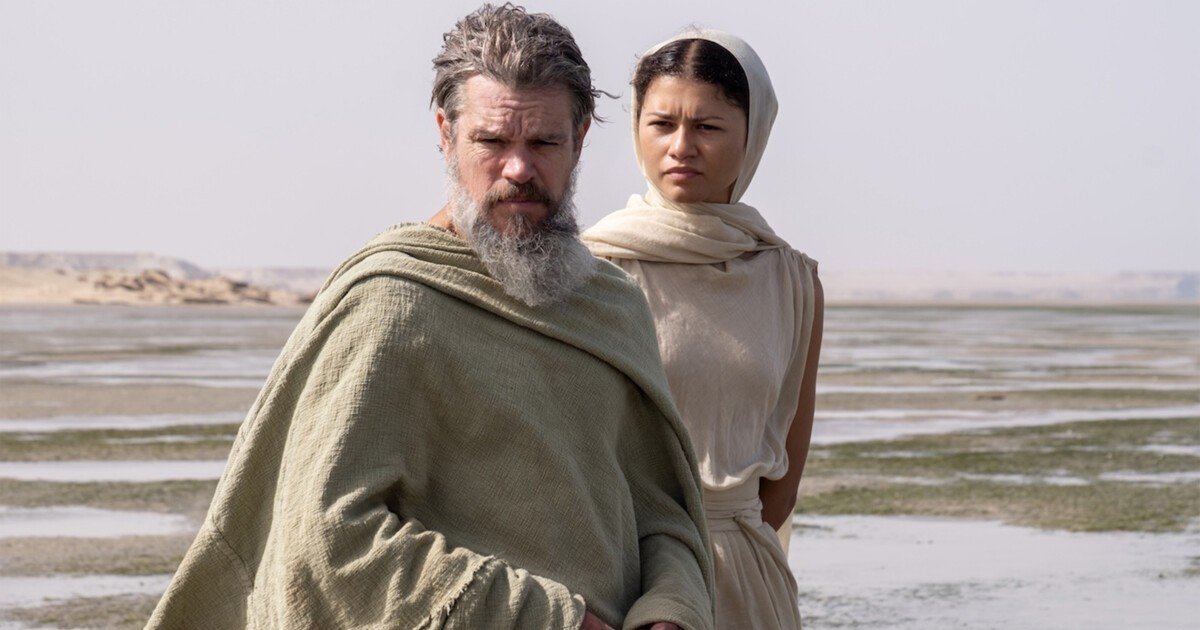
Christopher Nolan’s $250 million action movie version of Homer’s ancient Greek poem is an entertaining way to hide from the high temperatures for a few hours. Nolan’s trademark jumps and twists in the narrative structure are relatively easy to follow, and appropriate for The Odyssey, a narrative of tales nested in tales. My teenagers had a good time. Unlike some of Nolan’s other films, The Odyssey is not boring, thanks to the source material, which is impossible to mess up entirely. It’s a family-friendly audiovisual spectacle, like an elaborate Fourth of July fireworks display – and with about the same level of narrative and emotional depth.As in his previous films, Nolan is interested in the discontinuities of space and time, in magic, tricks, craft, technology, rivalry, substitution, masks, miscommunication, what we remember and what we choose to forget. Yet again, survival is portrayed as a kind of triumph. Yet again, there are long, claustrophobic scenes of drowning and near-drowning, and technically impressive episodes in which buildings are engulfed in flames and vehicles explode. Yet again, we watch a male character’s desperate quest to recover and/or avenge a female love object. I had hoped that Nolan’s affinity with these Homeric themes might push him to new creative heights, and enable him to conjure more believable characters. But The Odyssey features his usual combination of grandiosity and superficiality. Without a tub of wax for my ears – which Himesh Patel’s ever anxious Eurylochus, Odysseus’s doomed right-hand man, uses to sail safely past the Sirens – I was exposed to the full din of thumping sticks, staffs, swords and clashing armour, thunderbolts, crashing waves, grunts, screams, toppling palaces and burning temples. But unlike Matt Damon, the wax-free Odysseus who is tied to the mast as he is conveyed past the Sirens (naked ladies reclining on some uncomfortable-looking rocks), I gazed at the shipwrecks and bloodbaths without any agony of emotion. My eyes stayed dry, even for Argos the dog – whose adorableness as a puppy is predictably amped up to suit our animal-loving times. If only the human characters had been treated with such serious attention.The Homeric epic was already an adaptation. The poem used a relatively new technology – the written alphabet – to rework existing mythical traditions, reshaping the story of a veteran’s homecoming to resonate with the complex concerns of Greek-speakers in the archaic period, an era of migration, colonisation and urbanisation. Some seventh-century BCE Greek communities were ruled by an oligarchy, some by a single man. The poem traces the tension between the needs and desires of groups of men – Odysseus’ comrades or the suitors of his wife, Penelope – and those of a single powerful and cunning man, who wants to rule them all and win eternal fame for himself. In a period of cultural and technological change, it explores a fantasy of going back in time as well as space, while also showing its dangers and costs. The poem wrestles with the challenges of encountering strangers, of entering their homes and welcoming or rejecting them from one’s own. The contemporary resonances are obvious and Nolan’s movie hints at some of them, in interesting if scattered ways. But the film’s vision is too confused, its characters too underdeveloped, to deliver what it half-promises in terms of big ideas – although it is very good at conveying big bangs and big giants.Adaptations needn’t and shouldn’t follow the original with anything like the exactitude of a translation. Some of the best radically transform or resist the source material, providing what Harold Bloom called ‘strong misreadings’ of their ancestors. The most memorable creative responses to The Odyssey – such as Euripides’ Helen, Virgil’s Aeneid, Milton’s Paradise Lost, Joyce’s Ulysses, Walcott’s Omeros, Atwood’s Penelopiad, Madeline Miller’s Circe or Lisa Peterson’s play set in a modern migrant camp – reconsider the poem’s structure, narrative and values. In theory, Nolan seems to understand the assignment and its hazards. His first feature film, Following (1998), was a powerful black and white thriller about the fascination and dangers of tracking strangers through space and time. The hunter is more likely to become the hunted, Following suggests, if the would-be stalker lacks a clear identity beyond a misplaced belief in his own ingenuity. But knowing what temptations should be avoided isn’t the same as avoiding them – as Odysseus’ men learn to their cost when they kill the sacred Cattle of the Sun. Homer’s Odysseus makes it home because he is able, temporarily, to suppress his own desires – for meat and wine, for his wife, for control of his household and land, for slaughter, for victory over time and the threat of being forgotten, for a glorious eternal name. But there is no restraint in Nolan’s version of The Odyssey: every second is jam-packed with incident, lights and noise, and nothing is ever at a human scale.Nolan’s spectacle threatens to drown out his story just as the towering waves of the wine-dark sea – more grey than purple – threaten to overwhelm his hero’s ship. In looks, this Odyssey is often reminiscent of other 21st-century screen ‘epics’, not least Peter Jackson’s Lord of the Rings trilogy. The visit to the Land of the Dead reminded me of the excursions beyond the Wall in Game of Thrones. At the end of the film, a character sets out to ‘sail beyond the sunset’ and I almost expected everyone to break into Elvish. The film has none of the stylish sparseness of Uberto Pasolini’s The Return (2024), starring a scarred, desperate, mostly naked Ralph Fiennes, conflicted about his homecoming to a convincingly unhappy Juliet Binoche. Lacking the budget for gods or special effects, that film invited us to wonder what remains of The Odyssey and its hero when stripped down to the sinews and the hungry heart. Nolan gives us an all-inclusive buffet.The race-neutral casting of Nolan’s Odyssey was inevitably deplored in some quarters. But there is nothing progressive about it. Most of the non-white actors – Zendaya, Lupita Nyong’o, Himesh Patel, Corey Antonio Hawkins, Travis Scott – play versions of the Black best friend, whose only role in the drama is to provide aid to the white protagonist. Scott, as the Ithacan bard, Phemius, yells a few words and pounds a stick, but does not get to sing, tell a story or play the lyre: the most melodic note in the percussive soundtrack comes from the plucking of Odysseus’ bow (a beautiful sonic image of the archer as musician, borrowed from the poem). Nyong’o’s double part as Helen and Clytemnestra is hugely underwritten; she is given only a few minutes of screen time to perform a set of brief tableaux of female victims (the outraged bereaved mother, the abused wife, the repentant adulteress).There are more female characters than in most Nolan movies, thanks to the source material. But none of them has much to say, in contrast to the characterisations in the poem. Homer’s Calypso has a wonderfully outraged, operatic speech about divine double standards: male gods can kidnap and rape any mortal woman they desire, but when a goddess tries it, Zeus and his cronies scupper her chances. It’s a clever and comical distortion of the mythological ‘facts’: the poem’s listeners know that it is primarily Athena (a female deity) who is taking Calypso’s mortal victim away from her (Hermes, whom she’s complaining to, is merely the messenger) – and Eos, goddess of the dawn, as we’ve been reminded only a few lines earlier, has not been prohibited by the divine patriarchy from holding on to Tithonus. Charlize Theron’s Calypso looks gorgeous, but she is never angry, never funny, not skilled in rhetoric, and never consumed by lust for her scraggly mortal victim. She’s an unpaid therapist, soothing the soul of the bedraggled, PTSD-ridden Odysseus with drugs, and graciously listening to his disjointed tale of woe.Similarly, Homer’s Penelope gives the disguised Odysseus a wonderfully vivid account of a dream she has had about some geese in her yard being killed by an eagle; the eagle explained that the geese were her suitors, soon to be slaughtered by her returning husband. But in the dream, Penelope wept – suggesting a fascinatingly ambivalent response to the return of Odysseus and the imminent end to her long period of waiting, like a bride, for a husband. Nolan’s Penelope has no dreams. Anne Hathaway’s face is as expressive as ever, and she looks beautiful and mysterious, glimpsed mostly through the veil of a clever set design that separates the women’s quarters from the main hall. But the script gives her nothing to do except yearn for Matt Damon, for reasons unknown. The couple have no chemistry and nothing in common. Throughout his wanderings, the uxorious Odysseus clings to a little doll figure, intended to represent his wife (like the spinning top clutched by Leonardo di Caprio in Inception); the real woman is barely more interesting.It’s a challenge to represent deities on film without veering into Clash of the Titans silliness, so Nolan may have been sensible to leave them out. Even Zendaya’s underwritten Athena turns out to be a vulnerable victim of war, or perhaps a projection of Odysseus’ conscience – not a scheming and bloodthirsty war goddess. Other goddesses appear in cameo – Calypso, the seal-lady Sirens, Circe, Scylla and Charybdis – but there is no sign that we are supposed to realise they are goddesses. Poseidon, Hermes and Helius do not appear in person, although there are some scary storms and shipwrecks. One of my favourite moments was when Zendaya assures Damon that gods are not hard for mortals to understand: ‘Who doesn’t understand thunder? Fire?’ But the film wants to have it both ways. There are no gods, and yet shipwrecks and death are presented as the inevitable consequence of blinding the son of Poseidon and devouring the Cattle of the Sun. Zeus’ law is portrayed as being crucially important, and yet there is no Zeus. Nolan’s vision of the world is not quite big enough to include either real gods or real people who might be different from us.There are giants, including Polyphemus (here, a lone Cyclops) and some overdressed Laestrygonians. Circe, played with earthy vigour by Samantha Morton, is Baba Yaga in a Hansel and Gretel cottage; she uses a labour-intensive form of plastic surgery to turn Odysseus’ greedy men into the pigs they already are. There is only one lotus eater, though the theme of amnesia takes on new significance, as you might expect. Famous scenes flash by: Scylla and Charybdis threaten the boat, Eurycleia recognises the scar on Odysseus’ leg, Antinous hurls a footstool at our hero in disguise. A few notable sequences from the epic are missing: the film skips the island of Scheria, home of the helpful princess Nausicaa, where Homer’s Odysseus tells the tall tale of his adventures to the hospitable Phaeacians. There is no room in this maximalist film for anything as charmingly mundane and small-scale as Nausicaa’s laundry and her girlish fantasies about a husband. Damon’s grizzled Odysseus is neither a master storyteller nor a flirt. More substantially, the inclusion of a friendly, wealthy, culture-rich foreign place would have added more confusion to the film’s already muddled premise: that this Hollywood version of Mycenaean Greece is the only ‘civilisation’ in the world – the only place that still just about remembers that strangers and beggars must be welcomed, according to Zeus’ law.The costumes, armour, boats and architecture are a mishmash, which is in keeping with Homer’s poem – itself drawn from many generations of storytelling and incorporating bits and pieces from different eras, dialects and traditions. Linguistically, too, Homeric Greek is a composite – although it is always metrical poetry, not language anyone ever actually spoke. Despite the manufactured online outrage, there is nothing inherently wrong with the movie’s attempt to approximate contemporary American speech. If you’re not going to compose a script in Homeric Greek, or even in metrical English verse, you might as well use something like conversational American English. But writing dialogue is not one of Nolan’s talents. The language is relentlessly expository, humourless and flat. Attempts at vigorous speech – ‘My dad’s coming home’ or ‘Let’s get off this fucking beach’ – sit uncomfortably next to grandiose meditations: ‘Yes, my queen. The breaking of Zeus’ law, spreading like plague. Our age of bronze is collapsing, and maybe he couldn’t bear to see the ruins of what he’d done. Anywhere. Least of all, his home.’As they say at the awards shows, I was humbled to learn that Nolan has read at least the first line of my translation of The Odyssey into iambic pentameter. In at least one interview, he cited my version of the first line of the poem: ‘Tell me about a complicated man.’ But I would be ashamed to have written any part of this script. Sadly, Damon’s Odysseus isn’t complicated or wily or artful. One of Odysseus’ funniest (and most famous) tricks in Homer is to tell Polyphemus that his name is ‘No Man’. When the blinded giant screams for help from his neighbours, the other Cyclopes are reassured to learn that ‘No Man’ is hurting him. In the movie Odysseus doesn’t have to outwit Polyphemus because the Cyclops is a puppet who has no wits. Nolan’s grunting one-eyed giant is referred to as ‘it’, barely speaks, doesn’t get drunk and has neither neighbours nor a favourite sheep.Perhaps more surprising from the director of Oppenheimer, Damon’s lummoxy Odysseus also seems to lack technological intelligence (polymēchania). He does not build a marriage bed out of a tree growing in his house (it would be a waste of effort, since he so rarely seems to sleep or have sex). The raft on which he escapes from Calypso is cobbled together from a few bits of driftwood (in contrast to the elaborate wood-chopping and shipbuilding in Homer). We don’t see the design or construction of the Trojan Horse; instead, a kitsch, poorly designed horse (with no wheels) appears on the windswept beach as if dumped there by drone. The difficulties of transporting large, unwieldy objects over difficult terrain must have been on the director’s mind as he lugged his IMAX cameras through the film’s many challenging locations.The most obvious new spin that Nolan brings to the source material is a subplot based on a story from the Aeneid, describing the way the Trojans were tricked into taking the Trojan Horse (an invention of ‘cruel Ulysses’) into the city, thanks to the machinations of a Greek double agent called Sinon (his name means ‘harmful’). In contrast to the relatively positive representation of cunning intelligence in Homer’s Odyssey, Virgil makes Ulysses cruel and predatory; Sinon is his deceitful accomplice.In Nolan’s movie, Sinon is played by Elliot Page, and far from being a bad guy he’s the film’s moral centre. He is recruited to the Trojan War as a plucky youngster, thanks to the evil machinations of a teenage draft-dodger, Antinous (played in adulthood by a charismatically slimy Robert Pattinson). The main emotional arc of the film concerns Odysseus’ belated realisation that he is complicit in Sinon’s exploitation because he failed to tell him the truth about the Trojan Horse plot. Once he recovers his memory, Odysseus is racked by guilt. The film doesn’t address the moral dilemmas raised by its own narrative invention, such as why it matters so much whether Batman told the whole truth to valiant Robin, given that he would be killed instantly either way – or why the sinless Sinon wants in on the scheme, if the sack of Troy was as bad as the movie wants to suggest. Odysseus’ lie to Sinon doesn’t start the Trojan War, and the Trojans would presumably have taken the horse into the city anyway – as they do in Homer’s Odyssey. This muddled subplot is foisted on the film in order to make Nolan’s relentlessly didactic point about the contemporary Anglophone world: that the lies and xenophobia of the war on terror and Brexit began a cultural decline that is now destroying the values ‘we’ hold most dear.Nolan’s other major addition to Homer’s narrative is the repeated reference to threats to ‘our civilisation’ from ‘the sea peoples’ – a now debunked 19th-century theory about maritime tribes who were thought to have attacked Egypt around 1200 BCE and to have also been responsible for the roughly coeval collapse of Mycenaean Greek culture. ‘Our civilisation is under attack,’ Penelope wails. Odysseus comforts her by saying that ‘Bronze Age civilisation’, including literacy, will rise again from the ashes. The current consensus, as Nolan clearly knows, is that there was no such thing as ‘the sea peoples’, and that the Greek-speaking world’s shift away from the more centralised, literate palace culture of the Mycenaeans in the 11th century BCE towards the fragmented social formations of the early Greek Iron Age was caused by a range of factors, including climate change, earthquakes and internal unrest. Nolan uses these competing historical theories to create a characteristic narrative twist about the identity of ‘the sea peoples’, which I will not spoil, though you can probably guess it.Zeus’ law is a version of archaic Greek xenia: the idealised relationships between strangers, hosts and guests, who must treat one another with mutual respect, thereby forming multi-generational bonds between unrelated families. In the film, xenia is filtered through contemporary American ideas about the importance of philanthropic charity: wealthy people should be gracious towards the poor and hungry in their midst (without necessarily doing anything to mitigate their poverty). Many of the film’s implicit values directly contradict those of Homer’s poem. Deception, warmongering, extramarital sex, cruelty to animals, abusing women and yearning for honour – all perfectly fine in the world of Homer – are, in this version, very bad. This is not in itself a problem, but it is a problem if the film’s own values and vision don’t hang together, and if the characters’ motivations don’t make sense on their own terms.In Nolan’s Odyssey, slaughtering people with the help of trickery, technology and weapons is presented as bad when the Greeks are killing the Trojans, who have violated xenia, but good when Odysseus is killing the suitors, who have violated xenia. Taking something ostensibly abandoned by Odysseus and his comrades is natural and forgivable when the Trojans lay claim to the horse, but unnatural and unforgivable when the suitors lay claim to Odysseus’ palace, food, wine and wife. Strangers in Ithaca are to be treated with gracious kindness, as possible gods in disguise; but strangers in foreign lands are usually monstrous, to be blinded, robbed and slaughtered. Defying the gods is noble and brave when Odysseus blinds Polyphemus, son of Poseidon; it’s stupid and greedy when Eurylochus eats the Cattle of the Sun. Deception is bad when Odysseus tricks Sinon or the suitors trick Telemachus, but good when Telemachus and Odysseus trick the suitors. Sharing is good, and Odysseus is seen taking his place at an oar alongside his men; but one-man rule is also unambiguously good, and those who challenge monarchy or autocracy, or try to eat more than their allotted portion, are either evil (the suitors) or foolish (Eurylochus). Either way, they have to die. It is bad to fight and kill to accumulate wealth, as Agamemnon does; it is good to fight and kill to preserve the wealth that you have already acquired (even if by war). Any one of these moral contradictions could make for an interesting and generative theme in a movie, but Nolan lets the fragments of an incomplete set of big ideas spin around in the epic whirlpool, with no plank of solid, specific human experience to which we might cling.Homer’s Odyssey gives a clear, moving account of the feelings, histories and perspectives of several of Odysseus’ comrades and subordinates, including Eurylochus and the enslaved swineherd, Eumaeus. Kidnapped, trafficked and sold into slavery as a child, Eumaeus fantasises that his long-lost enslaver, Odysseus, will one day return and give him a home of his own. In the film, none of these subordinate characters has a personality of their own. Mentor (Ryan Hurst), who helps Telemachus (Tom Holland), is not a disguised goddess but a helpful guy with a beard; Eurylochus is not an embittered rival to Odysseus but another helpful guy with a beard. John Leguizamo does his best with the part of Eumaeus, now cursed with cataracts to ensure that he is unable to recognise Odysseus until the right moment, but Nolan’s script gives him nothing to work with; the only wish of this ‘servant’ (the film’s preferred term for ‘slave’) is to make Odysseus’ life more comfortable. But Damon’s Odysseus remains miserable as he hikes doggedly towards the camera across yet another beautiful landscape.The Trojan War is an aberration, the fault of faceless, monstrous Agamemnon (the one in the weird Darth Vader outfit), who has failed as an American family man by killing his daughter. Odysseus is an idealised leader who would never willingly put his people in danger: his foolish men insist on going to check out Circe’s hut for themselves, and he kindly retrieves them (without pausing to have sex with the goddess even for an hour, let alone a whole magical year). Damon’s Odysseus is motivated mostly by anxiety and guilt, though he is also eager to protect his boy (Holland is good at playing a gormless young man of twenty going on twelve).But the representation of Odysseus as a reluctant warlord makes a nonsense of the movie’s imagined world. We are not shown that war or killing are bad, only that good men sometimes feel bad about it – a very different point. Any serious depiction of violence, ancient or modern, must show the perspectives of the victims as well as the perpetrators, and the Homeric poems easily clear the bar – but Nolan doesn’t. The Trojans are dehumanised by their masks; we know none of them by name or face. The hands of Odysseus and Telemachus are bloodied only by the most righteous, computer-game modes of killing, and we feel no pity or horror at the deaths of their victims, whether Trojans, giants, suitors or slaves. During the sack of Troy – which he supposedly organised – Odysseus gazes around in bewilderment and horror, as if he has never seen a massacre before.Yet we are also invited to despise Penelope’s chief suitor, Antinous (‘opposite mind’), for being a coward, a liar and a schemer. The film asks us both to be horrified at war and to celebrate the action-movie sequences in which the reluctant warrior finally gets his hands on his bow and the blood starts flowing. The massacre of the suitors is probably the most enjoyable sequence in the film. The exuberantly villainous Antinous – Pattinson is the only person on set who seems to be having any fun – clearly deserves to be stabbed to death with the dagger of Sinon, but he also deserves one of the Oscars that will shower down on this movie like the golden rain of Zeus.Nolan’s Odyssey lacks many of the elements that make the poem great. It has nothing convincing to say about time, memory, history, war, or about the relationship between one warrior’s glorious return and the lives of his family, adversaries, comrades, friends and neighbours. It lacks psychological, emotional, political and ethical depth. Its narrative structure is gimmicky. The writing is abysmal. None of the characters has convincing motivation for their actions or words. There are no sex scenes, and all the food looks horrible.The most troubling ethical problem with Nolan’s Odyssey concerns the decision to film part of the movie in the occupied territory of Western Sahara, thus normalising the ongoing violence against the indigenous Sahrawi people. It is particularly galling that Nolan used this land simply as a visually striking backdrop for a film that centres, aggrandises and redeems the hero of a territorial war on account of his belated and partial acknowledgment of his own guilt.Despite all this, the release of The Odyssey is still an event to celebrate. In what we are told is the streaming era, this epic is bringing audiences back to cinemas. In what we are told is a time of declining literacy and the ‘death of the humanities’, translations of The Odyssey, including mine, are flying off the shelves. Some of those who buy the book or show up in cinemas to watch Tom Holland may go on to study ancient Greek. Perhaps the film will persuade a few college administrators not to cut their literature, language and history departments. Nolan, who studied English at University College London – where students still study The Odyssey as a first year ‘foundational text’ – is doing his best to get the general public reading again, and I am grateful.Listen to Emily Wilson discuss this piece with Thomas Jones on the LRB Podcast

BLOG: From city to city region, we’re building a fairer, healthier future together – Liverpool Express
By Councillor Liam Robinson, Leader of Liverpool City Council
“The announcement that Liverpool City Region is becoming a Marmot City Region is a significant milestone for our area and a powerful statement about the kind of future we want to create.
“At its heart, the Marmot approach recognises something that many of us have known for a long time: health is shaped by far more than healthcare alone. Where you live, the quality of your housing, access to education, employment opportunities, transport connections, and the strength of your local community all play a vital role in determining how long and how well you live.
“That is why I warmly welcome Mayor Steve Rotheram and the Liverpool City Region Combined Authority’s commitment to embedding the Marmot principles across its work. By putting health at the heart of decisions on transport, housing, skills, regeneration and economic development, we have an opportunity to tackle inequalities at their root and improve the lives of people across our entire city region.
“For Liverpool, this is a particularly proud moment because it builds on the journey we have already been taking as a Marmot City.
“Last year, Liverpool was officially awarded Marmot City status by Professor Sir Michael Marmot in recognition of our commitment to reducing health inequalities and improving wellbeing for every resident. That recognition reflected years of partnership working and a shared determination to address the social, economic and environmental factors that influence health outcomes.
“We know the challenges we face. Too many people in our city still experience poorer health, shorter lives and fewer opportunities than they should. In some communities, residents can expect to live significantly shorter lives and spend more years in ill health compared to those living in more affluent areas. These inequalities are not inevitable, and as a city we have been determined to do something about them.
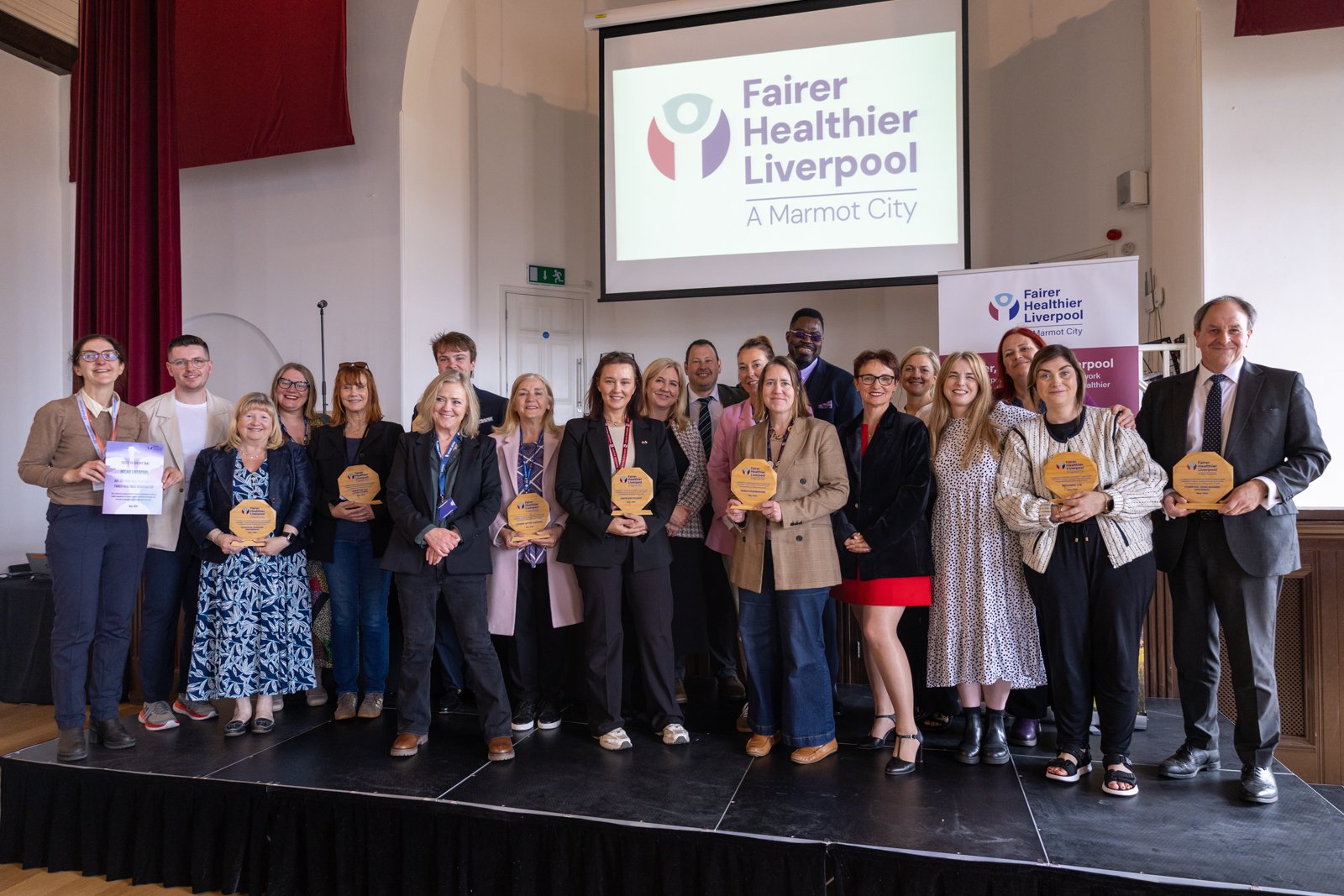
“Through the Fairer, Healthier Liverpool Partnership, we have brought together organisations from across local government, the NHS, universities, housing, education, the voluntary sector and local communities to take collective action. Guided by the Marmot principles, the partnership is helping ensure that fairness, prevention and health equity are embedded into everything we do.
“This progress would not be possible without the outstanding leadership and dedication of our Directors of Public Health and public health teams in Liverpool and across the city region. Their expertise, advocacy and tireless work to address the wider determinants of health have been instrumental in driving forward the Marmot agenda, strengthening partnerships and ensuring that reducing health inequalities remains at the forefront of our collective efforts.
“Over the past year alone, we have seen remarkable progress.
“We have strengthened our Health in All Policies approach, ensuring that health considerations are built into decisions about planning, regeneration and housing. We have expanded work that supports families to access healthier food, improved opportunities for community involvement in decision-making, and continued to focus on tackling poverty and the wider determinants of health.
“One of the achievements I am most proud of has been the launch and success of the Fairer, Healthier Liverpool Accreditation. Developed collaboratively by local partners, the accreditation enables organisations to showcase their commitment to the Marmot principles and highlight the actions they are taking to improve the social, economic and environmental conditions that shape health and wellbeing. Earlier this year, we celebrated the first accredited organisations, from community and voluntary groups to advice services and NHS partners. Together, they are demonstrating how organisations across the city can play a vital role in reducing inequalities and creating a fairer, healthier Liverpool.
“Their work shows that improving health inequalities is not something any single organisation can do alone. It requires a collective effort, strong partnerships and a shared belief that everyone deserves the opportunity to live a healthy and fulfilling life.
“That is why Liverpool City Region becoming a Marmot City Region is such an important development.
“The new commitment strengthens the work already being delivered through the All Together Fairer programme across Cheshire and Merseyside and creates greater alignment between local authorities, health partners and communities. It means that the principles driving change in Liverpool can now be supported and amplified across the wider city region.
“Importantly, it also reflects the opportunities that devolution provides. Many of the factors that influence health outcomes sit within areas of responsibility now held at city region level. Whether it is creating better transport networks, supporting people into good-quality employment, improving housing, investing in skills or driving economic growth, these policies can all contribute to reducing health inequalities if designed with health and fairness in mind.
“As Mayor Steve Rotheram rightly said, where you grow up, the job you do or how much money you have in your pocket should not determine how long or how well you live. That principle sits at the heart of the Marmot agenda and it is one that Liverpool has championed for many years.
“The transition from Marmot City to Marmot City Region is not about starting again. It is about building on the strong foundations that have already been established. It is about bringing partners together at every level and ensuring that health equity becomes a shared responsibility across the whole system.
“Liverpool has already shown what can be achieved when public services, communities, businesses and the voluntary sector work together towards a common goal. Now, with the support and leadership of the wider city region, we have an even greater opportunity to create lasting change.
“Together, we can tackle the root causes of inequality, improve the conditions in which people live, work and grow, and ensure that everyone across Liverpool City Region has the chance to live a longer, healthier and happier life.
“That is a vision worth working for, and one that I am proud to support.”
Man charged with stealing £1m worth of streetlamps from UK spots including Essex
John O’Sullivan, 20, of High Street in Barkway, near Royston, faces 38 theft charges covering alleged offences in Essex, Bedfordshire, Cambridgeshire, Durham and the Thames Valley area.
He also faces seven additional theft charges relating to incidents in Hertfordshire between September 17, 2025 and March 17 of this year.
He is due to appear at Stevenage Magistrates’ Court on August 5.
The lights and lanterns were stolen from councils, businesses, churches, schools and private owners.
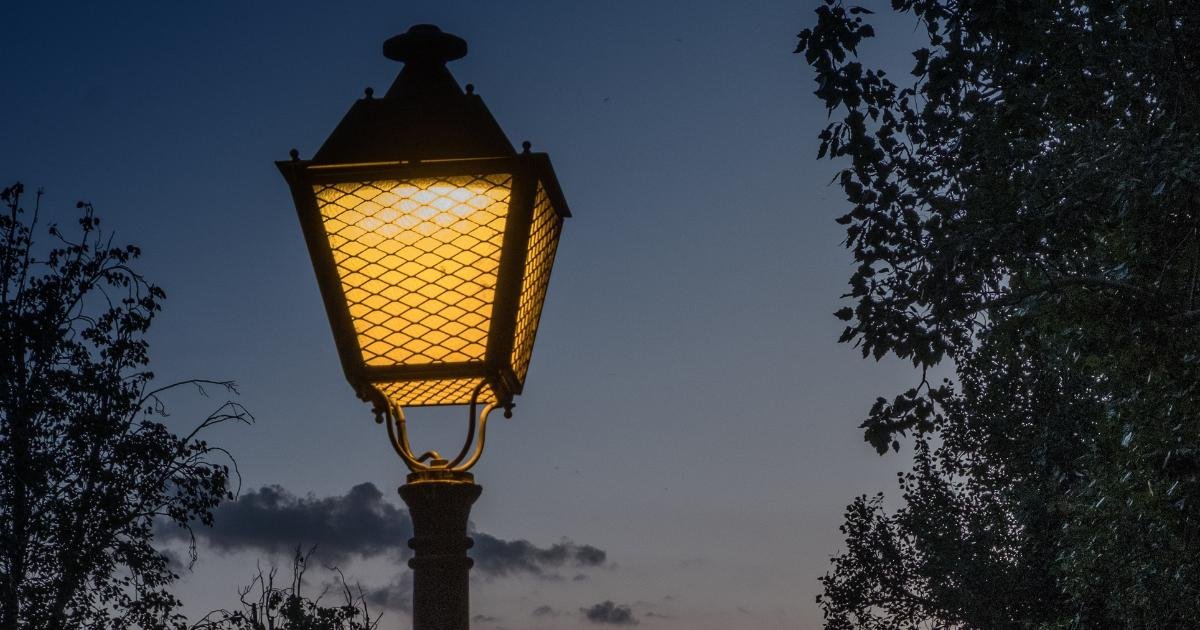
Grade II-listed 1950s street lamps known as Richardson Candles were among the items reported stolen from Cambridge city centre.
During the investigation, police recovered approximately 300 lights at a property in Barkway in January 2025.
Two others have also been charged in connection with the case.
Anna O’Sullivan, 66, and Richard O’Sullivan, 67, both of High Street, Barkway, have been charged with handling stolen goods.
They are due to appear at Stevenage Magistrates’ Court on August 12.
Details about thefts in Essex have not been released.
Inquest opens into the death of Wolverhampton found dead in a car park
Published 29th Jul 2026, 06:00 BSTAn inquest has opened into the death of a 34-year-old Wolverhampton man found dead in a Bridgnorth car park.The coroner for Shropshire, Telford & Wrekin, Mr John Ellery, heard on Tuesday that on June 5 this year, passersby found an unresponsive man in Severn Street car park in BridgnorthThe coroner’s court at the Guildhall, Shrewsbury heard that the man was Mr Andre Oraine Billings from Wolverhampton.Mr Ellery heard how members of the public began CPR on Mr Billings, who worked as procurement manager.On arrival of the ambulance service and police, paramedics continued with the CPR but Mr Billings was pronounced dead in the car park at 6.25pm.Mr Ellery adjourned the hearing for a full inquest until November 19.Continue Reading