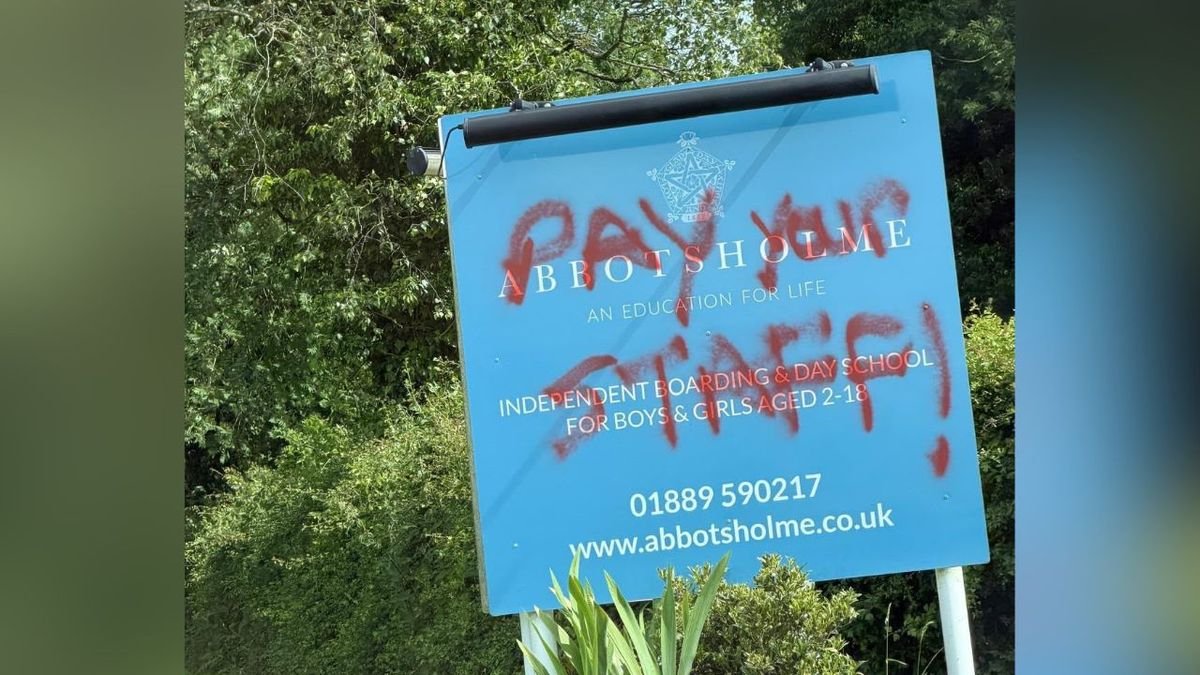
It has been a roller-coaster week at Abbotsholme SchoolAbbotsholme SchoolA troubled Staffordshire school has shut with immediate effect. Parents had been left stunned after being told Abbotsholme School, near Rocester, was to shut on Monday 22 June – before being given a stay of execution earlier this week.But in a further twist the school shut for the 2025/26 academic year on Wednesday 10 June. It is now only open for GCSE and A-Level exam students and leftover boarders.It comes as the school has been under new ownership since the end of May. Its staff have not been paid in May.In a letter to parents, school proprietor Tony Costigan said: “We are deeply aware of the worry and uncertainty that the recent news about Abbotsholme School may have cuased you and your family. Please know that the wellbeing and safety of every child in our care remains, and will always remain, our absolute first priority. From Thursday 11 June, and with the safety of pupils at the forefront of every decision we make, the school will be closed to pupils – with the important exception of those sitting examinations.”Get even more North Staffordshire exclusives – and it is free
Author: admin

Top Staffordshire school shuts with immediate effect

Liverpool City Region’s music sector worth £780 million – on track to become a £1 billion powerhouse | Growth Platform
A landmark new report has revealed that the region’s music industry contributes £780 million annually to the economy, supports more than 14,000 jobs, and is on a clear trajectory to become a £1 billion sector by 2035.The Liverpool City Region Music Economy: Toward a £1 Billion Sector provides the most comprehensive analysis ever undertaken of the region’s music industry. It reveals a sector that is significantly larger, more productive and more globally competitive than previously understood.Funded by the Liverpool City Region Combined Authority through its music industry development pilot, the report was commissioned by Liverpool City Council and builds on five years of sector development by the Liverpool City Region Music Board. Its findings were delivered by partners at the University of Liverpool, a key academic and research partner on the industry development programme.Drawing on detailed analysis of registered businesses, freelancers and the “portfolio” workforce that defines the modern creative economy, the report shows a music sector that outperforms national datasets — supporting more than 7,200 full-time equivalent roles, generating £406 million in GVA, and delivering a total annual economic impact of £780 million.Beyond the headline figures, the research highlights a distinctive and highly specialised industrial cluster, with strengths in live performance, technical production and music rights. This ecosystem is anchored by globally recognised organisations, including Sentric Music, Adlib Audio, Ditto Music and the Royal Liverpool Philharmonic, alongside a dense network of venues, studios and micro-businesses.Together, they position Liverpool City Region as one of the UK’s most important music economies outside London.Steve Rotheram, Mayor of the Liverpool City Region, said:“Music runs through this city region like a heartbeat — it always has. But this research shows it’s also a sophisticated, export-driven industry creating good jobs and powering growth right here, right now.“The pathway to a £1 billion music economy is within reach, and this report sets out how we get there. I’m incredibly proud of what we’ve built, and we’re committed to backing this world-class sector for the long term.”Jon Collins, Chair of the Liverpool City Region Music Board and CEO of LIVE, said:“Liverpool is rightly celebrated for its musical heritage and vibrant present, but for too long we’ve lacked the robust data to fully demonstrate the scale of the opportunity. This report changes that.“Over the past five years, we’ve seen how targeted support can strengthen the sector’s foundations. There is significant headroom for growth, and with continued investment and coordinated action, we can unlock even greater economic and cultural impact.”Cllr Harry Doyle, Liverpool City Council’s Cabinet Member for Culture, said:“This report underlines just how vital our music sector is – not just to Liverpool’s identity, but to our economy and future growth. From grassroots venues to global music businesses, we have a thriving ecosystem that supports thousands of jobs and attracts investment from around the world.“We’re proud to work alongside partners across the city region to nurture this success. By continuing to back talent, innovation and infrastructure, we can ensure Liverpool remains one of the UK’s leading music cities – and a place where creativity drives opportunity for everyone.”A growing, globally significant music clusterThe findings confirm Liverpool City Region as a nationally significant music powerhouse, with:Publishing and licensing employment nearly seven times the UK averageA thriving live music ecosystem of 500+ venuesA highly skilled freelance and technical workforce driving innovation and exportsThe report also identifies clear opportunities to:Strengthen artist value captureExpand music business and management servicesAccelerate music-tech and innovation activityAddressing these areas will help retain more value within the region and support long-term sector growth.Reaching the £1 billion milestone would require annual growth of just 2.5% — below historic UK creative industries growth rates — making the ambition both credible and achievable.The report provides a robust evidence base for future investment, planning and national policy engagement — reinforcing the case for music as a key driver of inclusive economic growth.The full report can be downloaded here.
Operating theatre staff in Beds could strike over overtime pay changes
Union says staff working extra are losing £120 a shift under new rulesA strike could be on the wayAuthor: Richard MuriePublished 1 hour agoLast updated 1 hour agoOperating theatre staff in Bedfordshire hospitals are preparing for potential strike action after voting unanimously against changes to their overtime pay, according to UNISON. The decision follows the Bedfordshire Hospitals NHS Foundation Trust’s move to cease time-and-a-half overtime payments for workers exceeding their 37.5-hour weekly contracts earlier this year. Under the new arrangements, staff must book additional shifts through the Trust’s ‘bank’ system, receiving standard pay rates for extra hours worked. As a result, experienced nurses and operating department practitioners are losing approximately £120 per shift. UNISON warns that the reduction in pay could exacerbate staffing issues and lead to increased cancellation of operations. Strike dates are likely to be revealed soon unless the Trust reintroduces the previous overtime rates, which would prevent industrial action entirely, the union stated. Staff reactions and union statementsUNISON Eastern head of health, Caroline Hennessy, commented on the situation: “The NHS is under huge financial pressure at the moment, but bosses shouldn’t go looking in theatre staff’s pockets to make their savings.” “This unanimous vote for strikes shows exactly how upset workers are at this raid on their wages.” “There’s still time to avoid strikes — the Trust just has to bring back the overtime rates that workers were paid already.” Elaine Inacio, a senior theatre assistant at Bedford Hospital, added her perspective: “Staff aren’t asking for anything extra, just the pay we were on before.” “It’s already stressful enough working in operating theatres, but morale has absolutely plummeted since this pay cut.” “Nobody wants to go on strike, but we’ve been left with no choice.” Trust’s response and future stepsA spokesperson for Bedfordshire Hospitals NHS Foundation Trust addressed the concerns raised by staff and unions: “We value our theatre teams enormously and fully recognise the skill, commitment and pressure involved in their roles.” “We are sorry that some colleagues feel distressed by the recent changes, and we are continuing to meet with staff and trade union representatives to listen to their concerns.” “Earlier this year, the Trust standardised overtime and additional hours payments for theatre staff so that all colleagues are paid consistently and in line with national NHS Agenda for Change arrangements.” “These changes were introduced to ensure fairness across our workforce, to bring legacy local arrangements in line with Trust wide standards, and to support the long-term sustainability of our services.” “We remain committed to working constructively with UNISON and our theatre teams, and we hope to avoid any industrial action.” The Trust emphasised its priority to maintain safe, high-quality patient care while supporting its staff as much as possible. Hear all the latest news from across the UK on the hour, every hour, on Greatest Hits Radio on DAB, smartspeaker, at greatesthitsradio.co.uk, and on the Rayo app.
MP’s ‘referendum’ shows opposition to Leicester expansion
Last year, Leicester City Council, Leicestershire County Council, the county’s seven district authorities and Rutland County Council were asked to set out their preferred visions for the future to the government.The city council’s proposal would see the city boundary widened in all directions to take in suburbs, towns and villages currently served by neighbouring district and borough councils.Areas that would be absorbed by the city include Oadby and Wigston, Blaby, Enderby, Braunstone Town, Glenfield, Anstey, Birstall and Syston.Leicester currently has a population of about 372,000, but that would grow to 623,000 under the proposal.The expansion would provide space for the city’s estimated future housing need of 30,000 new homes by 2046, the council said.The city council has also calculated the move would allow £46m of annual efficiency savings for councils across Leicestershire by reducing duplications of services, saving back office costs – allowing the money to be redirected to front-line services.Leicestershire County Council also believes there should be two unitary councils covering Leicester, Leicestershire and Rutland.However, it is opposed to losing any political territory to an expansion of the city council.Reform UK-led County Hall says its preferred business case would preserve historic borders and create one large council around the city serving some 800,000 residents.The county council says its proposal would save £40m annually by reducing senior management and back office costs, allowing more council tax to be put into services.Whatever the outcome, the county’s district and borough councils are set to be abolished.They, together with Rutland County Council, are proposing three unitary councils across Leicester, Leicestershire and Rutland, and their preferred option is called, North, City, South.A North Leicestershire and Rutland council would serve the area currently covered by Charnwood borough, North West Leicestershire district, Melton borough and Rutland County Council.A separate South Leicestershire council would cover the areas of Blaby district, Harborough district, Hinckley and Bosworth borough and Oadby and Wigston borough councils.The district leaders said their plan would create three equally-balanced councils, each serving about 400,000 people, delivering economic growth, and saving £44m in efficiencies.

Cambridgeshire man hopes to be crowned Britain’s fittest farmer
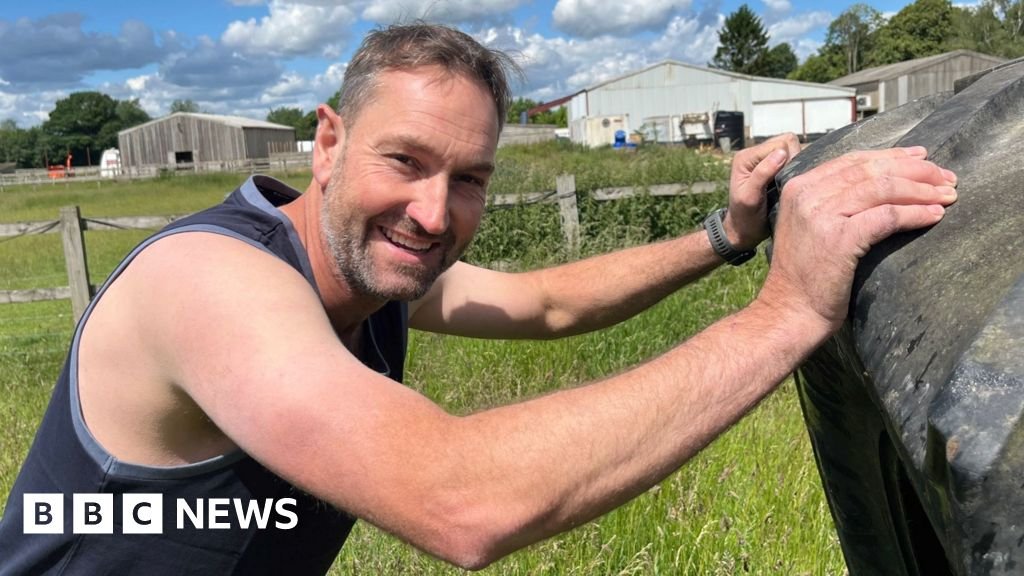
A farmer said he hoped to be crowned the fittest in Britain at an annual competition.David Wheatley, an arable farmer from Wisbech St Mary in Cambridgeshire, was inspired to enter this year’s Britain’s Fittest Farmer after watching the 2025 contest.He said he did not come from a fitness background, but started running after a fire at his farm in 2019 affected his mental health.He will be competing in the qualifying rounds of the competition at Lincolnshire Showground on 17 June.

UK metals company in business for 47 years crashes into administration
The industrial metal finishing company has been operating since 1979.A Staffordshire-based metal finishing firm that has served British industry for over four decades has collapsed into administration.Pym & Wildsmith (Metal Finishers) Limited, which dates back to 1979 and is based at Bramshall Industrial Estate near Uttoxeter, appointed administrators on June 3, according to a notice published in the London Gazette.
The firm, which specialises in metal treatment and coating, appointed Mark Blackman and James Saunders of KR8 Advisory as joint administrators.
READ MORE: {{title}}
Pym & Wildsmith has established itself as one of the Midlands’ foremost industrial finishing businesses, offering services including e-coating, powder coating, paint spraying, shot blasting, and pre-treatment. The company has provided services to clients across numerous sectors, including automotive, construction and engineering, defence, energy, rail, architecture, transport and water.
Having been in operation for 47 years, the industrial metal finishing company was originally founded in 1979 by Stephen Pym and Tony Wildsmith.The business transitioned from family ownership to 100% employee ownership in 2022, reports the Express.
On its website, the company describes itself as “one of the Midlands’ leading specialist industrial finishing companies”, supplying “high-quality services to a range of blue-chip customers”.
They added: “Pym & Wildsmith has over 45 years’ experience in the provision of high quality industrial finishes to UK industry. Our work can be seen in a variety of contexts, from heavy earth moving equipment to highly specialised small batches.
“We are based at our headquarters in Bramshall, Staffordshire. Therefore, we have access to the UK’s major motorway networks and road system. Our extensive office and manufacturing facilities include an EPD facility, box ovens, spray booths and pickling tanks,as well as a technical department.
“Over the past 5 years a programme of investment in processes, equipment and technology, has resulted in new products and services, as well as a growth in sales and customers.”The firm has garnered numerous positive reviews on Google.
One states: “The BEST experience with any finisher. Fantastic customer service. Responsive, organised, never have to chase for an answer and they do what they say they will do. They could not have been better.”
Another added: “Longstanding and successful company. Very professional and quality service.”

14,000 jobs. £780 million. New report reveals Liverpool’s music industry is bigger than anyone realised
Music flows through our veins in Liverpool City Region and today it’s been unveiled that the impact of the industry is much bigger than anyone realised, with a clear trajectory to become a £1 billion sector by 2035.
A new report has revealed that the region’s music industry contributes £780 million annually to the economy and supports more than 14,000 jobs. And if the report is anything to go by, it’s on track to be bringing in £1 billion within ten years.
Jay Hynd spoke with Metro Mayor of Liverpool City Region to find out just how big this news is, and how he plans to grow the industry even further.The Liverpool City Region Music Economy: Toward a £1 Billion Sector provides the most comprehensive analysis ever undertaken of the region’s music industry. It reveals a sector that is significantly larger, more productive and more globally competitive than previously understood.
Funded by the Liverpool City Region Combined Authority through its music industry development pilot, the report was commissioned by Liverpool City Council and builds on five years of sector development by the Liverpool City Region Music Board. Its findings were delivered by partners at the University of Liverpool, a key academic and research partner on the industry development programme.
Drawing on detailed analysis of registered businesses, freelancers and the “portfolio” workforce that defines the modern creative economy, the report shows a music sector that outperforms national datasets — supporting more than 7,200 full-time equivalent roles, generating £406 million in GVA, and delivering a total annual economic impact of £780 million.Beyond the headline figures, the research highlights a distinctive and highly specialised industrial cluster, with strengths in live performance, technical production and music rights. This ecosystem is anchored by globally recognised organisations, including Sentric Music, Adlib Audio, Ditto Music and the Royal Liverpool Philharmonic, alongside a dense network of venues, studios and micro-businesses.
Together, they position Liverpool City Region as one of the UK’s most important music economies outside London.
Steve Rotheram, Mayor of the Liverpool City Region, said:“Music runs through this city region like a heartbeat — it always has. But this research shows it’s also a sophisticated, export-driven industry creating good jobs and powering growth right here, right now.
“The pathway to a £1 billion music economy is within reach, and this report sets out how we get there. I’m incredibly proud of what we’ve built, and we’re committed to backing this world-class sector for the long term.”
The grand piano in a recording areas at SoundhouseJon Collins, Chair of the Liverpool City Region Music Board and CEO of LIVE, said:
“Liverpool is rightly celebrated for its musical heritage and vibrant present, but for too long we’ve lacked the robust data to fully demonstrate the scale of the opportunity. This report changes that.
“Over the past five years, we’ve seen how targeted support can strengthen the sector’s foundations. There is significant headroom for growth, and with continued investment and coordinated action, we can unlock even greater economic and cultural impact.”The findings confirm Liverpool City Region as a nationally significant music powerhouse, with:
Publishing and licensing employment nearly seven times the UK average
A thriving live music ecosystem of 500+ venues
A highly skilled freelance and technical workforce driving innovation and exports
The report also identifies clear opportunities to:
Strengthen artist value capture
Expand music business and management services
Accelerate music-tech and innovation activityAddressing these areas will help retain more value within the region and support long-term sector growth.
Reaching the £1 billion milestone would require annual growth of just 2.5% — below historic UK creative industries growth rates — making the ambition both credible and achievable.
The report provides a robust evidence base for future investment, planning and national policy engagement — reinforcing the case for music as a key driver of inclusive economic growth.
The full report can be downloaded here.Get the latest music news for Liverpool City Region HERE.

Ryston’s Mills chasing a unique county treble
Tiff Mills expects the Norfolk Ladies golf team to be very competitive this week when they will try to clinch the East region title for a third straight year.The side triumphed in the annual ‘County Match Days’ at Felixstowe Ferry in 2024 and repeated the feat in Bedfordshire 12 months ago.Mills, who secured the winning point last time, will captain Norfolk in the flagship championship, which takes place from June 12-14 at St Ives Golf Club in Cambridgeshire.Norfolk golf captain Tiffany Mills, who plays for Ryston Park. Picture: Rushmer PRThe Ryston Park golfers’ nine-strong side begins its three-peat attempt on Friday morning, lining up against Essex. Norfolk will go on to face Hertfordshire, Suffolk, Bedfordshire and Cambs & Hunts.Each match comprises two foursomes and three singles ties. And the winner of the round robin tournament will earn the right to tee up in late July in the English Women’s County Finals at Betchworth Park, Surrey.Mills, 35, joked: “I think we’re always going to have a target on our back being double reigning champions – everyone will be out to get us!“But we have strong singles players and it’s just getting those foursomes right. “Foursomes is tricky because it’s not something we practise throughout the year. But we’re lucky we’ve got some players from the same club that have played together before. “We’ve got a slightly different team to previous years. We’ve got a couple of rookies – Anita Booth and Ruby Reeve.“Anita played for the County 2s last year and she’s got a very steady game and a match play head, so I think she’ll make a good partner.“Ruby’s really determined and very committed to the county – and that’s what you want as part of your team. “We’ve also got Laura Todd, a player who came from Cambridgeshire and is now playing for us.”Mills is pleased to have talented Chloe Tarbard returning to the side. Also in the line-up is fellow teenager Amelie Marling, another fine young player to have come through Norfolk’s junior girls programme. Last year’s Norfolk Ladies county champion Harriet Allsebrook, former county captain Jo Herd and Ruby Patterson complete the team.For Mills, it will be the 20th significant tournament in which she has represented her home county. The career greenkeeper first played County Match Days in 2011 and, on five occasions, has been part of a winning team that’s progressed to the national finals.Captaincy brings fresh challenges but Mills is happy to embrace them as part of her journey within the Norfolk Ladies set-up.The 2024 women’s county champion said: “I did have to think hard about it because I still play golf quite competitively and to have the responsibility of everyone else is quite daunting. But obviously, I’ve been part of county golf for a long time and am giving something back.”Mills pinpoints team spirit as a key strength to Norfolk Ladies golf. And the team’s togetherness, alongside it’s undoubted ability, has led to a welcome association with insurance company Adrian Flux. Mills added: “We are grateful for the ongoing support from Adrian Flux, whose generosity has helped give us more opportunities. And, thanks to them, we are delighted to have some additional kit to wear this week.”*Scores from each match will be available to view via www.norfolkladiesgolf.co.ukNorfolk team: Tiff Mills (Ryston Park), Harriet Allsebrook (Hunstanton), Anita Booth (Royal Cromer), Jo Herd (Royal Norwich) Amelie Marling (Barnham Broom), Ruby Patterson (Royal Cromer), Ruby Reeve (Thetford), Chloe Tarbard (Royal Norwich) Laura Todd (Thetford). Non-travelling reserve: Tracey Williamson (Sheringham).Picture caption (credit Rushmer PR): Tiff Mills leads Norfolk Ladies in their bid to land a third successive East region crown
Police investigate reports of gunshots in Newbold Verdon
Detectives are investigating reports of gunshots in a village in Leicestershire. Armed officers were deployed in the interest of “public and police safety” to Brascote Lane, Newbold Verdon, shortly before 22:40 BST on Tuesday, Leicestershire Police said.On arrival, they found that damage “consistent with a firearm having been discharged” had been caused to a house and a car. No-one was injured in the incident, the force added. A police cordon remains in place while forensic officers investigate the scene.The force said it did not believe the incident was connected to a separate investigation after gunshots were heard at a property in Cort Crescent, Braunstone, on 3 June. A 40-year-old man has been arrested on suspicion of conspiracy to possess a firearm with intent to endanger life in connection with the earlier incident. He remains in custody. Det Insp Louise Rooke said: “I appreciate incidents of this nature may cause some concern, but I would like to reassure the local community that detectives are working hard to establish the full circumstances surrounding these incidents. “Local officers have been briefed and are providing reassurance patrols. They are approachable and will discuss any concerns you may have.”

New hand on deck – Cambridge News
Deb Hann
This week I’d like to introduce the new Cambridge Station Support Officer, Lauren Fletcher.
Deb Hann
Lauren joins us from outside police and brings experience from roles centred on caring for and supporting people. A lifelong Cambridge local, she is married with four children. One of her favourite things to do is to head to Mount Maunganui to walk and relax, with a nice dinner out afterwards. As her husband is a high-ranking speedway saloon driver, family summers feature travel to race meetings around the North Island. We welcome Lauren to the team.
Fieldays is now underway at Mystery Creek, bringing an influx of visitors and traffic into Waipā. With winter conditions setting in, please take extra care on the roads. Drive to the conditions, stay alert to what’s happening around you, be patient and prepared for delays. Allow extra travel time. Even without these traffic pressures, over the seven days to Monday this week Cambridge police had attended seven traffic crashes, while Te Awamutu staff dealt with four.
There were some good local traffic catches in the last week. Last Friday, Police received reports of a vehicle driving dangerously as it travelled from Tauranga though to Cambridge. It was stopped on Tīrau Rd, where breath alcohol testing of the driver returned a result over four times the legal limit. Te Awamutu Strategic Traffic staff also stopped a second impaired driver in a rural area, who again returned a high reading four times the legal limit. Making a hat trick, another vehicle was observed travelling at speed on a rural road in wet conditions. The driver’s increasing speed then caused him to lose control, and he now faces driving charges in court.
E-bikes vs E-dirt bike
Finally, police nationwide are seeing increasing numbers of young people illegally riding high-powered e-dirt bikes.
An e-bike is bicycle with a motor that helps you pedal and riders are not required to hold a licence.
It is not a legal e-bike if it has a power output of more than 300W or can move without pedalling. (limited throttle only start for stability prior to pedalling is permitted). In that case, the rider must hold some form of driving licence.
Electric and petrol dirt bikes and “choppers” without pedals (which are a moped or motorcycle) and pedal assisted mopeds are not classified as e-bikes.
Similarly , if the speed capacity is 50kph or less it’s a moped – over 50kph and it’s a motorbike.
Before purchasing, parents and caregivers should understand the legal requirements and also that many devices being sold today cannot be used in public places such as roads and footpaths. Further information may be found on the NZTA website.