A man accused of a triple-murder in Bedfordshire has been caught and hauled into a court in South Africa. Ndodana Mkhanyisi Tshuma, 45, has been accused of killing his wife Nothabo Zandile Tshuma, 42, and her daughters Natalie, 15, and Nala, 5, in Great Denham. Mr Tshuma – a British citizen of Zimbabwean heritage – was arrested by South African officers in Johannesburg on Friday with support from Interpol. After he was snared, the Crown Prosecution Service authorised three murder charges against him, with South African authorities also accusing him of illegal possession of a firearm – which carries a sentence of up to 15 years in the country. The bodies of Mrs Tshuma and her daughters were discovered on July 6, with a post-mortem examination determining their cause of death as blunt force trauma. The 45-year-old appeared at Johannesburg Central District Magistrates’ Court on Monday, where he was seen with “bloodshot eyes” and appeared “incredibly distressed”, according to Sky News Africa. The South African court will determine whether he should be extradited back to Britain to face his charges.Although the two countries have an extradition treaty in place, South African law requires all suspects to appear before domestic courts before being sent to another country. Mr Tshuma – a British citizen of Zimbabwean heritage – was arrested by South African officers in Johannesburg on Friday | REUTERSAuthorities are still determining whether Mr Tshuma – who was remanded into custody – is in the country illegally. Following his arrest, a South African police spokeswoman said: “According to our investigation, after landing in South Africa on July 5, he then went to one of the townships and he bought this particular unlicensed firearm.”She confirmed that British authorities have submitted a provisional extradition request, however, a full document has not yet been handed over.The spokeswoman said that Mr Tshuma’s relatives in South Africa played a “very pivotal role” in the murder suspect’s capture. The bodies of Mrs Tshuma and her daughters were discovered on July 6 | BEDFORDSHIRE POLICE”His family did not harbour him,” she stressed. The 45-year-old is said to have fled Britain roughly 48 hours before the bodies of his wife and her daughters were discovered.In a statement following their deaths, relatives said: “The Khumalo family is deeply saddened to confirm the passing of our beloved Zandile [Nothabo] Khumalo and her two children.”During this time of unimaginable loss, we wish to express our heartfelt gratitude to everyone who has reached out with prayers, messages of comfort, and support.The 45-year-old is said to have fled Britain roughly 48 hours before the bodies of his wife and her daughters were discovered | BEDFORDSHIRE POLICE”Your kindness and compassion have brought great strength to our family.”Following the suspect’s arrest, Detective Inspector Lee Martin, senior investigating officer at Bedfordshire Police, said: “This has been a fast-moving investigation which has involved multiple law enforcement partners, including the National Crime Agency, Interpol and authorities in both Zimbabwe and South Africa.“Thanks to the tireless work and dedication of all those involved, we have managed to swiftly locate and arrest Ndodana Mkhanyisi Tshuma, who we want to speak to in connection with this shocking and tragic case.“Our investigation remains ongoing and we’ll be working closely with our counterparts in South Africa, as well as the National Crime Agency and the Crown Prosecution Service, to bring him back to this country.“Our thoughts remain very much with Zandile, Natalie and Nala, as well as their loved ones, at this time.”
Author: admin

Bedfordshire murder suspect seen with bloodshot eyes after being caught and hauled into court in South Africa

Collins Aerospace opens UK Engineering Centre of Excellence – MM Media
Collins Aerospace, an RTX business, has revealed that its Engineering Centre of Excellence (CoE) in Wolverhampton is now fully operational, advancing next-generation electric thrust reverser actuation systems (elecTRAS™). The CoE is home to a new state-of-the-art, modular and scalable test facility designed to facilitate innovation in aircraft actuation system design, testing and certification.With a more streamlined solution, elecTRAS supports the elimination of actuation hydraulic interfaces and fluids and facilitates a 15-20% reduction of the nacelle actuation weight at the integrated aircraft system level. Wolverhampton’s advanced testing capabilities simulate real-world conditions for aircraft components, actuators, subsystems, and full systems. By integrating early-stage test results into system analysis, potential issues are resolved quickly, reducing delays and enhancing distinctive design scalability for future applications.Ajay Mahajan, president of Advanced Structures at Collins Aerospace, said: “Our Engineering Centre of Excellence reflects RTX’s commitment to delivering innovative, efficient and cost-effective solutions for the aerospace industry. This unique modular approach supports the industry’s transition to more-electric systems, aligning with original equipment manufacturers’ forward-looking goals while improving fuel efficiency, operational performance, and ease of maintenance.” Pic: Engineers at the elecTRAS Centre of Excellence in Wolverhampton are advancing electric thrust actuationThe Wolverhampton test capability spans from modules to integrated systems. This allows for scalability and interchangeability, reducing development time and cost while enabling the facility to support multiple programs and system variants.Co-located elecTRAS systems and nacelle actuation design expertise streamlines development and fosters efficient collaboration. Highly skilled engineers at the facility are driving innovation in electric systems, smart algorithms, and motor control architecture, while continuing to support current fleets. Already in use on the Airbus A350 family, Collins’ elecTRAS technology has logged more than 15 million flight hours and 2.2 million flight cycles on more than 700 aircraft as of 2025.Collins Aerospace provides advanced aerospace and defence solutions across avionics, aircraft interiors, aerostructures and engine components, mission systems, and power and control systems.

Government decision on Leicester boundary expansion due
The government is set to announce this week whether Leicester’s political boundary should expand to absorb surrounding towns and villages. Currently, the county, city and neighbouring Rutland are served by 10 local authorities delivering a range of public services, including education, social care, highways, waste collection, planning, housing, and leisure.However, ministers say they want to streamline local government across England by creating fewer, but larger councils with greater devolved powers.The Ministry of Housing, Communities and Local Government (MHCLG) has been considering three options for Leicestershire’s future political map.Labour-led Leicester City Council has suggested its border should move outwards in all directions into areas currently served by neighbouring districts or boroughs.However, the proposed city expansion has proved controversial with Reform UK, Conservative, Liberal Democrat and Green politicians in the county who have argued the government is forcing unwanted and unnecessary upheaval on residents.On Monday, Labour local government and housing minister Alison McGovern told MPs the shake-up would provide stronger councils able to make quicker decisions.She said a decision would be announced this week before MPs leave parliament for their summer break. The government has rejected calls for its proposals to be put to a local referendum before a final decision is made.

Locals slam ‘concerning’ post delays with no letters delivered in ‘over a month’
One resident said they find it ‘completely unacceptable’Royal Mail has failed to deliver post to people in ‘weeks and weeks'(Image: PA)Residents said it is “deeply concerning” that their post has not been delivered in weeks, after experiencing similar delays earlier this year. People who live in the Hampton area of Peterborough claim they have not had post delivered for weeks, with some claiming they haven’t received any letters in more than a month.As a result of the delay, people said they are missing important letters such as birthday cards and medical appointments. Sheila White, who has not received post in around two weeks, said she finds the delays “deeply concerning” and “completely unacceptable”.She added: “I was waiting for important insurance documents, which I ended up having to contact the company to ensure continuity of the cover. In the UK, we have always had a reliable postal service upon which many people depend.“Elderly people who can’t manage or cope with technology are now isolated and unable to rely on receiving relevant communications by post, which means they are potentially missing medical or other significant information and appointments.”Sheila’s husband also did not receive a Father’s Day card from his daughter, which left him feeling “forgotten and sad”. Sheila added: “The excuse of lack of staff is utterly irrelevant. It’s their responsibility to deliver the service they are supposed to provide.”A Royal Mail spokesperson said it recognises how “important reliable deliveries are”, when people are waiting for letters such as for medical appointments. They added: “We are delivering mail in Hampton. However, some deliveries have recently been affected by short-term local issues, including sickness absence.“We are working to return the service to normal and clear any outstanding mail as quickly as possible, with items not delivered that day prioritised for the next working day.”Phil Abbott, who lives in Hampton Vale, said he hasn’t received post in around five weeks. Due to the delay, he has missed “important medical appointments, business mail, birthday cards and bills to pay”. He said: “I think it’s absolutely disgraceful and a dereliction of contracted duties by Royal Mail.”Phil said he believes there needs to be an improvement in communication from Royal Mail. He said: “Don’t just leave people hanging with no information. What are they doing to resolve the issue and what will they do to prevent it happening again?”The last time Margaret Matthews received any post was around three weeks ago. She said she has missed insurance documents and believes the lack of post could affect elderly people who cannot access to the internet.She said: “I’m 75 and quite computer savvy, and use them no problem. There are people who can’t because they have never used computers.”Margaret believes there needs to be more regulation in place for the Royal Mail, as people pay for a “service”. She added: “Because it’s regulated, why are they not doing anything about it?“It’s not just Peterborough, it’s nationwide. Surely they should be held to account for their responsibilities? They have got to get their staffing levels right.”Kelvin Cowell said that after a couple of weeks with no post, he received a large load in one go. He said: “[This included] a new bank card, pin number, online banking details and a card reader for a new account, all of which were sent on different dates by the bank.“Equally annoyingly, none of the post was recent, so who knows when that’ll start to turn up? It’s all well and good advising people to go to the sorting office and collect, but their hours aren’t great for those that work. We are paying for a delivery service and they’re clearly not meeting their commitments.”Donna Spriggs hasn’t received letters in “up to four weeks”. She said: “When they did come, there was important mail that arrived late.“[I have no] idea why we are not getting post regularly. They are saying we can collect from the sorting office, which we shouldn’t have to do and not everybody has transport.”Samantha Mclennan is also frustrated that she hasn’t received post for “weeks and weeks”. She said: “I had to call them [Royal Mail] around two weeks ago as I was waiting on important hospital letters and important HMRC letters.“They delivered approximately 15 letters about a week later, following my call. Some of the letters were dated May, and I’ve not received any post since then.”The Royal Mail spokesperson said that it is “rare” for post to be delayed by a month or more. They added: “A delay of a month would be exceptionally unusual and would suggest an issue with an individual item rather than the wider service. Our latest performance shows that more than 92% of letters are delivered on time and over 99% within a week, meaning longer delays are rare.”

Leeds United near deal for 22-year-old as selling club expect transfer exit
Leeds United
Credit: ImagoLeeds United have already signed Harry Wilson on a free transfer and are now pushing to finalise deals to improve their defence and midfield.
The Yorkshire giants finished 14th in their first season back in the Premier League. However, they are aware that the second season is likely to be tougher.
Most Read on The Leeds Press
Daniel Farke is seeking to strengthen several areas of their squad ahead of the summer, with particular emphasis on adding defensive and attacking reinforcements.
However, Leeds have been working behind the scenes for several weeks to sign one of their long-term targets, and an agreement now appears to be edging closer as the selling club prepare for the player’s departure.
Read More: Leeds United nearing breakthrough in deal to sign £25m midfielder
Selling club expect Leeds United target’s sale
Daniel Farke has been keen to add major upgrades to his squad, even in areas where they seemingly look well-stocked ahead of the new season.
The Leeds boss is aware that he needs better options across the pitch to ensure Leeds stay away from the relegation quagmire in the 2026/27 campaign.
Leeds have been in negotiations with Southampton for weeks over a deal to sign Shea Charles, and this deal has been anything but straightforward.
The Saints have slapped a £30m asking price on the midfielder and have already rejected two offers from Leeds this summer.
Leeds held more positive talks with Southampton towards the end of last week and have been expecting an imminent solution.
According to journalist Ben Jacobs, Southampton expect to sell the midfielder in the ongoing transfer window.
Despite the belligerence in negotiations, the Championship side expected Charles to leave before the transfer window closes.
With Southampton and Leeds expected to fly out for their pre-season tours in the coming weeks, a deal is likely to be finalised soon.
There has been talk of other clubs showing an interest in Charles, but Leeds believe they are firmly in the lead to sign him this summer.
The midfielder wants to join the Whites and his camp are pushing Southampton to agree on a fee soon.
Leeds United do not want to overpay for Shea Charles
Shea Charles remains one of Leeds United’s priority targets this summer, but the club are determined not to overpay despite Southampton’s firm stance.
The 22-year-old has just one year remaining on his contract and is still relatively untested at Premier League level. Leeds feel Southampton’s £30m valuation is excessive for a player who is yet to establish himself consistently in the top flight.
The Saints have already turned down bids of up to £23m, but negotiations have continued, with Leeds seeking a middle ground that works for both clubs.
If the deal goes through, the Whites are hopeful it can be completed for a fee closer to £25m rather than Southampton’s original asking price.
Double-yellow lines plan for 62 Stoke-on-Trent streets
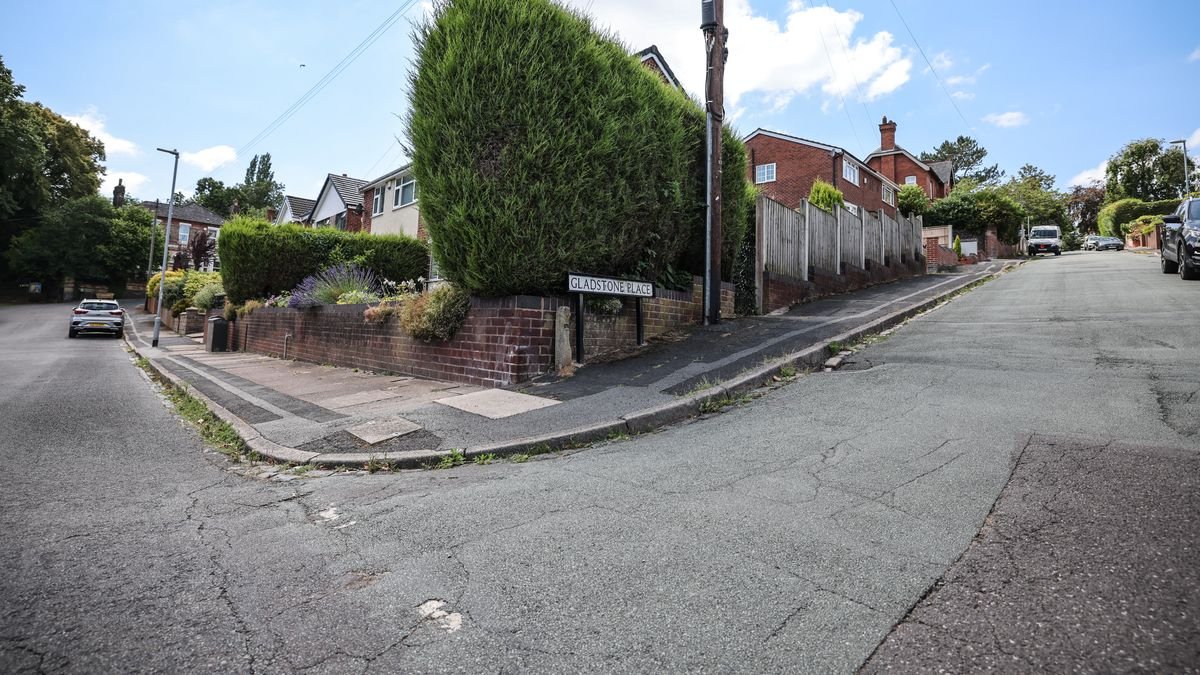
Double-yellow lines are set to be painted on 31 Stoke-on-Trent junctions. Stoke-on-Trent City Council is currently consulting with motorists, residents and businesses after listing 62 streets across the 31 junctions.The consultation runs until Thursday 16 July.The council wants double-yellow lines on the following junctions:Abbey Lane and Abbey Road, in Abbey HultonAshendene Grove and Ampthill Place, in TrenthamAshworth Street and Smithpool Road, in FentonAtholl Rd and Lennox Road, in NormacotBankhouse Road and Ivy Grove, TrenthamBemersley Road and Whitfield Road. in Ball GreenBlurton Road and St Margarets Grove, in BlurtonBlurton Road and Whitaker Road, in BlurtonBramley Place and Greenwood Avenue, in Trent ValeBrierley Street and Ford Green Road, in SmallthorneCumming Street and Trafalgar Road, in HartshillElder Road and Rushton Road, in CobridgeLondon Road and Flash Lane, in Trent ValeGladstone Place and Munster Terrace, in PenkhullGoms Mill Road and Byatts Grove, in LongtonHareshaw Grove and Rainham Grove, in Fegg HayesHawkins Street and Napier Street, in FentonIvy Grove and Jubilee Road, in TrenthamKnypersley Road and Whitfield Road, Ball GreenMain Street and East Street, in Weston CoyneyMain Street and Bannock Street, in Weston CoyneyNapier Street and Stewart Street, in FentonNapier Street and Ashworth Street, in FentonNapier Street and Edison Street, in FentonNursery Lane and Roundfields, in Stockton BrookPetersfield Road and Farland Grove, in ChellRiverdale Drive and Sudbourne Close, in PackmoorRonson Avenue and Newcastle Lane, in Trent ValeRuby Close and Sapphire Drive, in Norton HeightsWell Street and Waterloo Street, in HanleyWilson Road and Mayne Street, in HanfordTo take part in the consultation, email here quoting reference: DF/NM/TRO8/2026.Get even more North Staffordshire exclusives – and it is freeWhat do you think of the state of the roads in Stoke-on-Trent

London weather LIVE: Heatwave temperatures to rise again as capital faces a month without rain – AOL
Megan Howe and Michael HowieUpdated Tue, 14 July 2026 at 5:47 am UTCTemperatures are expected to exceed 30C on Tuesday as the heatwave shows little sign of ending.The Met Office is forecasting the heat to intensify once again after the capital baked in the ninth straight day of heatwave conditions on Monday.Almost no rain is forecast for London for the next two weeks. If the predictions pan out, London will have had zero rain for at least 30 days.The warm dry conditions will raise fears among many Londoners of a hosepipe ban in the capital and more wildfires after two blazes in recent days triggered major travel disruption.Follow the latest updates below.Read MoreLondon’s last barbecue-friendly parks announce bans amid ‘extreme’ wildfire threatHeatwave fuels 19 wildfires across UK as more health warnings issuedCreate firebreaks around gardens to protect homes from wildfires, Londoners toldWhat is the weather forecast for London today?06:45 , Megan HoweTemperatures are expected to remain high today following a week of hot weather, with highs of 30C in the capital according to the Met Office.But BBC weather is forecasting highs of 32C in southern England. Despite a cloudy start, temperatures will increase as the day goes on, with a gentle breeze expected. The UV for the capital is ‘very high’ today and Londoners are advised to avoid direct sunlight from 11am to 3pm. Shirts, sunscreen and hats are essential. Good morning06:39 , Megan HoweWelcome to our live blog covering the ongoing heatwave that is gripping London and the rest of the country. Stay tuned as we bring you the latest weather-related updates.

Transfer news LIVE: Tottenham eye Omar Marmoush as Inter Milan chase Liverpool ace
July 13th©IMAGO
The summer transfer window has officially opened and while the main attention is on the World Cup, clubs are working away on major deals. For most clubs, planning will already be complete and they will have identified which players they want to sign, and which players they want to sell.
Managers will be constantly assessing their squads with sporting directors and recruitment staff scanning the market for potential deals this summer. The rumour mill is still gathering pace and we’ve collated some of the biggest current transfer stories – you can access the full rumour mill below.
Today’s biggest transfer storiesInter Milan are preparing another bid for Curtis Jones. Liverpool have already rebuffed an opening offer for around €25m for the midfielder but Jones is expected to depart Anfield with his contract expiring in 2027.
Roma are currently the leading candidates to sign Alejandro Garnacho. The Argentine winger is not part of Xabi Alonso’s plans with Chelsea setting a price tag of €50m, which will be prohibitive for Roma but a loan deal remains possible.
Tottenham and Newcastle United are reportedly interested in Omar Marmoush. The 27-year-old has struggled since moving to Manchester City from the Bundesliga and Enzo Maresca’s men will entertain offers this summer.
Note:
When you search for something on Google, you’ll see a box with the latest news alongside the usual results. If you set Transfermarkt as your preferred source, our content will appear there more often.Add Transfermarkt as your preferred source here.

Post-Mortem Reveals Horrific Cause Of Death For Ndodana Tshuma’s Wife And Daughters
Post-Mortem Reveals How Ndodana Tshuma’s Wife And Daughters Died
The cause of death of Ndodana Mkhanyisi Tshuma’s wife and two young daughters has been officially revealed following post-mortem examinations carried out in the United Kingdom.
Authorities confirmed on Monday, 13 July 2026, that Nothabo Zandile Tshuma, 42, and her daughters, Natalie, 15, and Nala, five, all died from blunt-force trauma after their bodies were discovered at their Bedfordshire home on 6 July.
Post-Mortem Confirms Blunt-Force Trauma
Bedfordshire Police said the post-mortem examinations established that all three victims died from blunt-force trauma.
Blunt-force trauma is a medical term used to describe severe injuries caused by a forceful impact from a hard object or surface. Unlike stab wounds or gunshot wounds, the injuries are caused by powerful blows that do not pierce the body. Police have not disclosed what object, if any, may have been involved.
The bodies of Zandile and her daughters were found at their £1.3 million home after concerns were raised when they had not been seen for several days.
The forensic examinations were conducted under the direction of the Bedfordshire, Cambridgeshire and Hertfordshire Major Crime Unit as investigators continue building their case.
Police Urge Public Not To Speculate
Following the release of the post-mortem findings, Bedfordshire Police urged the public to avoid speculation while criminal proceedings continue.
Detective Inspector Lee Martin, the senior investigating officer, said:
“This case has attracted a huge amount of media coverage and we are aware of international reports circulating which contain some speculation about this case.”
He added:
“With three murder charges authorised by the Crown Prosecution Service, proceedings around this case remain active and we are not able to provide any further detail at this stage.”
Martin said investigators would continue working closely with the Crown Prosecution Service and international partners as the investigation progresses.
Suspect Remains In Custody
The release of the post-mortem results came on the same day Ndodana Tshuma appeared before the Johannesburg Magistrates’ Court in South Africa after his arrest last week.
South African Police Service (SAPS) said he was arrested during an operation involving Interpol, Crime Intelligence and the Organised Crime Investigation Unit. British prosecutors have authorised three murder charges against the 45-year-old, while the process to return him to the UK is underway.
The latest post-mortem findings provide the clearest official account yet of how Zandile Tshuma and her daughters died, although investigators have stressed that further details will only emerge through the court process.
Roberto De Zerbi set to make key transfer decision after Spurs ‘reject’ three approaches for 12-goal forward – Sports Mole
Tottenham have reportedly turned down three approaches for young forward Will Lankshear.The striker spent time in the youth system at Arsenal and Sheffield United before he joined Tottenham in 2022.Lankshear, who has made three appearances for Tottenham’s first team, spent time out on loan at West Bromwich Albion in the second half of the 2024-25 season and at Oxford for the entirety of the 2025-26 campaign.The 21-year-old netted 12 goals in 47 competitive appearances for the U’s, including 11 goals and four assists in 44 Championship matches.© Imago / PPAUKTottenham turn down three Lankshear approachesWhile he could not keep Oxford in the second tier, Lankshear’s impressive performances saw him named the club’s Young Player of the Season.According to football.london, Tottenham have already received plenty of interest in Lankshear this summer.The report claims that the north London club have turned down approaches from the Championship duo of Wolverhampton Wanderers and Southampton, as well as Portuguese giants Sporting Lisbon. The offers were said to be worth eight figures as either a permanent transfer or a loan with an obligation to buy.
Tottenham are yet to make a decision over Lankshear’s future, but it would take a significant fee to sanction his exit. © ImagoDe Zerbi to make Lankshear decisionSpurs boss Roberto De Zerbi is expected to have a major say in whether Lankshear remains with the club beyond the end of the summer transfer window.Lanskhear has returned to Spurs for pre-season training, giving De Zerbi the chance to assess him before making a final decision, which could happen before the squad heads to New Zealand and Australia for their pre-season tour next week.As it stands, Lankshear may struggle for minutes on the pitch if he stays put, with Spurs looking to add a centre-forward to their current options of Dominic Solanke and Richarlison.However, there is a possibility that Richarlison could leave, especially as he only has a year left on his contract.