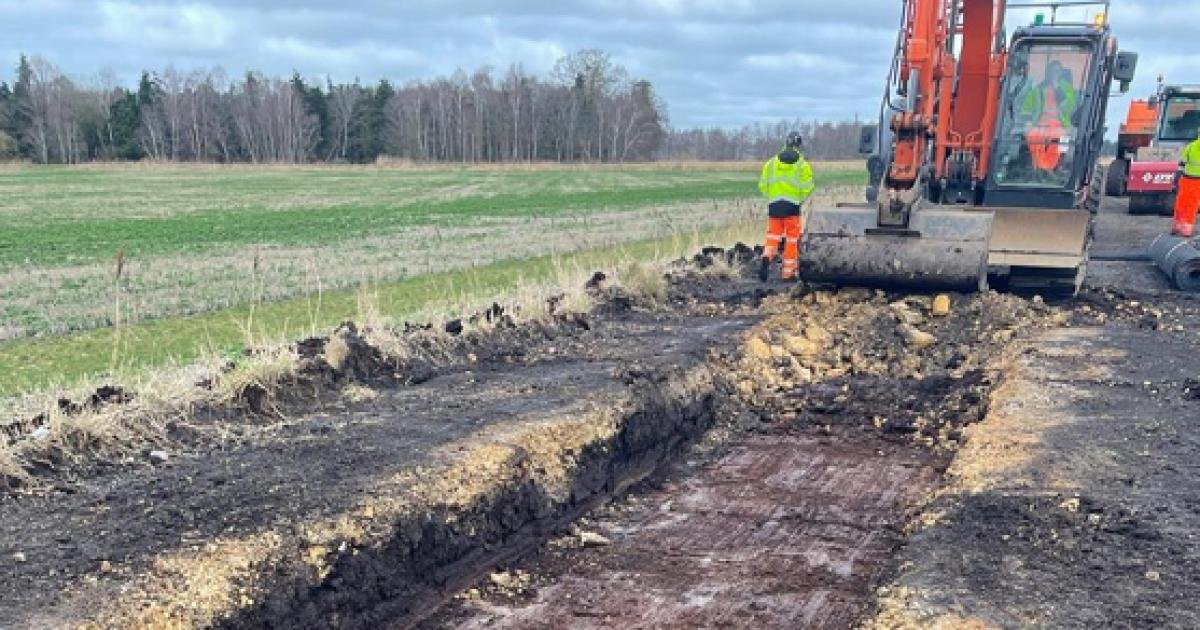
A busy city road closed to traffic in June when a sinkhole appeared has reopened.The hole on Milton Road in Cambridge was first spotted on 22 June and was estimated to be up to 3m (10ft) deep.Cambridgeshire County Council said repairs had been delayed by a damaged sewer. An Anglian Water spokesperson told the BBC it had been fixed towards the end of July.The council thanked “everyone in the community for their patience and understanding”, as well as highways officials “for their hard work and dedication in resolving this complex issue”.
Category: Cambridgeshire

Cambridge road reopens after sinkhole filled with concrete
Health alerts issued across the East of England
Amber heat health alerts have been issued across the East of England after temperatures are expected to rise again.Parts of Essex, Bedfordshire, Buckinghamshire and Hertfordshire are due to hit 31C on Monday, according to BBC weather. The UK Health Security Agency (UKHSA) warned that the weather could significantly impact health and social care services due to the high temperatures, including a rise in deaths, particularly among vulnerable people.The warning is in place from 09:00 BST until the same time on Tuesday.In Cambridgeshire, Northamptonshire, Norfolk and Suffolk temperatures are due to reach up to 30C.Monday is expected to bring the hottest weather of the next seven days, with a surge of hot air moving north from France.On Wednesday the Environment Agency declared more than half of England was in drought. As a result of successive heatwaves hosepipe bans are also in place across the region.Do you have a story suggestion? Contact us below.

‘Dad didn’t want to stay in hospital – I’m so glad he’s being treated at home’ – AOL
“I don’t want to be in hospital, of course not – I want to be free and easy,” says Clifford Craske.For the 96-year-old retired architect, hospital visits have become a familiar part of life.But now, under a new initiative, he is among a number of residents receiving specialist care without having to leave their care home. At Heathlands House Care Home in Cambridge, doctors are visiting residents in person, providing assessment, ongoing care and clinical support as part of the Enhanced Reviews in Care Homes (EnRICH) service.Clifford receives a check-up at his care home from Dr Matthew ButlerClifford, a retired architect, has several health issues including dementia, heart failure, diabetes, and COPD (a progressive lung disease) and has previously had a stroke. In the year before the EnRICH service started at the home, Cambridge University Hospitals NHS Foundation Trust (CUH) says he attended hospital three times, but has since been supported by hospital geriatricians and avoided being readmitted.On her father’s hospital visits, Alice Craske, 67, says: “For him, it is very traumatic. As soon as he was in the hospital he didn’t want to stay.”By him being treated here, within the care home, it is much more settling for him and he is very happy here and sees this as home now, which is very important for us.”The retired nurse adds that the service “has actually prevented him from going to hospital”.”The scheme is absolutely invaluable [as] it is creating a bridge between the GPs and consultants within the hospital.”Doctors usually arrive at the care homes on bicyclesEnRICH was introduced by clinicians at Cambridge University Hospitals NHS Foundation Trust (CUH).The initiative brings hospital geriatricians, who specialise in treating older adults, together with community nurses, pharmacists, care home staff and GPs.Research published in the journal Age and Ageing states that since the introduction of the service, hospital admissions by residents from care homes have reduced by nearly 25%.Prime Minister Andy Burnham has this week he would not want to leave office without bringing in “substantial change” to the social care system.He told the BBC that if the government did not reform social care, the NHS would “collapse under the weight of trying to care for people who’ve really not needed to end up in the NHS system”.Dr Butler says the scheme “tries to follow residents throughout their whole healthcare journey”Statistics in Age and Ageing reveal the service has reduced the time patients spend in hospital by a third, saving 1,300 inpatient bed days a year.CUH says it assessed the impact of the service at 11 care homes in Cambridgeshire over more than 12 months, finding that hospital admissions have fallen by 23% after the service was introduced, with the average length of stay for those residents admitted decreasing by 32%.Dr Matthew Butler, a geriatrician at CUH, says the scheme “tries to follow residents throughout their whole healthcare journey”, including if they are taken to hospital.”We have got an ageing population and we are not going to build ever bigger hospitals, we need to be moving care out to the community,” he says.”Through assessments and conversations in the care home with residents and their families, we can work alongside our primary care colleagues to have a plan in place for residents to help reduce time spent in hospital.”Razvan Stanbeca is manager of Heathlands House Care Home in CambridgeHeathlands House, which provides residential, dementia, nursing, respite and end-of-life care, was among the first homes to adopt the service in October 2024.Razvan Stanbeca, manager, says the initiative is making “a massive difference to residents as instead of going to hospital they can get care in their home”.”Besides looking after residents, the team have helped our team to develop their knowledge and are very confident asking for help and assistance from the doctors.”On the number of residents being sent to hospital, he says: “In the last six months we have seen a reduction of about 50%.”The initiative has now expanded to 15 care homes with the highest frequency of hospital admissions in Cambridgeshire, funded by the NHS Central East Integrated Care Board.CUH says the service could save about £700,000 annually due to hospital inpatient beds being freed up.Clifford, meanwhile, is continuing to enjoy life and to limit his time in hospital wherever possible.”Life is exciting as you do not know what is going to happen next, and that in itself doesn’t worry me,” he says.”I might drop down dead tomorrow but c’est la vie, you have to accept these things.”Do you have a story suggestion for Cambridgeshire? Contact us below.Follow Cambridgeshire news on BBC Sounds, Facebook, Instagram and X.
More stories from CambridgeshireRelated internet links

HGVs are ‘destroying the roads’ when diverted off main routes, Cambridgeshire county councillors warn
Lorries being diverted into rural areas are damaging the roads, a Cambridgeshire County Council meeting was told.Cllr Mark Goldsack (Con, Soham North) argued the council should “totally avoid” using “peat-damaged Fenland roads” as diversions when major A roads are closed.He said he was “very pleased” that repairs to the A142 Soham Road had been scheduled, but raised ussues with the plans to handle the traffic.Cllr Mark Goldsack speaks at a Cambridgeshire County Council meetingSpeaking at a council meeting on 28 July 28), he said: “We were told there would be at least four weeks’ notice before we know what’s going on.“That’s impossible, because there was 10 days between the actual original notice and the actual proposed start date.“And the diversionary routes were… quite frankly, I think my eight-year-old granddaughter could have come up with better ideas.” Cllr Goldsack added: “The local drivers know where the dips are, know where the bumps are and know where the problems are and drive accordingly. The other drivers, who are on diversionary routes, don’t.“They go at excess speeds and they’re the ones that cause the problems and, exactly as the chairman said, where there’s water and there’s a bumpy road – the logical outcome often occurs.” Josh Rutherford, head of asset management, said: “In an emergency situation the police would be able to divert onto the nearest possible viable route.“If it was a highways diversion – then we would divert onto a road of the same class.”Cllr Ian Gardener (Con, Alconbury and Kimbolton) asked if signs could be put up to divert HGVs away from rural roads that can’t handle their weight.Cllr Ian Gardener speaks at a Cambridgeshire County Council meetingThe Conservative councillor said every time the road is closed – for a crash on 27 July on the A14 at Bythorn in one recent example – the huge lorries “come off the A14 and they’re on our rural roads”. He said: “They are destroying the roads and it’s creating a much greater maintenance cost for the county council.“To spend a few hundred pounds on a few signs might help the situation.“I know drivers follow their satnavs and what have you, but if they were to see ‘not suitable for HGVs’, it might reduce some – I’m not saying it would reduce all, but I just think that might help and would alleviate the issues that I get with residents saying, ‘I’ve now got lines of HGVs coming past my house.’“We really can’t keep on with it because it’s just destroying the roads and the rural roads never seem to get that much expenditure on them.” Mr Rutherford said that “year-on-year” the amount spent on rural roads across the county is a “significant part of the highways maintenance budget”.He said: “I do appreciate that the rural road network is huge – there are a lot of roads out there and there is a lot that needs doing.”He said he agreed with looking at a “more holistic approach to highway maintenance” as alternatives to just patching up potholes after the roads are already damaged.Mr Rutherford said: “You know we’ve done that probably 50 times – the definition of insanity and everything else.”

Playbooks, plagiarism and a pig’s head: new claims surrounding a star Cambridge professor
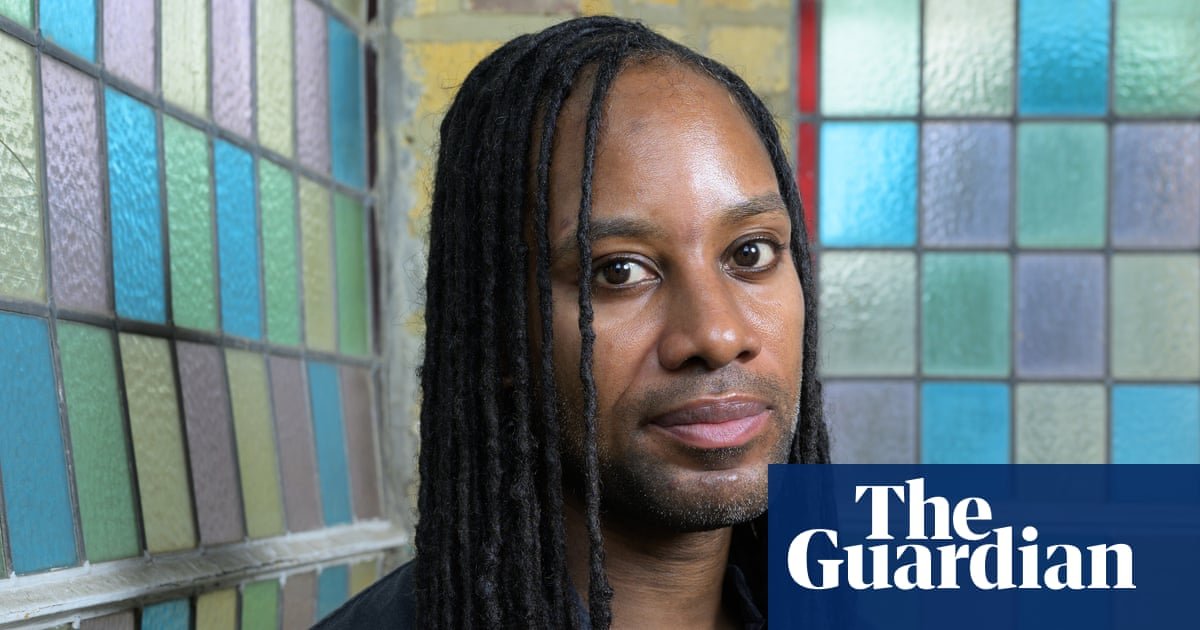
When the superstar academic Jason Arday took to the stage at the British Sociological Association’s 75th anniversary conference earlier this year, he delivered a talk called Wanted Dead or Alive: the Playbook.The youngest black professor in Cambridge University’s history told an audience of his peers that the playbook in question had helped bring down some of the biggest names in US academia. Conservative “activists” were trawling through the work of black academics, looking for anything to use against them: inconsistencies, citation errors, passages in their work that were similar to existing papers.Once an error was identified, rightwing media outlets and conservative politicians joined the pile-on – heaping pressure on universities to cut ties.Claudine Gay, the first black woman to become president of Harvard, was only in the post for seven months before she was forced out over plagiarism allegations. Others said they felt like “sitting ducks” as their work was pulled apart. Some academics have killed themselves after being hounded out of their positions.Claudine Gay speaking at her inauguration as Harvard University’s 30th president in 2023. Photograph: Boston Globe/Getty ImagesThe playbook was not restricted to the US, Arday explained. The same tactics were being used to bring down some of the UK’s most high-profile black academics.“The instruments that are designed to protect academic integrity, designed to protect our wellbeing and our intellectual property, are weaponised,” he told the audience in April.He called for his peers to defend him. “There isn’t any room to sit there and watch your fellows suffer for no reason. It’s abhorrent, it’s a disgrace and, quite frankly, evil,” he added. “That’s the cancer that we need to eradicate from academia.”Some of the audience thought it was strange. Keynotes are usually places where academics talk about their work and discuss breakthroughs, yet here was Arday talking about racism and harassment. Some felt he must have been saying this for a reason.Then last week a row erupted concerning Arday’s academic work. The Telegraph reported that analysis had found more than 100 passages in his PhD were similar to another thesis by Paula Zwozdiak-Myers, a student at Brunel University in London, published six years earlier.The report followed a Substack post by Nathan Cofnas, an academic who was previously embroiled in a free speech row at Cambridge after he suggested in a blogpost that, in a meritocracy, there would be “close to zero” black professors at Harvard. The British politician and activist Simon Woolley called the post “abhorrent racism, masquerading as pseudo-intellect”.Cofnas, a self-defined “race realist”, was sacked by Cambridge’s Emmanuel College in 2024 and underwent a disciplinary investigation into the blogpost about black academics. The investigation concluded that Cofnas was not guilty of “discrimination or harassment”, and that his views, “while seen by many as offensive, did not breach the law and did not contravene university regulations designed to uphold free speech”. He now works at Ghent University, in Belgium.Cofnas claimed he had put Arday’s PhD through plagiarism detection software, which found that “many passages are lifted with minimal editing, sometimes retaining copy-editing mistakes from the original source”.Another critic of Arday was Dr David Harris, professor emeritus at Plymouth Marjon University, in Devon, who had previously written to Cambridge with claims about Arday’s work.Harris had been stripped of his professor emeritus title after he wrote a post about critical race theory that was deemed “controversial” by colleagues, but it was reinstated in 2026. After Harris’s earlier queries about Arday’s work, two corrections were made to papers released in 2018 and another in 2020.The fact that the two most vocal critics of Arday harboured controversial views on race appeared to inform Cambridge’s response, which was a robust defence of Arday. The university called the claims a “vile smear campaign to undermine his credibility”.An open letter in support of Arday, signed by the Green party leader, Zack Polanski, and the prominent black studies academic Kehinde Andrews, argued there was “an orchestrated and grim effort to delegitimise a brilliant, young, working-class academic for the sin of being successful while Black”.double quotation markProfessor Arday probably holds the top position in the world in sociology of education. It’s important for the whole discipline that he addresses these claimsProf John Preston, University of EssexCambridge said it had passed complaints to the university where Arday completed the PhD, Liverpool John Moores, which had reviewed the work and found he had not plagiarised it.“We take allegations of academic misconduct incredibly seriously,” a Cambridge spokesperson said. “It is university procedure that investigations are carried out by the institution at which the research was undertaken. This is standard practice in the sector because that institution has access to the information to ensure a full and fair investigation.”Arday told the Guardian he fully supported “fair investigation processes for genuine concerns” of academic misconduct. He added: “To clarify, there have been multiple thorough investigations across several institutions as a result of the allegations, and immense scrutiny, including with an academic misconduct panel who concluded that there was no plagiarism or academic misconduct.”But prominent academics of colour that the Guardian spoke to said the claims of plagiarism were legitimate, and that Arday’s alleged actions risked undermining others who study race.Some of Arday’s peers said the fallout from the row could send shockwaves through academia and set the study of race in Britain back 20 years.One academic, who has worked in the area of race and education for decades and spoke to the Guardian on condition of anonymity, said the accusations against Arday were worrying. “I think it’s plagiarism and it’s obvious,” they said.John Preston, an emeritus professor of sociology at the University of Essex, said: “Having seen the evidence, it triangulates and there is, in my judgment, a case to answer here.”Some have argued that Arday has come under unfair levels of scrutiny. But the academics the Guardian spoke to said it was “fair for someone at Cambridge”, in one of the most prestigious positions in academia.The tone of the coverage from rightwing publications has been a mix of outrage and “I-told-you-so” self-righteousness, with the Telegraph describing Arday as a “diversity poster boy”, and his online accusers all sharing a critical view of diversity, equity and inclusion policies.The stakes are high for all concerned. For Arday, the accusations are potentially ruinous – plagiarism is as serious as it gets for academic malpractice and the professor has consistently claimed he has done nothing wrong.In an interview with the Times on Friday, he suggested the issue had been blown out of proportion. “I am accountable for the mistakes I’ve made,” he said. “I hold myself accountable and other people should hold me accountable. We’re talking about academia here. I didn’t murder somebody. I think the cruelty that I’ve experienced, and the positioning of me as this kind of liar and fantasist, is totally unacceptable.”For Cambridge, there are questions about judgment over Arday’s appointment, which occurred when its own track record on race was being scrutinised in the wake of the Black Lives Matter movement. Cambridge had been criticised for the lack of diversity in its student body and faculty; when Arday was hired, there were only five black professors at the university.But the accusations of plagiarism are only one element of the Arday story.In March 2023, the sociologist’s arrival at Cambridge made headlines around the world. Not only was he the youngest black professor in the university’s history, but his backstory made that feat all the more impressive. His story is to be detailed in a memoir for Simon & Schuster this autumn.At the age of three, the south Londoner was diagnosed with autism and global developmental delay. He was unable to speak until he was 11 and could not read or write until 18. Despite that, he forged an impressive academic career, mostly focusing on race and education, with stints at Roehampton, Glasgow and Durham universities.From 17, Arday began completing charity challenges to raise money for various causes. They were often endurance challenges, which began when he was taking a BTec course in sport and development at Merton college in Morden, south London.Jason Arday claimed to have run 600 miles in six days. Photograph: Christian Sinibaldi/The GuardianHe has claimed in media interviews to have raised £5m for charities over a 20-year period (sometimes this figure has risen to £5.5m). He has done this, he says, by running 30 marathons in 35 days – a feat he has spoken about in media interviews and in his book. He also claimed at public events to have run 600 miles in six days.As his critics online have pointed out, £5m raised for charity would be a staggering amount for someone who is not already famous. In 2012, Arday said he hoped to raise £250,000 by the time he was 50.When asked if the £5m figure was accurate, Arday clarified to the Guardian that the money was raised with the help of “many fundraising collectives over a two-decade period”. When asked to identify other people who took part in these efforts, Arday said he had signed NDAs preventing him from disclosing that information.The Guardian also asked Arday about his claim to have run 600 miles in six days, an achievement that would make him one of the world’s most gifted endurance runners. (The first woman to achieve the feat, Megan Eckert, only managed it last year; the men’s record is 650 miles.) He said that because of the “cumulative wear and tear of training” from his previous running challenges he “had to put rest days in between the running days just to finish” the 600-mile challenge, which was actually completed over a 12-day period.Earlier this year, two universities that had given Arday honorary degrees and doctorates amended their websites, with Southampton Solent University removing the 600 miles citation, and Anglia Ruskin University changing the six days claim to 12 days.In 2012, Arday was a torchbearer for the Olympic Games and met the tennis player Andy Murray via the TV programme Surprise, Surprise.After the meeting, Murray said Arday had told him a story that inspired him to victory in his gold medal win against Novak Djokovic. “He is an epileptic who ran 30 marathons in 35 days,” said Murray. “He told me that on the 20th day he fell – he had a fit, a seizure – and had a hairline fracture in his leg, but he continued. He had asked to meet me, and that was pretty cool, speaking to someone like that.”When asked by reporters at the time why he carried on, Arday said: “When I fell over, I didn’t want to have to pay back thousands of pounds.”Doctors have told the Guardian that running nine marathons with a hairline fracture in a fibula would be incredibly painful, though technically not impossible. In his forthcoming memoir, Arday says he completed the distance by taking painkillers and despite his right leg swelling to twice its normal size. He previously said in a 2012 interview that he used ice baths to ease the pain between his runs.As well as scrutiny of his academic record and fundraising history, Arday claims to have been the victim of a campaign of physical abuse and intimidation.Arday began being sent racist emails as soon as he took up his position at Cambridge, becoming so intense that his emails had to be screened. But the messages paled in comparison to the other incidents the academic said he had faced.In an open letter to the government minister Jacqui Smith in July 2025, which outlined Arday’s experiences, he claimed to have been “threatened with a knife, physically assaulted and spat on; [had] rape and death threats being made to him and his family; bananas and bullets being posted to him via the university campus; and corrosive substances and mutilated animals sent to his family home”.double quotation markI always wanted to be a person who flew close to the sun. But sometimes I wonder: did I fly too close?Jason ArdayIn a subsequent interview with the Guardian, Arday claimed to have been confronted at his faculty building on two separate occasions by a masked man threatening to harm him if he did not resign, and evading detection both times. On the second occasion Arday said the intruder produced a knife and threatened him with it.The Guardian understands that after Arday reported the first intrusion to the university, enhanced CCTV was placed in the faculty and a panic alarm was installed in his office. The professor said he hit the panic alarm during the second confrontation, but that no one responded. It should have triggered an alarm alerting the faculty’s security team, all of whom were present at the time of the alleged incident.The intruder was not picked up by CCTV on either occasion and no one in the faculty reported seeing anyone suspicious. Arday did not report either intrusion at the time, telling the Guardian that after the second incident he continued his working day and even conducted a PhD viva for a student less than two hours later.He did not inform colleagues that a masked man with a knife was in the faculty building.Arday confirmed in an interview with the Guardian that the “mutilated animals sent to his family home” mentioned in the open letter was a severed pig’s head, delivered in a large cardboard box to his parents’ home address in south London. He claimed to have intercepted the package and immediately thrown it away, only telling the police several months later.In a subsequent interview he claimed the police investigated, checking with butchers in south London if they had sold a pig, eventually finding one that had sold a “whole hog” on the morning the head was left outside the family home.When the Guardian checked those details with the local butchers Arday named, they said no police officer had come in to ask them about a pig. When asked if they were sure, the butcher said “that’s the kind of thing we’d remember”.When the details Arday gave about the pig’s head investigation were checked by London’s Metropolitan police, the Guardian was told they were “categorically” incorrect and no investigation had taken place.Arday had contacted the Met to lodge a complaint of harassment against Harris after his plagiarism allegations and, because he was based in Plymouth, the case was handed over to Devon and Cornwall police. Correspondence seen by the Guardian confirmed that the force declined to pursue a case against Harris.Arday took no photographs of the bullet, the banana, the corrosive substance or the pig’s head. The only other people who saw any of the items were close family members, who told the Guardian Arday had shown them the bullet and the “poison”. Arday could produce no messages from the time in which he discussed any of the items with friends, family, colleagues or the police.A Cambridge University spokesperson said: “As soon as Professor Arday shared concerns with the faculty a number of enhanced security measures were urgently taken in response, with the advice and continuing engagement of university security and the police. These include the installation of panic alarms, screening of emails, post and packages, upgraded CCTV and revised security protocols.”There are many examples of prominent black figures being intimidated in recent British history.Black footballers, including Brendon Batson, reported being sent a bullet in the post during the 1970s after being selected for England. Bananas were often used by racists to insult black people. Severed pig heads have been attached to the walls of mosques by far-right groups. People have been attacked and intimidated at their place of work. Malicious communication is commonplace. Black academics are frequently hounded by organised groups.Brendon Batson playing for West Bromwich Albion in 1979. Photograph: Colorsport/Rex/ShutterstockBut the abuse and harassment Arday has outlined would be some of the most extreme any academic has been subjected to in the UK.When Arday was asked about his claims by the Guardian, he stood by them. “To be honest with you, I thought you’d just believe me,” he said. “Why would I lie?” He would be jeopardising his career.In Arday’s memoir, Great and Unfortunate Things, he references the scrutiny placed on him and his work.He writes that people have been “outraged and offended” by the idea of a black professor at such an elite institution, and that he has faced harassment and persecution as “the subject of targeted campaigns driven by racial animus”.“There have been days when I can only describe the experience as traumatising. It’s hard for people to even comprehend or imagine the toll this can take on a person,” he writes.But the row over his academic work and some of the claims he has made is far bigger than one person.“The whole area of the sociology of education, and particularly race studies within that, is very fragile,” said Prof Preston. “It is primarily Black, Asian and minoritised people who work and study in those subjects. Professor Arday probably holds the top position in the world in sociology of education. It’s important for the whole discipline that he addresses these claims.”In a recent interview to promote the memoir, Arday spoke about feeling like Icarus when he came under scrutiny after joining Cambridge. “I always wanted to be a person who flew close to the sun,” he said. “But sometimes I wonder: did I fly too close?”
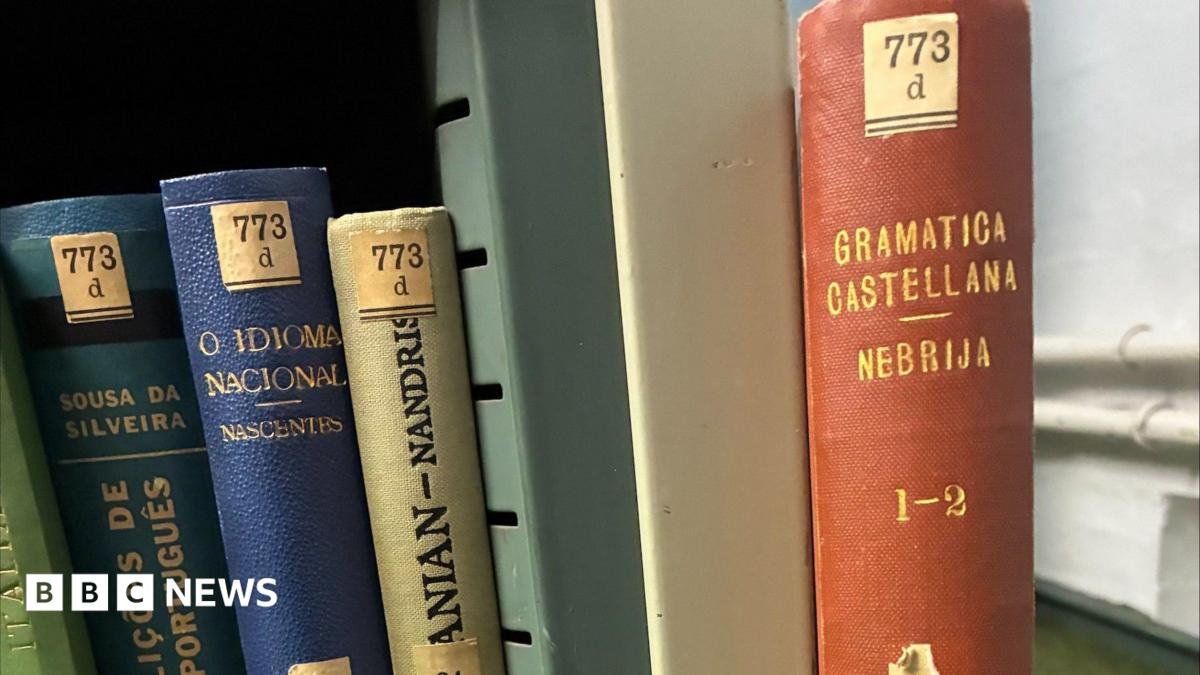
Book returned to Cambridge University Library after 60 years
Aside from library books, other items have also been returned (very late) to university colleges over the years.In the 1930s, two students replaced the ornate hands of the chapel clock at Gonville and Caius College with cardboard replicas – in a prank that worked well until it rained and they started to disintegrate.At the time, the college replaced the hands as the pranksters had kept one each, but the daughter of one “thief” returned it in 2024 and it now sits in the college archive.Still at Caius, as it is known (and pronounced “keys”), an American student returned her room key to the college in 2025, 40 years after accidentally taking it back to the USA with her.The error would usually have incurred an initial £10 fine with interest of £10 per week added on top, but four decades later than planned, the woman returned it during a trip to the UK and was relieved to know the college decided to waive the £20,000 fine.In light of the above, the University Library reminded students that items could be returned at any time, adding: “Don’t panic, and please don’t wait until 2086.”Do you have a story suggestion for Cambridgeshire? Contact us below.
Residents can find out more about peat road trials starting in Fenland in August
Cambridgeshire County Council will host a drop‑in event at the Oliver Cromwell Hotel, High Street, March (PE15 9LH) on Monday (August 3), from 3pm to 7.30pm.
The session will give people the chance to meet the project team, learn more about the trial on Upwell Road (B1099), ask questions and find out how the research could improve the durability of local roads built on peat.
Peat soils are soft, water‑rich and prone to significant movement, expanding and contracting with changing weather conditions over time.
That shifting ground means roads built over peat need more frequent repairs and generally have a shorter lifespan than routes constructed on firmer soils.
The trial on Upwell Road aims to test different construction techniques to see which performs best in these challenging conditions, with the findings expected to inform future road improvements in Cambridgeshire and beyond.
Work will begin on Monday, August 10, and the road will be closed to vehicles for nine weeks, until October 30. Diversions will be in place while the closure is in place.
The Upwell Road scheme follows work by the county’s Highways and Transport Committee, which discussed proposals for managing soil‑affected roads back in January 2024.
Since then, £1.5m of external funding has been secured from the Cambridgeshire and Peterborough Combined Authority, alongside an additional £5m of county capital funding earmarked for repairing and reconstructing soil‑affected roads before the end of the next financial year.
Councillors have previously been told that the trial options could include using lightweight recycled materials, “ultra‑low” carbon products, or on‑site treatment techniques designed to strengthen existing materials and improve their durability.
Upwell Road was chosen for the pilot because it is built over peat, carries both heavy and agricultural traffic, is typical of the rural network, and is already due for renewal.
Cllr Alex Beckett, chair of the highways and transport committee, has previously said climate change and extreme weather are having a “significant impact” on soil‑affected roads and that long‑term solutions will require national support as well as local maintenance.
The council says Monday’s meeting is an opportunity for March and Fenland residents to help shape that work and understand how the Upwell Road project could influence future investment on other peat‑based routes.
Pledge made over parking at new Hinchingbrooke Hospital
The new Hinchingbrooke Hospital is set to have the same number of car parking spaces as there are on the current site.The hospital in Huntingdon, Cambridgeshire, was one of four in the East of England found to have crumbling reinforced autoclaved aerated concrete (Raac).North West Anglia NHS Foundation Trust announced on Thursday that it had appointed a company to build the new hospital.Project manager Deborah Lee said: “We’ve got to replace all the car parking that will be displaced, so we’ve committed to not reduce the amount of car parking as that was really important to local residents in particular.”The hospital has been included in the first wave of the government’s New Hospital Programme.A consultation giving people the opportunity to share their thoughts on the plans is open until 16 August.Lee said the issue of parking had been raised by local residents, and she added that the hospital would have to “replace all of the car parking”.”We’re quite far down the process of acquiring the land adjacent to us… which is currently owned by the Cambridgeshire Constabulary,” she said.
Water resilience grant scheme set up for farmers and growers
If nothing else, this summer has shown that improving food resilience is essential if we are to survive – so a new water resilience grant scheme for farmers and growers in the region is very timely.Funded by the Ministry of Housing, Communities and Local Government, the scheme to boost water resilience countywide is delivered by Water Resources East and Cambridgeshire County Council as part of its water efficiency agenda.Carrots growing in healthy soilFarmers, growers and horticultural businesses across Cambridgeshire can now apply for grants of between £2,000 and £50,000 from a £1.3million grant scheme designed to improve water efficiency, strengthen resilience to drought and support sustainable food production.Water supply in the region has long been flagged up as inadequate to the challenge of building tens of thousands of new homes – along with population rises and the climate change challenges which this month lost farm estates across south-west France and Spain to wildfire. Fires have destroyed 100,000 acres of land in France following the outbreak of wildfires, and in Spain 295,000 acres have been lost since the fires commenced on 22 July – and a fire is currently raging at Dunwich Heath in Suffolk, just 75 miles east of Cambridge.A major incident has been declared following a fire at Dunwich Heath. Picture: Suffolk Fire and Rescue ServiceDaniel Johns, managing director at Water Resources East, said: “Water availability is becoming an increasing challenge for agricultural businesses across the region. This scheme provides a practical opportunity for farmers and growers to invest in solutions that improve water efficiency, strengthen resilience and support sustainable food production for the future.”The first window for applications for the scheme is now open to agricultural and horticultural businesses operating within Cambridgeshire. Applications will be reviewed at three intervals, based on applications received before midnight on: 27 September 2026, 29 November 2026 and 17 January 2027.Cllr Ros Hathorn, chair of the environment and green investment committee at Cambridgeshire County Council. Picture: Hannah Brown, LDRCllr Ros Hathorn, chair of the environment and green investment committee at Cambridgeshire County Council, said: “With our farmers and growers facing hotter, drier summers, we want to support them to create a balanced, long-term approach to water management and make the sector more resilient to these pressures.“This funding will enable farmers and growers to take practical action to improve water resilience while supporting the sustainable management of our water resources. Local projects such as this highlight our work to support a green and sustainable county, by managing the effects of a changing climate securing the future of water, food and farming.”Further information, including eligibility guidance and the application form, is available here.

“I dream to be…” – Cambridge News
The Bible
Our community has many commendable social initiatives, often under the radar and unheralded and motivated purely to support and enhance other’s lives.
The collective positive impact and difference made by all the dedicated people involved is invaluable – their efforts matter and raise the goodwill ‘water-table’ of our township.
Murray Smith
The dedicated Te Haerenga (The Journey) teaching team at Cambridge High School cater for young adults with unique challenges and individual needs. Equipping these students with life-skills through offering practical experiences, in and outside of the classroom, enables them to become more confident, connected and actively involved lifelong learners. Various opportunities include participating in the arts, work experience, cooking, reading, financial literacy, team sports, excursions and opportunities to develop social interactions.
My attendance at a stage production prepared by Te Haerenga class last week was second time I had joined an enthralled audience cheering these kids on. Their creative, energy packed show was titled, “I dream to be…”
The entire class played a part with everyone costumed as native birds. Their teacher was ‘Mr Maye’, a Moa. His class of pukeko, kiwi, fantail, kea, ruru, sparrows and a robin were assigned to originate a response to the proposal “I dream to be…”
The birds identify goals, pursuing a dream… except for Paulie Pukeko. Paulie dismally witnesses everyone implementing their dreams while he remains stuck, unable to nail what his dream or skill might be. In the end he realises his dream is to be an entertainer and, demonstrating a dream fulfilled, introduces a full-cast, bouncy musical finale
Education done right provides opportunities and enduring memories for ‘building’ young people. Learning environments where our youth are encouraged to become more whole, thoughtful and caring of others, contributing and making a positive difference, have a needed place. Ka pai Te Haerenga, for being that place for many.
A student in an altogether different context, Monty Roberts found high school crushing. It climaxed when a final assignment required students to write about what they wanted to accomplish after graduation. Monty’s Dad was a traveling horse trainer who visited ranches and stables training horses. Against that background, Monty prepared a highly detailed seven page description of a horse ranch he would establish. Expectantly, he waited days for his grade. His teacher returned it with an ‘F’ and called him to a meeting after school.
“Why did you fail me?” Monty asked in frustration. The teacher replied, “This dream is entirely out of reach with your background and limited resources… I’ll consider changing your grade if you’ll re-write a more realistic dream.”
Monty thought about it for a week – then turned in the same paper stating, “Keep your ‘F’ and I’ll keep my dream”. Years later that same teacher bought 30 kids to camp at Monty’s ‘Dream Ranch.’ Departing she tearfully said, “I’m sorry… years ago I stole many youthful dreams. I’m glad you had the guts not to give up on yours.”
Dreaming the impossible requires seeing the invisible. God bless our ‘dreamers’.