Category: London

  • London welcomes its first Ferrari F80 in a stunning red exterior finish – The Supercar Blog

    London welcomes its first Ferrari F80 in a stunning red exterior finish – The Supercar Blog


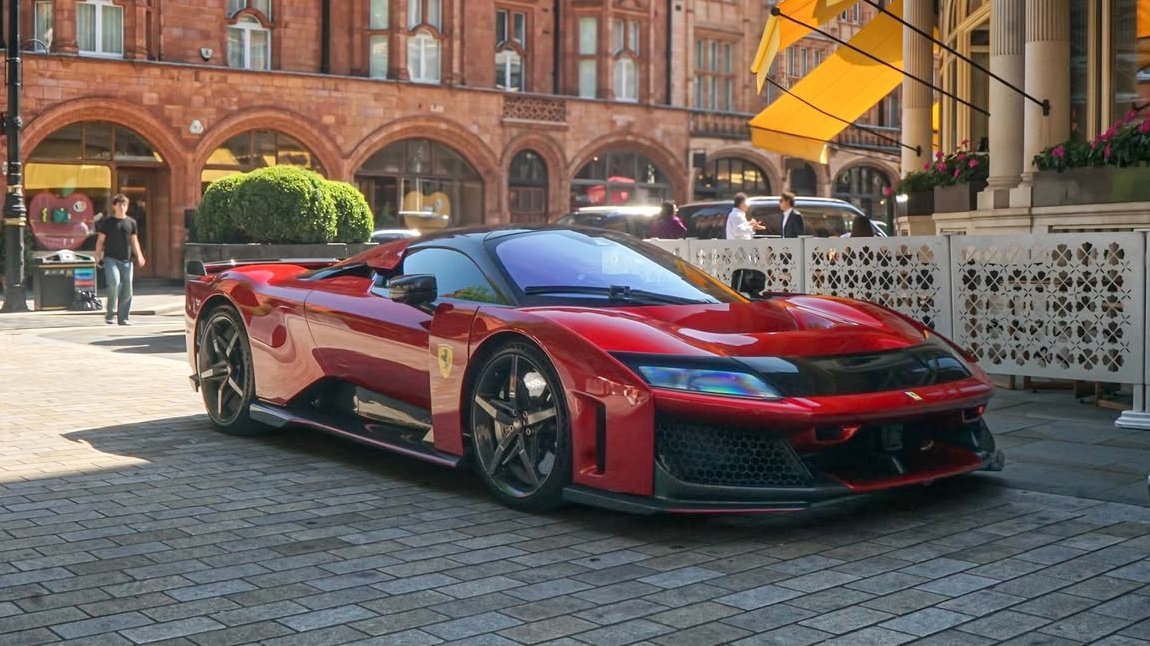
    The supercar scene in London just climbed to a new level as the city welcomes its first Ferrari F80. Finished in a deep red exterior finish, it looks stunning and ready to turn heads on the streets. Hearty congratulations to the owner!
    The Ferrari F80 looks brilliant, especially in this colour. It has a charm of its own, especially with the yellow Prancing Horse logos. Adding to the overall visual appeal is the F80’s signature black strip running across the front end of the car, joining the neatly designed headlamps.

    The red-black dual-tone combination continues with the blacked-out ORVMs, roof, alloy wheels, aero bits in the front and rear bumpers, side skirts, and of course, the massive wing at the back. Another element at the rear of the Ferrari F80 that cannot be ignored is the huge integrated diffuser.

    The Ferrari F80 is powered by a 3.0L twin-turbo V6 engine and three electric motors. It is a pretty competent hybrid system that generates a combined output of 1184 hp. Mated to an 8-speed dual-clutch transmission, this supercar is capable of hitting 62 mph in 2.15 seconds, and when given all the liberty, it can reach a top speed of 217 mph.

    Source: @spottingcars.uk

  • Who is Arthur Fery? The millionaire’s son and west London-raised tournament wildcard who’s the last Brit standing at Wimbledon

    Who is Arthur Fery? The millionaire’s son and west London-raised tournament wildcard who’s the last Brit standing at Wimbledon


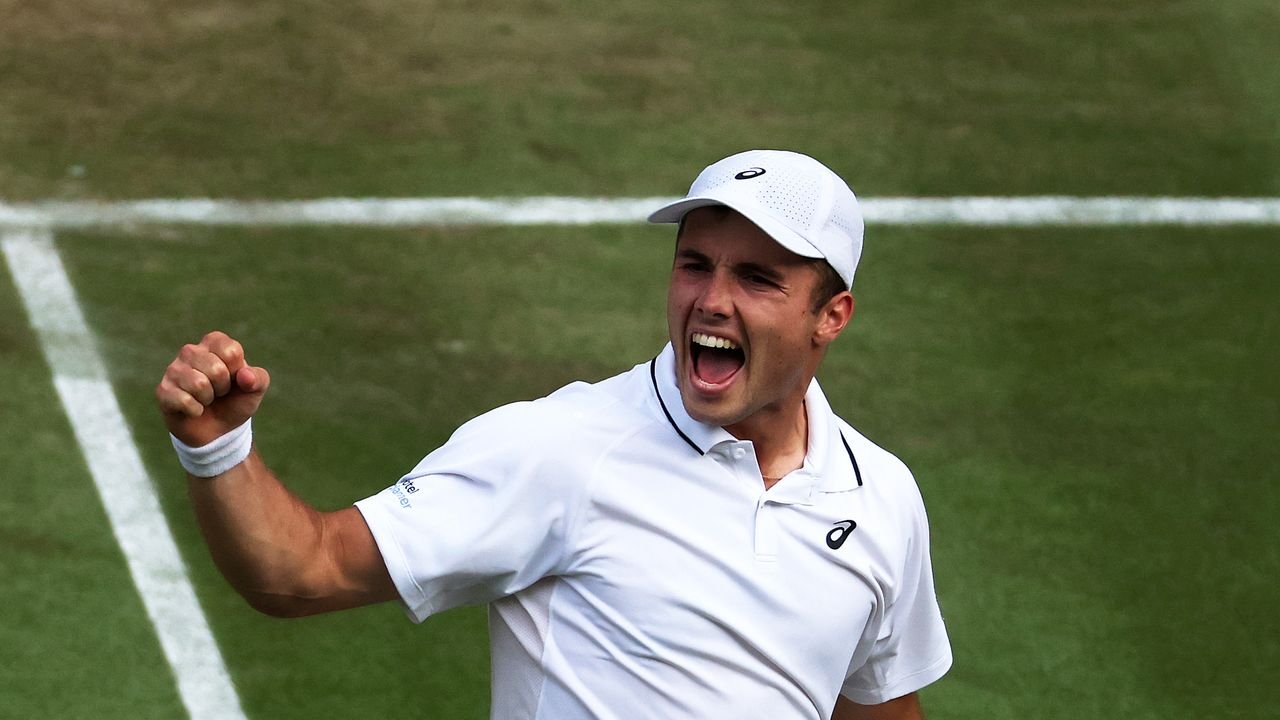
    Fery studied at Stanford University in the United States, majoring in Science, Technology, and Society, and quickly became a darling of the College Tennis circuit. Working through the ranks on the senior tour, he played his first main-draw match at Wimbledon 2021 in the doubles, before making his singles debut in 2025. That year, he claimed his first victory on the Challengers tour, claiming the trophy in Barranquilla.While Fery might be a new name to much of the British public, he has been on the tennis world’s radar for a while, with former doubles world No. 1 Jamie Murray praising his game to Sky Sports. ‘He’s someone who plays proper grass-court tennis, coming forward and knowing how to play at the net, move at the net and also his composure,’ said Murray, describing Fery as ‘awkward’ to play thanks to his ‘good court-craft’.‘He has an inner confidence about himself, and I didn’t think he was worried about going on to Centre Court.’Fery’s route to the quarter-finals has not been drama-free, of course. Yes, there have been two five-setters in a row, but Fery garnered headlines from his very first match, when he devised a unique way of dealing with a famously hot-tempered player, Damir Dzumhur, in Round One. When the Bosnian player began arguing with the referee, with Fery himself, following a let call, the Brit put on some earplugs during the changeover and claimed all but three games in the next three sets.Speaking in a press conference following the match, Fery played it cool. ‘I mean, it was expected, to be honest. He does that with everyone. I guess I was just ready for it before the match. If it’s a let, it’s a let for everyone, right? It’s not just a let for him.’

  • List Of Football Teams That Play In Red – Top Soccer Blog

    List Of Football Teams That Play In Red – Top Soccer Blog


    The red colour is a fiery colour, associated with fire, blood, love, passion, and desire. Many football teams wear red jerseys as their home kit for many reasons. Some wear it because of the colour of their national flag, or club colours. Today, you will find out the major football national teams and clubs that wear the read jersey.
    1. Liverpool FC
    Red is one of the most powerful and widely worn colours in world football.
    From the crimson of Spain’s La Roja to the red and black of AC Milan, the colour carries more history, passion, and trophy-winning pedigree than almost any other in the sport.
    Here are 20 of the most popular soccer teams that play in red, covering national teams and football clubs from across the globe.
    You might also enjoy our articles on soccer teams that play in yellow and football teams that play in blue.
    1. Spain
    (Photo by Catherine Ivill – AMA/Getty Images)
    Spain are the most decorated red national team in world football and are known globally as La Roja — The Red.
    Their red jersey with yellow trim is taken directly from the Spanish national flag and has been the home colour since Spain played their very first international match at the 1920 Olympics in Antwerp.
    The shirt is manufactured by Adidas, who have supplied the national team since 1991.
    Spain are one of the countries with the most football trophies, having won one World Cup and four European Championships.
    Their greatest period came between 2008 and 2012 when they won three consecutive major tournaments, making them the most dominant international side in the history of the sport.
    Lamine Yamal and Mikel Oyarzabal continue to carry the red shirt to glory at the 2026 World Cup in North America.
    2. Denmark

    Denmark’s football identity starts with the Dannebrog, the Danish national flag, which holds the Guinness World Record as the oldest continuously used national flag in the world, dating back to 1625.
    Legend states that a red cloth with a white cross fell from the sky during the Battle of Valdemar in the 13th century, gifting the Danes victory, and the colours have been carried ever since.
    Denmark’s kit is made by Danish company Hummel, who have been the national team’s supplier since 1979 with only a brief Adidas interruption from 2004 to 2012.
    Their 2026 kit was inspired by the jersey Denmark wore at their very first World Cup in 1986, the tournament that produced the famous chant “We are red, we are white, we are Danish Dynamite.”
    Denmark’s greatest achievement remains winning the 1992 European Championship without even originally qualifying, replacing Yugoslavia at the last minute and beating Germany 2-0 in the final.
    3. Wales
    (Photo by Visionhaus/Getty Images)
    Every Wales shirt tells the same story: Y Ddraig Goch, the Red Dragon, which has been a symbol of Welsh identity since the 5th century and has appeared on the national flag since it was officially adopted in 1959.
    In 1902, the Football Association of Wales formally adopted red shirts as the permanent home colour, aligning with the Welsh Rugby Union and ending decades of colour confusion against the other home nations.
    The red dragon crest has featured on every Wales shirt since the 1950s and is one of the most instantly recognisable badges in world football.
    Wales qualified for the 2022 World Cup for the first time in 64 years and their finest modern moment remains reaching the UEFA Euro 2016 semi-finals with Gareth Bale leading the attack in red.
    Their book on football history by Phil Stead is titled Red Dragons, the Story of Welsh Football, which tells you everything about how central the colour is to the Welsh football identity.
    4. Switzerland
    (Photo by FABRICE COFFRINI/AFP via Getty Images)
    Switzerland‘s red jersey comes from one of the most powerful symbols in European history: the Swiss national flag, whose white cross on a red background has origins dating to the Battle of Laupen in 1339.
    The Swiss national team first wore red in the early 20th century and have maintained it as their primary home colour through every generation and every kit manufacturer.
    Their current Puma kit was worn at the 2022 World Cup in Qatar where Switzerland reached the quarter-finals, beating Serbia in the group stage and France in the round of 16 before losing to Portugal.
    Switzerland are one of Europe’s most consistently underrated sides and their red jersey is carried to major tournaments with remarkable regularity.
    5. South Korea
    (Photo by Justin Setterfield/Getty Images)
    South Korea‘s red home jersey has one of the most powerful origin stories in international football.
    The red comes from the Taegeukgi, the South Korean national flag, in which red represents passion and the yang force — the active, fiery energy, at the heart of the flag’s iconic yin-yang symbol.
    The 2002 World Cup cemented red as South Korea’s identity colour, as millions of supporters flooded the streets in red shirts to cheer the Taeguk Warriors to the semi-finals, the best finish ever achieved by an Asian team at a World Cup.
    The 2026 home jersey features a red base with a marled tiger-fur pattern woven into the fabric, inspired by the tiger’s reputation as a ruthless ambush hunter.
    South Korea’s footballing profile in Asia has grown enormously since 2002 and their red jersey remains the most recognised kit across the continent.
    6. Morocco
    (Photo by Franco Arland/Getty Images)
    Morocco’s red jersey comes from their national flag, which features a red background with a green pentacle star at its centre, making their home kit a direct reflection of national identity.
    At Qatar 2022, Morocco became the first African and Arab nation to reach a World Cup semi-final, defeating Belgium, Spain, and Portugal along the way while wearing the iconic red shirts.
    The 2026 home shirt takes the storytelling further, featuring Fes-style embroidered taping on the cuffs and collar and a subtle texture woven into the fabric that pays tribute to Moroccan craftsmanship.
    Morocco won the Africa Cup of Nations title in 2025, adding to their 1976 triumph, and arrived at the 2026 World Cup on home soil in North America as one of the tournament’s most feared sides.
    No red jersey in African football carries more global prestige than the Atlas Lions shirt heading into this tournament.
    7. Turkiye
    (Photo by Yagiz Gurtug/NurPhoto via Getty Images)
    Turkiye’s red jersey has Ottoman roots that stretch back centuries.
    Red was the dominant colour of Turkic states before the arrival of Islam, the crescent and star existed in Constantinople before the Ottomans adopted them, and by 1793 the red flag with crescent and star was officially in use across the Empire.
    When the Republic of Turkey was formally established in 1923, red became the permanent football kit colour and has remained so through every tournament the national team has entered.
    Turkiye reached the semi-finals of UEFA Euro 2024, their best European Championship result, with a squad including Hakan Calhanoglu and a breakout teenager named Arda Guler who lit up the tournament in red.
    Their finest hour remains the 2002 World Cup where they finished third, losing to Brazil in the semi-final and defeating South Korea in the third-place match.
    8. Chile
    (Photo by CLAUDIO SANTANA / AFP via Getty Images)
    Chile share their nickname with Spain, both are called La Roja,  and their all-red jersey is one of the most recognisable kits in South American football.
    The red is taken from the Chilean national flag, where red represents the blood spilled by patriots in the fight for independence, making it one of the most symbolically loaded colours in South American football.
    Alexis Sanchez led Chile to back-to-back Copa America triumphs in 2015 and 2016 wearing the red shirt, making Chile the first South American nation to win the continental championship in consecutive editions.
    Chile produced some of the finest strikers of their generation during that golden era and their all-red kit became one of the most celebrated in the sport.
    9. Manchester United
    (Photo by Paul Popper/Popperfoto via Getty Images)
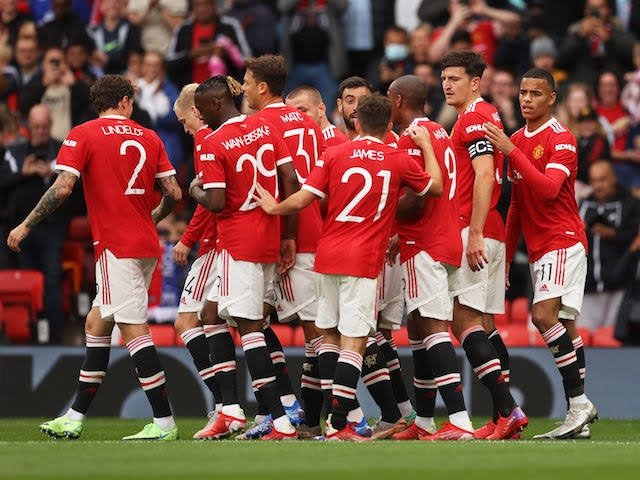
    Manchester United are the most recognisable red football club on the planet.
    The club was founded in 1878 as Newton Heath LYR Football Club and wore green and gold before adopting red somewhere between 1887 and 1889, with the colour formalised as the permanent home kit when the club changed its name to Manchester United in 1902.
    Club captain Harry Stafford believed red would evoke strength and unity among players, and in the century that followed, the red shirt became the most widely recognised football jersey on earth.
    United wear red shirts, white shorts and black socks, and under Sir Alex Ferguson the jersey was worn while winning 13 Premier League titles, two Champions League trophies, and the historic treble in 1999.
    They are one of the world’s most recognisable Adidas-sponsored soccer teams and their red shirt is sold and worn in every corner of the world.
    10. Liverpool
    (Photo by Tony Marshall – PA Images via Getty Images)
    Liverpool have a specific moment that defines their red identity: the evening of December 1964 when manager Bill Shankly told his players to wear all-red for the first time before a European Cup match against Anderlecht at Anfield.
    Shankly believed the all-red strip would make his players look awesome and terrifying to opponents, giving them a psychological edge.
    Liverpool won 3-0 that night and the all-red kit has never been changed, now inseparable from the club’s identity and from the famous Kop end at Anfield.
    Liverpool had worn red shirts since 1896 but it was Shankly’s decision that turned the kit into one of the most iconic in world football.
    They have won six European Cups, 20 league titles, and eight FA Cups, making the red jersey one of the most decorated in football history, and also carry one of the most lucrative shirt sponsorship deals in European football.
    11. Arsenal
    (Photo by David Price/Arsenal FC via Getty Images)
    Arsenal’s red jersey has a founding story that connects north London directly to Nottingham.
    When Woolwich Arsenal were formed in 1886, Nottingham Forest donated a full set of their red shirts to the new club, which is how Arsenal came to wear red from their very first match.
    The iconic white sleeves were added in 1933 by manager Herbert Chapman, who spotted a supporter in the stand wearing a sleeveless red shirt and decided the contrast would help players identify each other on the pitch.
    Arsenal won the 2025/26 Premier League title — their first in 22 years — with Viktor Gyokeres leading the attack and David Raya winning the Golden Glove for the third consecutive season, ending a run of three straight runners-up finishes.
    They also reached the UEFA Champions League final against PSG in Budapest in May 2026, wearing the red shirt on European football’s biggest stage for the first time in the club’s history.
    Their red and white kit is one of the best soccer jerseys of all time and is widely worn across Africa, Asia, and North America.
    12. AC Milan
    (Photo by Pier Marco Tacca/AC Milan via Getty Images)
    AC Milan’s red and black stripes were chosen with a declaration of intent.
    When English founder Herbert Kilpin established the club in 1899, he chose the colours with a vision: “We will be a team of devils. Our colours will be red like fire and black to invoke fear in our opponents.”
    Kilpin was inspired by the jerseys of Notts Olympic, a team from Nottingham he had played for, and the red and black stripes have appeared on every single AC Milan home shirt since the club’s foundation.
    I Rossoneri, The Red and Blacks, have won seven UEFA Champions League titles and 19 Serie A titles, making their home kit one of the most trophy-laden in world football.
    The San Siro in Milan, shared with city rivals Inter, has been the stage for some of football’s greatest nights played out in red and black, from the great sides featuring Maldini and Baresi to the Berlusconi-era Champions League winners.
    13. Bayern Munich
    (Photo by Daniela Porcelli/Getty Images)
    Bayern Munich are known as Die Roten — The Reds — and have worn a predominantly red home jersey throughout their entire history.
    The red was part of the club’s identity from their earliest years in Munich and has been maintained through every era, every kit manufacturer, and every generation of players.
    Bayern have won 34 Bundesliga titles and six UEFA Champions League crowns, making their red jersey the most decorated in German football history.
    The shirt has been worn by some of the greatest players in football history including Franz Beckenbauer, Gerd Muller, Oliver Kahn, and Robert Lewandowski, and is currently supplied by Adidas.
    Their red shirt is recognised on every continent and Bayern remain one of the most globally followed clubs in world football.
    14. Atletico Madrid
    (Photo by Gonzalo Arroyo Moreno/Getty Images)
    Atletico Madrid’s red and white vertical stripes carry one of football’s most unusual origin stories.
    Before 1911 Atletico wore blue and white halved shirts like their parent club Athletic Bilbao, but switched to red and white when a bulk order of striped fabric became available cheaply because it was widely used in mattress manufacturing across Madrid.
    This gave birth to their famous nickname Los Colchoneros, The Mattress Makers, a name their supporters have reclaimed with enormous pride over more than a century.
    Their red and white stripes paired with blue shorts have been worn through La Liga titles, Copa del Rey victories, and UEFA Europa League triumphs under Diego Simeone, one of football’s greatest managers.
    Atletico play at the Wanda Metropolitano in Madrid and their red and white identity is as central to the club’s fierce character as their combative, relentless style of play on the pitch.
    15. Flamengo
    Flamengo are the most supported football club in Brazil and play in red and black hooped jerseys that are one of the most recognisable kits in South American football.
    The club was founded in 1895 as a rowing club and their full name remains Clube de Regatas do Flamengo, with the red and black colours taken directly from the rowing club’s original identity.
    The red and black hooped football jersey was adopted when the football section of the club was established and the fundamental design has not changed in over a century.
    Flamengo have won the Copa Libertadores three times, most recently in 2022 under Dorival Junior, and are one of the most decorated clubs in Brazilian football history with multiple domestic titles.
    Their red and black jersey is worn by an estimated 40 million supporters across Brazil, making Flamengo the club with the largest fanbase on the continent.
    16. Benfica
    (Photo by Gualter Fatia/Getty Images)
    Benfica are Portugal’s most famous and most supported football club and their red home jersey has earned them two enduring nicknames: The Reds and The Eagles.
    The club was founded in 1904 and adopted red as their primary colour from the earliest years of their existence, making it one of the most historically consistent colour associations in European club football.
    Benfica won the European Cup in 1961 and 1962, with the great Eusebio leading the attack in the famous red shirt during one of the finest periods any European club has ever produced.
    They wear red shirts with white shorts and white socks and play their home matches at the Estadio da Luz in Lisbon, one of the grandest venues in European football.
    They are also one of the few soccer clubs with birds on their badges.
    Benfica have won over 40 Primeira Liga titles and remain one of the most important clubs in the history of European football.
    17. Nottingham Forest
    (Photo by Ahmet Okatali/Anadolu via Getty Images)
    Nottingham Forest are arguably the most influential red club in the history of world football — and most people have no idea.
    The club was founded in 1865, inspired by Giuseppe Garibaldi and his Italian revolutionary Red Shirts, making Forest one of the first clubs anywhere in the world to officially wear red.
    Forest donated their red kits to Woolwich Arsenal in 1886 when the London club was formed, which is the direct reason Arsenal wear red today.
    Forest’s 1905 tour of South America inspired Argentine club Independiente to adopt red after their president described the visiting English players as looking like diablos rojos — red devils.
    Under Brian Clough, Forest won back-to-back European Cups in 1979 and 1980 wearing the red shirt, one of the most extraordinary achievements in football history for a club of their size.
    They returned to the Premier League in 2022 after more than 20 years away and their red shirt remains a beloved symbol of English football’s most surprising story.
    18. Independiente
    Independiente are nicknamed El Rojo — The Red — and the story of how they came to wear red is one of football’s most remarkable transatlantic connections.
    When Nottingham Forest toured South America in 1905, Independiente president Aristides Langone watched them play and described the visiting players as looking like diablos rojos — red devils.
    So struck was Langone by Forest’s red shirts that Independiente switched colours in 1908 and have worn all-red ever since, creating a direct line between a small English club and one of South America’s greatest.
    Independiente have won the Copa Libertadores seven times, more than any other club in the history of the competition, making them the most successful club in South American continental football.
    They are known as Rey de Copas — King of Cups — and their all-red jersey is one of the most historically significant in the world.
    19. Urawa Red Diamonds
    Urawa Red Diamonds top 5 football leagues in Asia
    Urawa Red Diamonds are Japan’s most successful football club in Asia and the red in their name is not cosmetic — it comes from the Mitsubishi logo, which consists of three red diamonds, one of which remains in the current club badge.
    The club was founded in 1950 as Mitsubishi Heavy Industries FC and became one of the original ten J-League clubs when professional football launched in Japan in 1993.
    Their 2026/27 Nike home kit features a red base with a subtle zigzag lightning pattern woven into the front, the latest evolution of a red identity that has been central to the club since its founding.
    Urawa have won three AFC Champions League titles, most recently in 2022, eight Emperor’s Cups, and one J1 League title, making them the most decorated club in Japanese football history.
    Their red shirts fill Saitama Stadium with 60,000-plus supporters on big matchdays, producing one of the loudest and most passionate atmospheres in Asian football.
    20. Brentford
    (Photo by Ryan Pierse/Getty Images)
    Brentford’s 2025/26 season was special before a ball was kicked: it marked exactly 100 years of the Bees wearing red and white stripes.
    The club was founded in 1889 wearing claret and blue from the Brentford Rowing Club, then switched to gold and blue in 1903 under the patronage of Lord Rothschild, before adopting red and white stripes in 1925 when competing in the Third Division South.
    The precise reason for the 1925 switch has been lost to history, but it is believed to have been inspired by the colours of Middlesex county, within whose historic borders Brentford sits.
    The 2025/26 centenary kit was manufactured by Joma and featured a classic collar directly inspired by the lace design of the very first 1925 red and white shirt, with “1925” embroidered on the socks.
    Brentford were promoted to the Premier League for the first time in their history in 2021 and have established themselves as one of English football’s most admired and best-run clubs, wearing those famous red and white stripes at their modern Gtech Community Stadium.
    OTHER POPULAR SOCCER TEAMS AND NATIONAL TEAMS THAT PLAY IN RED:

    Portugal (red home with green trim)
    Belgium (red home, the Red Devils)
    Egypt (red home)
    Austria (red home)
    Spartak Moscow (red and white stripes)
    Ajax (red and white home)
    Red Star Belgrade (red and white stripes)
    Athletic Bilbao (red and white stripes)
    Sunderland (red and white stripes)
    Stoke City (red and white stripes)
    Southampton (red and white stripes)
    AS Roma (deep carmine red)
    Standard Liege (red and white)
    Aberdeen (all red since 1939)
    Middlesbrough (red home)
    Tunisia (red and white)
    Georgia national team (red and white)
    Canada national team (red home)
    Peru national team (red and white diagonal sash)
    Spartak Moscow
    Red Star Belgrade
    Olympiacos
    PSV Eindhoven
    Granada
    Austria national football team
    Norway national football team
    Albania national football team
    Ajax
    Wisla Krakow.

    You might also enjoy reading about the soccer teams sponsored by Nike and the best soccer jerseys of all time.
    I am Collins Nwokolo and I’m your top soccer blogger! Like you, I enjoy the beautiful game of football or soccer. I write informative articles on major football topics around the globe and I love sharing it with soccer lovers. You can connect with me on LinkedIn & X.
  • Audi Nuvolari spotted on the streets of London for the first time! – The Supercar Blog

    Audi Nuvolari spotted on the streets of London for the first time! – The Supercar Blog


    The Audi Nuvolari made its global debut last month. Now, exactly a month later, the limited-edition supercar has been spotted on the streets of London. This one looks like a pre-production prototype that will be showcased at the Goodwood Festival of Speed later this week.
    The Audi Nuvolari is based on the Lamborghini Temerario. In fact, it is powered by the same high-revving 4.0-liter twin-turbo V8 hybrid with three electric motors. It produces 907 hp and 538 lb-ft of torque.

    The Nuvolari has a distinct exterior design, featuring a rectangular grille and slim LED headlights that extend from large vents that flank the nose section. The rear fascia is dominated by an expansive grille. It has a single central exhaust and slim LED taillights on either side. It also has a unique interior, although most of the hardware has been borrowed from Lamborghini.
    Only 499 Nuvolaris will be produced with a price tag of under $700,000.
    Source: @tfjj

  • Brazil vs Norway: World Cup 2026 prediction, kick-off time, TV, live stream, team news, h2h results, odds

    Brazil vs Norway: World Cup 2026 prediction, kick-off time, TV, live stream, team news, h2h results, odds


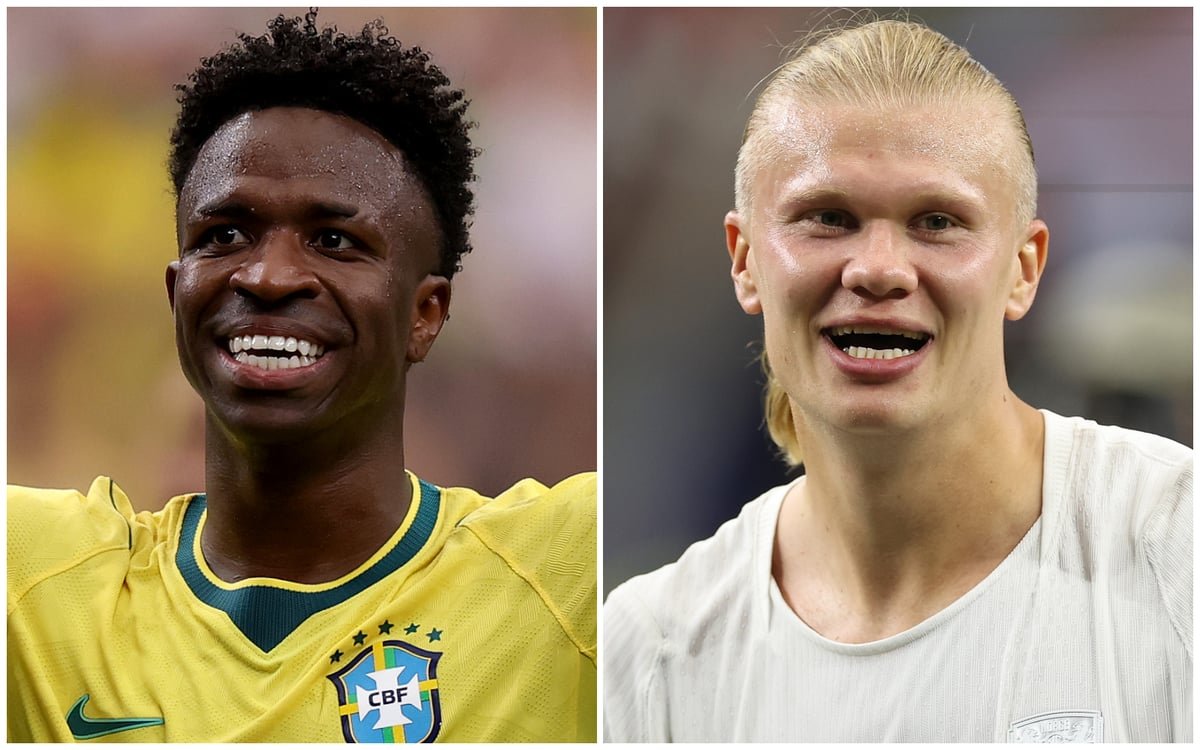
    Brazil take on Norway in the World Cup last 16 on Sunday in what promises to be an entertaining affair in East Rutherford, New Jersey.The Selecao came from behind to beat Japan 2-1 in their round of 32 tie, while Norway also needed a last-minute winner from Erling Haaland to see off the Ivory Coast in Arlington, Texas.AdvertisementStale Solbakken’s side finished second in Group I behind France, with the former Wolves boss making 10 changes against Les Bleus on matchday three with qualification already secured.Brazil won Group C, despite being held by an impressive Morocco side in their opening game.Date, kick-off time and venueBrazil vs Norway is scheduled for a 9pm BST kick-off on Sunday, July 5, 2026.The match will take place at the MetLife Stadium in East Rutherford, New Jersey.AdvertisementWhere to watch Brazil vs Norway for FREETV channel: In the UK, the game will be televised live on ITV1, with coverage starting at 8.15pm.Live stream: UK viewers can also catch the contest live online via ITVX app or the channel’s website.Live blog: You can follow all the action on matchday via Standard Sport’s live blog.Free highlights: World Cup highlights are available on FIFA’s official YouTube channel, along with ITVX app and their websites.Brazil vs Norway team newsCarlo Ancelotti is likely to be without Barcelona winger Raphinha here, with the forward struggling with a thigh problem.AdvertisementLucas Paqueta came off at half time against Japan, and Casemiro was also replaced.Casemiro, the now former Manchester United midfielder, is thought to be available to play here, but Paqueta is a doubt, as he deals with a hamstring problem.Brazil squadGoalkeepers: Alisson Becker, Ederson, WevertonDefenders: Marquinhos, Gabriel Magalhaes, Gleison Bremer, Leo Pereira, Roger Ibanez, Wesley Franca, Danilo, Alex Sandro, Douglas SantosMidfielders: Casemiro, Bruno Guimaraes, Fabinho, Danilo, Lucas PaquetaAdvertisementForwards: Vinicius Jr, Raphinha, Matheus Cunha, Luiz Henrique, Gabriel Martinelli, Neymar, Endrick, Rayan, Igor ThiagoFor the Norwegians, their main concern is Julian Ryerson, the first-choice right-back, who missed the first knockout round with a thigh niggle.He could come back in here, and he is the only injury concerrn to Solbakken.Erling Haaland and Martin Odegaard remain their shining lights, with Antonio Nusa catching the attention of many with his sumptuous finish aganist the Ivory Coast.AdvertisementNorway squadGoalkeepers: Orjan Nyland, Egil Selvik, Sander TangvikDefenders: Kristoffer Ajer, Torbjorn Heggem, Leo Skiri Ostigard, Julian Ryerson, Marcus Holmgren Pedersen, David Moller Wolfe, Fredrik Bjorkan, Sondre Langas, Henrik FalchenerMidfielders: Martin Odegaard, Sander Berge, Fredrik Aursnes, Patrick Berg, Kristian Thorstvedt, Antonio Nusa, Oscar Bobb, Andreas Schjelderup, Jens Petter Hauge, Thelo Aasgaard, Morten ThorsbyForwards: Erling Braut Haaland, Alexander Sorloth, Jorgen Strand LarsenAdvertisementBrazil vs Norway predictionThis should be an entertaining encounter, with neither side the most robust defensively.That said, for all the star quality Norway have with Haaland and co, Ancelotti’s men should have too much for them here.Brazil to win, 3-1. Head to head (h2h) history and resultsBrazil wins: 0Norway wins: 2Draws: 2Match oddsOdds via UK betting sites (subject to change).

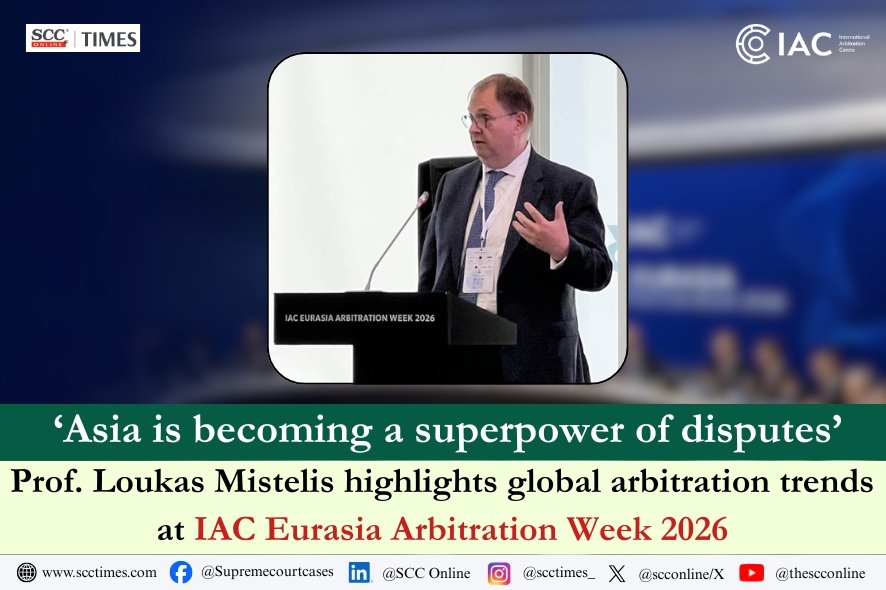
  • ‘Asia is becoming a superpower of disputes’: Prof. Loukas Mistelis highlights global arbitration trends at IAC Eurasia Arbitration Week 2026

    ‘Asia is becoming a superpower of disputes’: Prof. Loukas Mistelis highlights global arbitration trends at IAC Eurasia Arbitration Week 2026


    On Day 2 the International Arbitration Centre (IAC) hosted a keynote session titled “Queen Mary International Arbitration Survey: Global Trends, User Expectations & the Path Forward” during IAC Eurasia Arbitration Week 2026, featuring Prof. Loukas Mistelis, Clive M. Schmitthoff Professor of Transnational Commercial Law and Arbitration at Queen Mary University of London and International Arbitration Partner at Steptoe LLP.

    Introducing the speaker, it was noted that Professor Mistelis had played a defining role in establishing the empirical study of international arbitration through the Queen Mary surveys, long before arbitration discourse became driven by rankings and analytics. He observed that the surveys sought to understand not merely how arbitration functioned, but how its users perceived and experienced it.
    The moderator further remarked that for the IAC, the survey represented more than academic research. As a relatively young arbitral institution that has recently crossed the milestone of 5,000 cases, the Centre hopes to earn recognition through user confidence rather than institutional promotion. “We hope to appear because users name us, because they have used us, trusted us and found us worthy of comparison with established international centres,” he said.
    Origins of the Queen Mary International Arbitration Survey
    Beginning his address, Professor Mistelis explained that the Queen Mary International Arbitration Survey originated from a simple yet significant question: how do businesses actually choose arbitration?
    Recalling the survey’s inception more than two decades ago, he said that the idea emerged during a discussion with colleagues over dinner, at a time when international arbitration lacked systematic empirical research.
    He observed that in the early 2000s, resources either did not exist or were in their infancy. Discussions surrounding arbitration were largely anecdotal, with little understanding of what users actually valued in arbitral proceedings.
    Accordingly, the survey was designed to understand why businesses choose arbitration, what users expect from the process, and how arbitration functions as a transnational legal order.
    Professor Mistelis noted that the surveys have been conducted in partnership with leading organisations, including PwC, White & Case LLP, and Pinsent Masons, while every researcher associated with the project has gone on to establish a distinguished career in arbitration, whether in academia or practice.
    2025 Survey reflects Asia’s growing engagement
    Turning to the latest edition of the survey, Professor Mistelis explained that the 2025 Queen Mary International Arbitration Survey combined quantitative responses with qualitative interviews.
    The survey received approximately 2,400 responses and included 117 in-depth interviews across jurisdictions, industries and stakeholder groups.
    One of the most striking findings, he noted, was Asia’s growing participation.
    Nearly 47 per cent of respondents came from the Asia-Pacific region, followed by Europe (31 per cent) and North America (10 per cent).
    Professor Mistelis attributed this not merely to demographic realities but also to the region’s increasing engagement with international arbitration and growing reliance on empirical research.
    Arbitration remains the preferred method for cross-border disputes
    Discussing the survey’s principal findings, Professor Mistelis noted that international arbitration continues to enjoy overwhelming user confidence.
    He stated:
    “Arbitration remains the preferred method for cross-border disputes.”
    Approximately 87 per cent of respondents identified arbitration as their preferred standalone mechanism for resolving international commercial disputes, while many others preferred combining arbitration with other forms of alternative dispute resolution such as mediation and negotiation.
    Although perceptions have evolved over the past two decades, he observed that the fundamental preference for arbitration has remained remarkably consistent.
    London retains leadership while Asia emerges as a global arbitration powerhouse
    Professor Mistelis observed that London has consistently remained the world’s leading arbitral seat since the first Queen Mary survey in 2006.
    According to the 2025 findings, London continues to lead globally, followed by Singapore, Hong Kong, Beijing, and Paris.
    Regional preferences, however, reveal significant shifts. Within the Asia-Pacific region, respondents identified Hong Kong, Singapore, Beijing, London, and Shenzhen as their preferred arbitral seats.
    Similarly, the survey demonstrated the continuing prominence of the International Chamber of Commerce (ICC) as the most preferred arbitral institution globally, followed by institutions such as the Hong Kong International Arbitration Centre (HKIAC), London Court of International Arbitration (LCIA), China International Economic and Trade Arbitration Commission (CIETAC), and others.
    Reflecting on broader global developments, Professor Mistelis remarked:
    “Asia is becoming a superpower of disputes.”
    He explained that not only are an increasing number of disputes originating from Asia, but many are also being seated within Asian arbitral centres, demonstrating the region’s growing influence over international dispute resolution.
    Efficiency, cost and confidentiality remain users’ primary concerns
    Professor Mistelis noted that while arbitration continues to be widely preferred, users consistently emphasise three priorities: efficiency, cost, and confidentiality.
    He observed that demands for expedited procedures, early determination of unmeritorious claims, and more effective case management continue to grow.
    At the same time, survey respondents frequently attributed procedural inefficiencies differently depending upon their role.
    He remarked, somewhat humorously, that:
    “Counsel blame arbitrators and arbitrators blame counsel.”
    Cost also remains a recurring concern. Professor Mistelis stated:
    “Cost matters.”
    Nearly half of the survey respondents continue to regard arbitration as expensive.
    Offering his own perspective, however, he described arbitration as a premium dispute resolution mechanism.
    He explained:
    “Arbitration is a luxury market. It’s the private health service.”
    According to him, arbitration was never intended for every category of dispute, particularly low-value consumer or small commercial claims, and attempts to extend arbitration into such areas may undermine its original purpose.
    Confidentiality also continues to distinguish arbitration from litigation. While some institutions have promoted greater transparency by publishing arbitral awards, Professor Mistelis observed that parties overwhelmingly continue to value confidentiality, particularly in commercial disputes.
    Artificial Intelligence will improve efficiency but not replace arbitrators
    Addressing one of the most closely watched themes of the survey, Professor Mistelis discussed the growing role of Artificial Intelligence (AI) in international arbitration.
    Survey respondents generally believe AI will improve efficiency, particularly in document review, organisation of evidence, and factual summaries.
    However, they remain reluctant to entrust substantive legal reasoning to AI.
    Professor Mistelis explained that while AI may assist tribunals in administrative tasks and procedural management, the drafting of legal reasoning and final decisions must continue to remain the responsibility of human arbitrators. He also acknowledged concerns surrounding algorithmic bias and differing technological standards across jurisdictions.
    Geopolitics and mediation will shape future arbitration practice
    Looking ahead, Professor Mistelis identified several developments likely to influence future editions of the survey.
    These include the growing interaction between mediation and arbitration, emergency relief mechanisms, sanctions, and the fragmentation of the global legal order resulting from geopolitical developments.
    He observed that international arbitration is increasingly evolving within regional ecosystems while remaining fundamentally global in character.
    During the interactive session, Professor Mistelis also addressed questions regarding the survey’s methodology and representativeness. He explained that the questionnaires are developed through carefully selected focus groups comprising representatives from arbitral institutions, businesses, in-house counsel and arbitrators, while qualitative interviews provide essential context beyond statistical findings.
    Concluding the session, the moderator observed that the Queen Mary Survey serves as an important benchmark for arbitral institutions worldwide.
    He remarked that institutions ultimately build their reputation not through self-promotion but through user confidence. Expressing the IAC’s aspirations, he stated that the Centre hopes to be recognised in future editions of the survey because users choose it voluntarily and regard it alongside the world’s leading arbitration institutions.
    Read more IAC Eurasia Arbitration Week 2026 coverage:

  • Asake’s ‘One Night Only’ Concert In London Was A Masterclass In Gratitude

    Asake’s ‘One Night Only’ Concert In London Was A Masterclass In Gratitude


    Walking out spitting lyrics to an unreleased track which aligned with the thematic and sonic universe of ‘M$NEY,’ Asake’s vocals cut through.

    Written by Ezra Olaoya – 03.Jul.2026

    Rich with affirmations, manifestation and gratitude, there is a prophetic quality that permeates Asake’s music. His 2022 breakout single “Omo Ope”-which can be loosely translated as someone who is highly favoured-was a jubilant declaration of living in expectation of the blessings the path to inevitable success. The faith with which he made this declaration was swiftly rewarded with an Olamide feature that preceded a generational run of snippets, singles and a classic debut album which marked 2022 as a year that will always be synonymous with Mr Money.
    The following four years have been filled with that foretold success. There have been sold out shows in iconic venues, from London’s O2 Arena in 2023 to New York’s Madison Square Garden in 2024. There has been more iconic music created across three albums, a joint EP with Wizkid as well as a deck of memorable feature verses. There has also been, as he will not neglect to let his fans know, a lot more money made. 
    His Red Bull Symphonic performance in Brooklyn’s King Theatre last year felt like a crowning moment for an artist who has steadily built a discography that evolves thematically and sonically in step with his life experiences while maintaining an unmistakable essence. These expressions which see Asake seamlessly blend influences spanning from Fuji to Electronic Dance Music to Séga music, translate impactfully in his live performances. Augmented by live instrumentation, solid vocals and an assured swagger on stage, Asake has become one of Nigeria’s most formidable live performers, crowning his catalogue with memorable moments on stage. 

     
    His milestone performance in New York last year is indicative of a pattern which has seen Afrobeats artists bring their music to stages which have not traditionally welcomed artists of the genre. Notable examples include Adekunle Gold at Royal Festival Hall in November 2025, as well as Fireboy DML and Cavemen at Royal Albert Hall in April and August 2025, respectively. Though these venues do not affirm or legitimise the value and skill of Afrobeats artists, these performances demonstrate how the quality and commercial viability some of these artists bring has become undeniable, leading them to be embraced in these music cathedrals. 
    Whether or not performing in these revered halls ‘elevates’ the art, these performances demonstrate that the genre’s storytelling and musicality can consistently produce memorable spectacles, even in these contexts where they may once been shunned. Despite the success of the Red Bull Symphonic performance which had  teasers of the forthcoming project,  2026’s ‘M$NEY’ arrived with relatively little fanfare per Asake’s standards. That said, on Sunday 21st June, the excitement in the air was palpable. In London’s Theatre Royal Drury Lane, a mixture of top listeners, press and media personalities donned their finest black tie to witness Mr Money grace the stage for a “One Night Only” performance in partnership with Spotify.

     
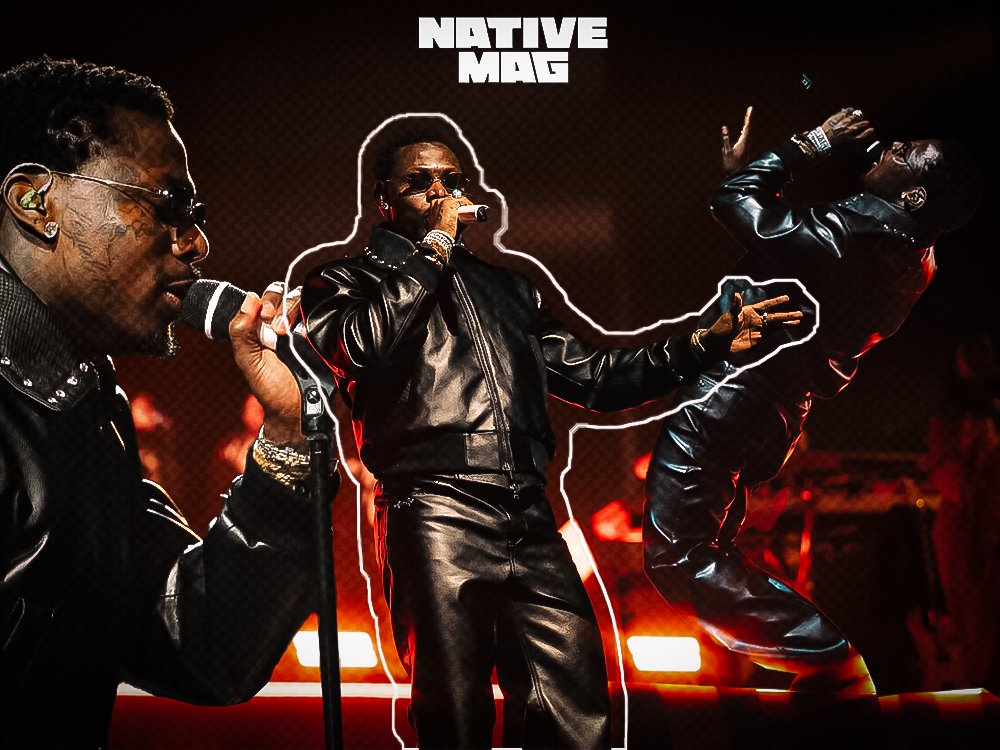
    As the curtains of the 2,300 capacity theatre rose to cheers of expectant fans, a host of backing vocalists and instrumentalists poised themselves on the stage according to their role. The man of the moment emerged decked in a leather two piece, complete with a subtle embellishment of diamonds on the collar of his jacket, a signifier that as his moniker suggests, he indeed is Mr Money.

    Walking out spitting lyrics to an unreleased track which aligned with the thematic and sonic universe of ‘M$NEY,’ Asake’s vocals cut through cleanly from the start to the end of his performance. Fan favourites could be easily detected by the eruption of cheers in response to the opening chords and lyrics, with tracks like  “Wa,” “Why Love,” and “Forgiveness” met by roars and impassioned renditions by members of the audience members. The theatre seating, usually synonymous with ‘polite’ reservation became a dancefloor as Asake shared tales of gratitude and opulence. 

     
    The onstage ensemble including choir, band and backing vocals shared this energy with animated choreography, bringing life to the affirmations and reflections being shared. Meanwhile, Asake’s stage presence embodied ‘itutu’-a calm, assured confidence that was evident in the dance breaks and the way he sauntered around the stage-a marked contrast with the high octane performances of 2022. 
    As the night progressed, the two piece leather set became a waistcoat and trousers before it became a dazzling gold top–gradual outfit changes which echoed a metamorphosis of sorts. Importantly, the performance of the tracks contextualized his latest album, exploring ideas of love, affirmation and gratitude alongside the accompaniment of a live band communicating feelings in a way that doesn’t always translate digitally. Asake’s performance was indicative of someone who is aware of how far they’ve come and can only give thanks for the journey. 
    2022’s ‘Mr Money With The Vibe’ opened with Asake’s earnest prayers on “Dull,” requesting that he shouldn’t stumble as he ascended the highest summit. Fast forward to 2026 in London, as Asake stood in the centre of the stage with his arms open while the crowd sang the lyrics to ”Worship,” it felt like an expression of gratitude for answered prayers. While sometimes expressed through flaunting of wealth and demonstration of excesses, there is a clear sense that Asake attributes his success to the grace of God. 
    2026’s ‘M$NEY’ can perhaps be read as an offering of thanksgiving as Asake basks in the manifestation of the blessings he prophesied when he first burst onto the scene. The pursuit of success and wealth can often seem insatiable, each milestone unlocking a deeper desire for the next. Through this project and his live performance, Asake exemplifies the simplicity and beauty of gratitude.

  • WhatsApp will allow users to go by usernames instead of phone numbers, closing a privacy blind spot

    WhatsApp will allow users to go by usernames instead of phone numbers, closing a privacy blind spot


    LONDON (AP) — WhatsApp users will soon get the option of going by usernames instead of phone numbers, the company said Monday, announcing plans to address a privacy blind spot.The app said it has started allowing users to reserve unique usernames, which can be used to contact WhatsApp users when the feature is launched later this year.WhatsApp, which says it has more than 3 billion users globally, has until now allowed users to be contacted by anyone who has their phone number.The app, owned by Meta Platforms, said in a blog post that over the “coming months” users will get the option to be found and contacted only by their username, and not their number. It wasn’t more specific about the timeline.“We have designed this as a core privacy feature,” Alice Newton-Rex, WhatsApp’s vice president of product, told reporters.There won’t be a directory of usernames on the app, and the app won’t suggest names as you type.“People will need to know your exact username to contact you for the first time,” she said.WhatsApp’s current privacy settings are limited to blocking individual users and silencing unknown callers. The app also allows users to add a profile name, but that’s only displayed in chat groups for other people who don’t have the user’s contact info saved.While Americans still prefer text messaging to WhatsApp, the app is widely used in Europe, Asia and much of the rest of the world.Catchy online handles are highly coveted and users will likely scramble to claim a desirable one.“I think a lot of people will go and get usernames and that’s why we decided to open reservations early,” Newton-Rex said.Companies, organizations and creators with existing accounts on Meta’s social media platforms, Instagram and Facebook, will get the chance to claim their usernames on WhatsApp.Usernames need to be between three and 35 characters. To prevent impersonation, WhatsApp will hold back usernames for high-profile people or groups such as celebrities, public figures and government entities.

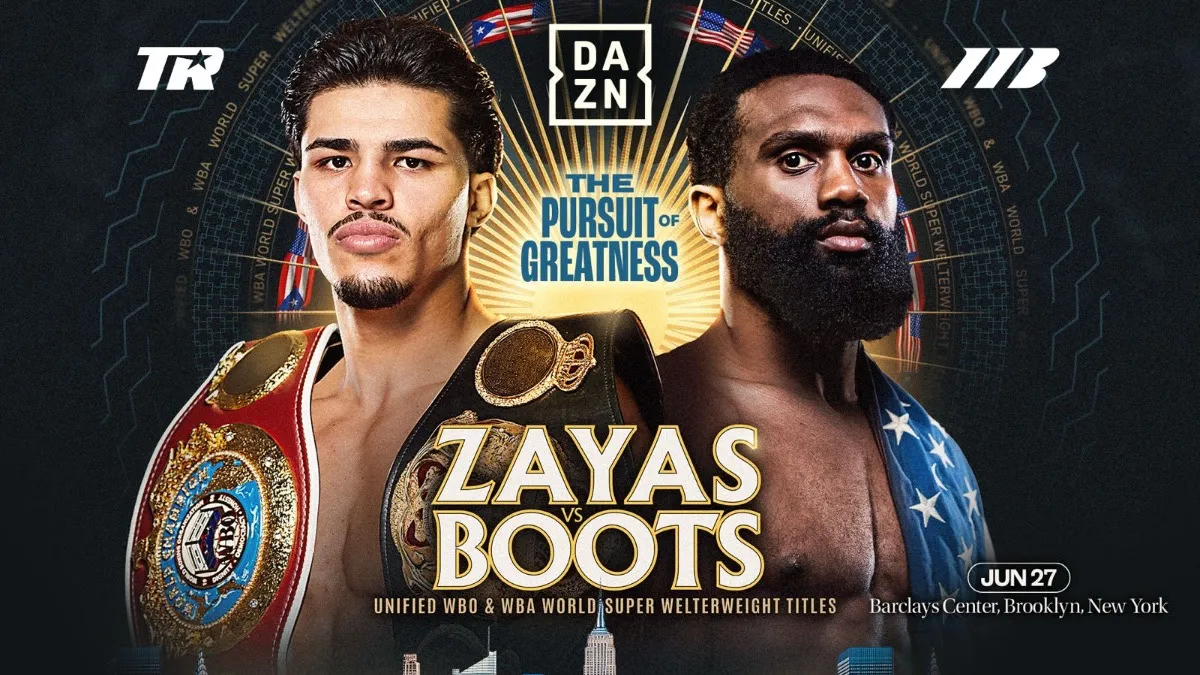
  • LIVE BLOG: Xander Zayas vs. Jaron ‘Boots’ Ennis

    LIVE BLOG: Xander Zayas vs. Jaron ‘Boots’ Ennis


    NEW YORK – A matchup of two champions performing in their primes can seem too infrequent in boxing, but it happens Saturday night at Barclays Center as unified 154-pound champion Xander Zayas defends his WBO and WBA belts versus unbeaten former unified welterweight titlist Jaron “Boots” Ennis.BoxingScene will provide live round-by-round coverage here with writers Lance Pugmire and Tris Dixon near ringside in Brooklyn.Philadelphia’s Ennis, 35-0 (31 KOs), won his 154-pound debut by first-round knockout and Puerto Rico’s Zayas, 23, has claimed the WBO and WBA straps in his past two bouts.Ennis, 28, is a -500 betting favorite because of his comprehensive skillset, but Zayas, 23-0 (12 KOs), boasts an effective jab and footwork, seeking to draw the smaller Ennis into a toe-to-toe battle that can provide openings to land effective blows.

  • Tim Bowness & Butterfly Mind | Bruce Soord & Jon Sykes

    Tim Bowness & Butterfly Mind | Bruce Soord & Jon Sykes


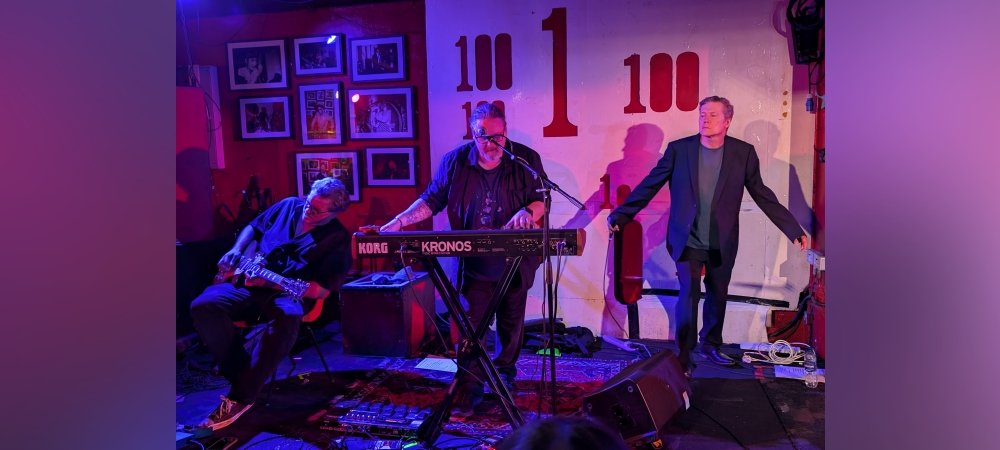
    100 Club, Oxford Street, LondonSaturday, 20 June 2026
    A balmy summer evening greets us revellers as we emerge from Oxford Circus tube station, heading for a tasty pre-gig curry. Suitably nourished off we go to the nearby legendary 100 Club, a place that holds many memories of punk gigs of yore. That old dive is more than a tad smarter now, TV Smith wouldn’t recognise it. The floor is no longer sticky! The stage is still in the wrong place, and those pillars are no smaller though. 🙂

    BRUCE SOORD & JON SYKES

    Bruce and Jon, the beating heart of prog veterans Pineapple Thief, opened tonight’s shenanigans with what starts off as an unplugged set and slowly gets spikier as Bruce picks up his electric.
    There was a time, quite a few years ago now, when I was a bit of a fan of Pineapple Thief, but we seem to have drifted apart. As a result I was unfamiliar with tonight’s set.

    With drums on a backing track for the rockier numbers, this, in sound at least, was a PT gig. They seem to have got a tad heavier since I last encountered them, which is no bad thing. I think I need my earplugs now, the volume has increased accordingly! Typically they then slow things down again. The set peaks with the near-epic Ghosts In The Park from Bruce’s new album of the same name. Review link if there is one?
    I do enjoy the heavier stuff more than the quieter introspective numbers, which tend to inhabit a rather narrow soundscape as far as my battered ears are concerned, it has to said, but it’s an enjoyable start to the evening.

    SETLIST:
    Pillars
    Solitary Path
    Dear Life
    Meet Me On The Downs
    Never Ending Light
    All This Will Be Yours
    Cut The Flowers
    A Lonelines (that’s what the setlist says!)
    Ghosts In The Park Pt 1
    Ghosts In The Park Pts 2&3
    Snowdrops
    [Photos courtesy of Leon Barker]MUSICIANS:
    Bruce Soord – Acoustic & Electric Guitars, Vocals
    Jon Sykes – Bass
    LINKS: Website | Facebook | Bandcamp | Instagram

    TIM BOWNESS & THE BUTTERFLY MIND

    After a much-needed chance to recharge our glasses and chat to some familiar faces, we have the headliners Tim Bowness & Butterfly Mind, back to their original line up now that the mercurial Andy Edwards has returned to the drum stool. Tim Bowness is a man who has written some extraordinary songs in his long career. Always self-effacing, for a while now he has been blessed with a new confidence and a spring in his step, that tonight transmits to the band as they deliver a feisty and edgy set. I think he may have smiled, more than once, too!

    After opening with the as yet unreleased No Fires Lit Here the band propel themselves into a fiery rendering of live favourite Time Travel In Texas, which segues straight into Sweetheart Raw, featuring Mr Jon Jowitt on extra funky bass groove.
    Tim finally gets to chat between numbers, noting that his stage suit and smart top bear a striking resemblance to the favoured garb of our Prime Minister-in-waiting… “If we sound crap, it’s the curse of the Andy Burnham suit” jokes Tim. It’s ok Mr B, no worries on that score. For all it’s ergonomic failings, the 100 Club always delivers a good sound, and tonight is no exception.

    The frenetic atmosphere is brought down a notch or two with no man’s Wherever There Is Light. It was good to hear a liberal sprinkling of no man material throughout the set. I think I’ve heard…or I’m starting a rumour 😉 …that there is new no man material on the way. Let’s hope so. For all his success elsewhere I still consider Mr Wilson’s collaboration with Mr Bowness has produced the former’s best writing. Other opinions are available.
    Tim’s band intros are always wryly amusing, and tonight’s into for the bass player is no exception… “And on bass guitar, Jon Jowitt, a man so masculine he invented the manosphere!” 🙂

    Rainmark sees some skysaw Fripp-styled guitar wrangling from Matt Stevens, who along with Rob Groucutt are introduced as “the two nicest men in rock”. This is followed by a mad but thrilling drum cacophony from Andy Edwards, who definitely exorcised some ghosts on that one! Mixtaped, another no man treat, brings things down after that adrenaline fest. Or so you might think if you were unfamiliar with the tune, for it soon jumps into a broiling gaping maw bubbling with hot lava guitar. Nice!

    As the band can’t leave the stage with any dignity, as they’d have to walk through the crowd, they remain where they are for the encore, after Tim has exhorted the appropriate whooping and hollering from the appreciative crowd. They encore with Lost/Not Lost, a song from Tim’s last album Powder Dry, with a top line that reminded my companion of Firestarter (it does!), followed by a “punk” version of Time Travel In Texas in honour of the iconic venue’s past.
    That was a jolly good gig, o yes!

    [Photos not entirely ruined by All The Blue Lighting (thanks Sam 😉 ) – Roger Trenwith]
    SETLISTNo Fires Lit HereTime Travel In TexasSweetheart RawAll The Blue ChangesWherever There Is LightThe Warm-Up Man ForeverSing To MeRainmarkMixtapedThings Change
    MUSICIANS:Tim Bowness – VocalsMatt Stevens – GuitarsRob Groucutt – Keyboards, Guitar, Backing VocalsJon Jowitt – Bass Guitar, Backing Vocals, [manoshpere]Andy Edwards – Drums
    SETLISTNo Fires Lit HereTime Travel In TexasSweetheart RawAll The Blue ChangesWherever There Is LightThe Warm-Up Man ForeverSing To MeRainmarkMixtapedThings Change ~ Encore:Lost/Not LostTime Travel In Texas – “Punk” version
    LINKSTim Bowness – Website | Facebook | YouTube | X | Instagram