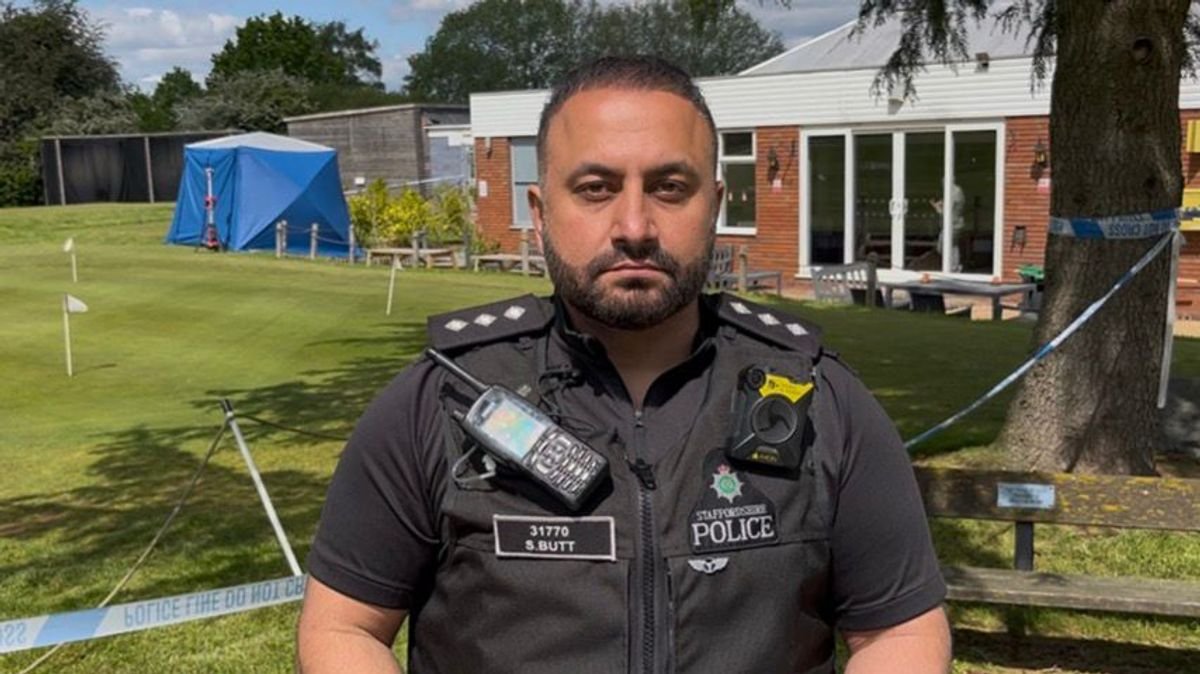
Ch Insp Saqib Butt said Staffordshire Police is carrying out ‘reassurance patrols’ in the area after a man in his 60s was stabbed16:34, 15 May 2026Updated 16:35, 15 May 2026Chief inspector Saqib ButtA police chief inspector has sought to reassure members of the public after a man was stabbed in Stafford.The victim, aged in his 60s, was attacked while walking through Stafford Castle golf course, near Newport Road, at 7pm yesterday on Thursday, May 14.He remains in a critical but stable condition today, Staffordshire Police said.READ MORE: Stafford manhunt live after stabbing leaves man in critical conditionGet breaking news on BirminghamLive WhatsApp, click the link to joinA large police presence remains in place at the scene today, May 15, while officers hunt the attacker.A blue forensic tent was in place while the scene was taped off, and officers in high-vis uniforms patrolled.Chief Inspector Saqib Butt on stabbing at golf club in StaffordThe attacker is described as being a man in his mid-to-late 20s, potentially of Eastern European heritage, of average build, and wearing dark clothing.Asked by BirminghamLive if there was any indication of the cause of the attack, Chief Inspector Butt, who is the Stafford Borough local policing team commander, said: “At the minute, all I’d say to the public is that the enquiries are ongoing.”Our detectives are working really hard and at pace, as are some of our officers.”So don’t be alarmed to see them in the area; we are giving you our reassurance patrols, and all I’ll say is that inquiries are continuing.”Staffordshire Police at the scene of Stafford Castle golf courseCh Insp continued: “We understand this incident will cause concern within the local community.”I want to reassure residents that we are doing everything we can to identify and apprehend the person responsible.”Detectives are keen to hear from anyone who was “in the area around Redgrave Drive towards Stafford Castle shortly before the assault and who may have seen anything suspicious,” said Ch Insp Butt.He added: “If you live nearby or were passing through and have CCTV, dashcam, or doorbell footage, please take the time to review it and get in touch if you have anything that could assist our investigation.”I would like to thank everyone who has already come forward with information.”Your support is invaluable and we are continuing our inquiries today.Staffordshire Police at the scene of Stafford Castle golf course”A dedicated online portal has been set up to make it as easy as possible for people to share information with us.”Alternatively, you can contact us directly, or if you wish to remain anonymous, you can call Crimestoppers on 0800 555 111.”
Category: Newcastle

Detectives probing motive for stabbing as they hunt for ‘Eastern European man’

Adults in Staffordshire to get new route into higher level learning > A Little Bit of Stone
Adults in Stone and across Staffordshire who want to retrain, upskill or return to higher level learning are set to get access to more flexible student finance under government reforms due to begin from 2026.Newcastle and Stafford Colleges Group, Keele University and the University of Staffordshire are among the first providers approved to offer shorter courses through the new Lifelong Learning Entitlement.
The changes are aimed at people who want to study around work, childcare or other commitments, rather than committing straight away to a full degree.
From September 2026, people will be able to apply for student finance for shorter higher level courses, known as modules, as well as traditional university degrees. The first courses and modules under the new system are due to start from January 2027.
The Department for Education says the funding will allow people to build qualifications over time, with support linked to the size of the course being studied rather than only being available for full academic years.
For Stone residents, the Staffordshire providers on the first approved list mean there will be local and regional options available through nearby colleges and universities.
The full Staffordshire and nearby providers named in the West Midlands list include Newcastle and Stafford Colleges Group, Keele University and the University of Staffordshire. Other approved providers across the region include Aston University, Birmingham City University, Coventry College, Dudley College of Technology, Harper Adams University, Solihull College and University Centre, Telford College, University College Birmingham, University of Warwick, University of Worcester and Walsall College.
The government says modules will focus on subjects linked to skills shortages, including computing, engineering, architecture, economics, health and social care.
Under the new system, eligible people will be able to access funding equivalent to four years of post 18 study, currently worth up to £39,160. The money can be used flexibly across shorter courses, modules or full degrees during a person’s working life.
Maintenance support will also be available for eligible students to help with living costs.
People who already have a degree may still be able to access the new funding if they have remaining student finance available, or if they want to retrain in certain priority subject areas.
Skills Minister Jacqui Smith said
“Financial support should be available whether you want to do a degree, take a short course, or retrain later in life. Our changes will make that happen, with the option to access student finance in any stage of life.
“Whether it’s fitting study around a job, retraining for a completely new career, juggling childcare, or getting qualifications later in life, the new Lifelong Learning Entitlement will open up new opportunities for thousands more people to build the careers they want and get on in life.”
Applications for student finance under the new system are due to open in September 2026, for courses and modules starting from January 2027.

Arsonists start Stoke-on-Trent building fire
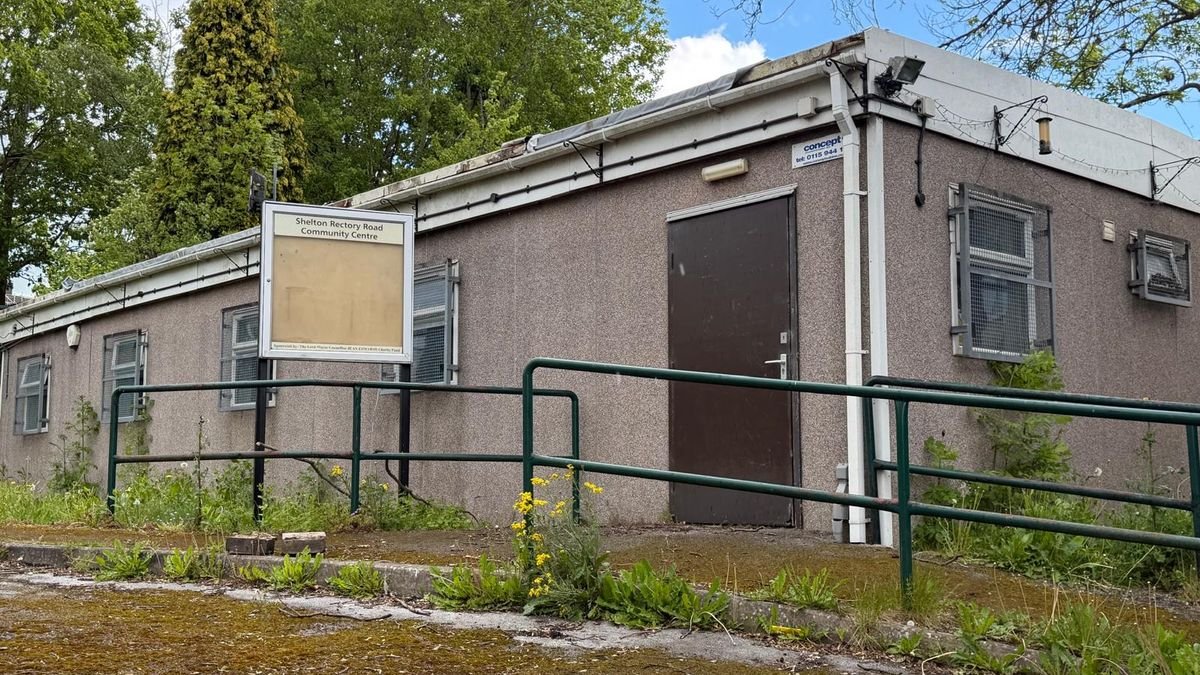
Police are investigatingShelton Rectory Road Community Centre, in SheltonArsonists started a building fire. Firefighters taped off the junction of Milton Street and Rectory Road, in Shelton, at the height of the incident.The fire broke out in an outbuilding in the grounds of Shelton Rectory Road Community Centre. The alarm was raised at 7.15pm on Wednesday 13 May.A Staffordshire Fire and Rescue Service spokesman said: “We were called to Milton Street following reports of smoke coming from an outbuilding. Two appliances attended the scene and extinguished a small fire using a hose reel jet. Nobody was reported injured. The cause of the fire was deemed to be deliberate and the incident has been left with colleagues from Staffordshire Police.”StokeonTrentLive is still awaiting a statement from Staffordshire Police following the blaze. Any witnesses can call the police on 101.Get even more North Staffordshire exclusives – and it is free

Staffordshire Police publishes new plan to tackle anti-social behaviour > A Little Bit of Stone
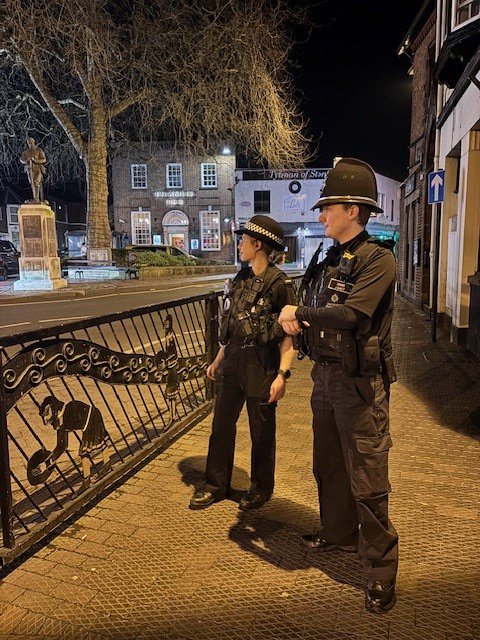
Staffordshire Police has published a new action plan setting out how it will work with communities and partner organisations to reduce anti-social behaviour across the county.Photo: Staffordshire Police Facebook
The plan covers the whole Staffordshire force area, including Stone and Stafford Borough, and focuses on early intervention, support for victims and action against repeat offenders.
The action plan says anti-social behaviour can include aggressive, noisy or abusive behaviour, vehicle-related nuisance, neighbourhood disturbances, drug-related issues, abandoned cars, problems involving animals, and public space disorder. The plan also lists common trends across Staffordshire, including youth-related nuisance, neighbourhood disputes, noise complaints, substance misuse linked behaviour, environmental anti-social behaviour, town centre disorder and rural issues including off-road vehicle misuse.
Staffordshire Police says it will work to prevent anti-social behaviour by identifying trends through police intelligence and community information.
It also says the force will focus on repeat and vulnerable victims, with improved identification, risk assessment, support and safeguarding referrals.
The plan is built around four areas of work, prevent, protect, pursue and prepare.
Under the plan, Staffordshire Police says it will work with partners including community safety teams, schools, youth services, housing providers, health services, local authorities and the voluntary sector. It also says it will use a range of interventions against offenders, up to and including prosecution, with repeat offenders targeted through problem-solving work and partnership case management.
The plan says anti-social behaviour incidents in Staffordshire continue to show a seasonal pattern, with peaks usually seen during the summer school holidays. It also says overall incident volumes have increased year on year, with community nuisance making up more than 75% of reported anti-social behaviour incidents.
Figures included in the plan show 17,808 anti-social behaviour occurrences across Staffordshire in the latest completed 12 month period, compared with 14,993 in the previous 12 months.
For the Stafford local policing team area, which includes Stone, the plan records 1,794 occurrences in the latest completed 12 month period, compared with 1,529 in the previous 12 months.
Reporting patterns are described as broadly stable, with most reports made from mid afternoon into the early evening, and larger volumes on Fridays and Saturdays.
Force lead for anti-social behaviour, Superintendent Alan Lyford, said
“We do not underestimate the impact that ASB can have on local people and businesses.
“We use a range of orders to combat ASB and between July 2024 and July 2025, we issued 236 community protection warnings, 180 dispersal powers and 122 community protection notices.Article continues after this message
“The new plan sets out how we will work alongside partners to reduce ASB by delivering early intervention, targeted enforcement and sustainable prevention through partnership-led, intelligence-driven policing that improves community safety and confidence.”
Staffordshire Commissioner for Police, Fire & Rescue and Crime Ben Adams said
“Tackling the anti-social behaviour that can damage our communities is a priority for me as Commissioner. I am continuing to directly support our local community safety partners to address the issue alongside the police, so I welcome Staffordshire Police’s renewed commitment to pursuing offenders and supporting victims through their action plan.
“Each person’s experience of ASB is different, which is why I commission the ASB Harmony service to offer a range of emotional and practical support for victims that is tailored to their individual needs.
“If you’re experiencing ASB, please make use of resources available, such as case reviews and community remedies, and report incidents to Staffordshire Police by calling 101. If you need support to help you recover from the impact of ASB, contact ASB Harmony on 0330 1757 258.”
Anthony Screen, Cabinet Member for Community Safety and Resilience at Staffordshire County Council, said
“Anti-social behaviour damages more than property; it chips away at people’s confidence, pride and sense of belonging in their community. Left unchecked, it can make residents feel unsafe in their own neighbourhoods.
“By working together with our partners including the police, housing providers, schools, health services and local communities, we can prevent problems early, support victims and hold perpetrators to account. This means we can create a safer and stronger Staffordshire for everyone, which is a key aim of the county council’s recently published Community Safety Strategy.”
The plan says members of the public should report anti-social behaviour to police if it involves crime, violence, threats or immediate danger.
Ongoing issues such as noise complaints, littering, graffiti or other community disturbances that do not need an emergency response may be dealt with by the local authority.
Anyone experiencing anti-social behaviour can report it to Staffordshire Police by calling 101 or using Live Chat on the Staffordshire Police website.
The full Staffordshire Police anti-social behaviour action plan is available through the force website.
Police make third attempted murder arrest after Hanley attack
The victim remains in hospitalStaffordshire Police have taped off Potteries Way, in HanleyPolice investigating the attempted murder of a man have made a third arrest. A 39-year-old Stoke-on-Trent man is today still being quizzed following the Hanley attack.The victim – a man in his 30s – today remains in a ‘serious’ condition in hospital.Police, paramedics, and an air ambulance were deployed to Hillcrest Street, in Hanley, at 4.20pm on Sunday. Police later made two arrests on Wellington Street and officers and paramedics were also seen at the junction of Potteries Way and Bucknall New Road.A Staffordshire Police spokesman said: “A third man has been arrested following a serious assault in Hanley. A 39-year-old man, from Stoke-on-Trent, was arrested on suspicion of attempted murder last night (Tuesday 12 May). He remains in police custody while our inquiries continue.”Two other men, aged 52 and 53, both from Stoke-on-Trent, who were also arrested in connection with the assault have since been placed on conditional police bail. The victim, a man in his 30s, remains in a serious but stable condition in hospital. Officers continue to investigate the circumstances of what happened and urge anyone with information, CCTV, dashcam or doorbell footage to call us.”Witnesses should call the police on 101, quoting incident number 517 of 10 May, or call Crimestoppers, anonymously, on 0800 555111.Get even more North Staffordshire exclusives – and it is free
Smartphone video helping Staffordshire firefighters respond to emergencies > A Little Bit of Stone
Smartphones are increasingly being used to help Staffordshire firefighters assess emergencies before crews arrive at the scene.Stone residents calling Staffordshire Fire and Rescue Service, along with others across the county, may be asked whether they have a smartphone. Control room operators can then send a link so live video can be shared from the incident.
The latest Fire and Rescue Service Public Performance Meeting, chaired by Staffordshire Commissioner Ben Adams, heard how the technology is helping crews respond to incidents including fires and missing person searches.
Mr Adams said
“There was a message I picked up recently, someone had called fire and rescue and an early question to them was have you got a smartphone? This individual was thinking ‘what’s going on here, I’m trying to report a fire’.
“Can you explain what is going on with people providing more information to control via the technology they have got in their pocket? I think the individual was confused and a bit angry, then they were almost embarrassed when they realised just what a contribution they were making.”
Glynn Luznyj, who is set to become Staffordshire’s next Chief Fire Officer next month, said the system was a “fantastic example” of technology helping the fire and rescue service during emergencies.
He said
“There is a facility now that our fire control operators can tap into a member of the public who has a smartphone by sending them a link very quickly.
“They can click on the link and video what’s occurring on the ground in real time. That can be relayed to the control centre, to aid with their decision-making so they can see the incident before them, and that can also be relayed to the oncoming crews who are on the way to the incident, that can be so valuable in informing the tactical plan for the commanders and the teams.”
Mr Luznyj said the live video can quickly change how crews prepare for an incident.
He added
“Where there’s been a fire in a home, everybody’s outside the property, the link’s been sent through, control have witnessed somebody realising that a pet is still inside the house that’s on fire and they’ve made the decision to enter the building.
“All of a sudden we’ve got a house that’s on fire with a person reported inside and that dramatically changes the situation for the oncoming crews, who can prepare for that and act accordingly.”Article continues after this message
The meeting also heard how drones are being used more often to support emergency services.
Mr Adams said
“I’m involved with the national police aviation service and we’re seeing drones used a lot more in policing.
“That new technology is still progressing for fire and rescue as well and going into areas safely, which you wouldn’t want firefighters to go into without advance information.”
Mr Luznyj said drones had already shown their value at incidents including building fires and missing person searches.
He said
“I remember first using a drone a decade or so ago, purely for a media interview at the scene of a large wildfire in the county, and we were so impressed with the picture and the views the drone was giving us.
“We knew then what an opportunity drones could present in terms of operational awareness, decision making and thermal imaging. Now I’ve seen real value on a number of occasions on the ground, whether it be a building fire or a missing persons incident, to give you that overview quickly.”
He said Staffordshire Fire and Rescue Service had also used drone capability from other fire and rescue services, including an underwater drone in sensitive incidents involving someone submerged in water.
Mr Luznyj added
“It’s a developing picture, one that I can see only enhancing firefighting operations. I think there will be, in very near times, opportunities to have drones committed into buildings, doing a level of firefighting, a level of assessment and reconnaissance which is going to make it safer for our firefighters.
“I’m very much behind exploiting those opportunities and learning from them in the future.”

UK Water Supplier Fined Nearly £1 Million After Hackers Roamed Networks for Almost 2 Years
A UK water supplier has been fined £945,000 after regulators found cybercriminals had access to its systems, exposing sensitive customer data, for nearly two years before they were discovered.The UK Information Commissioner’s Office (ICO) announced this week that it had levied the penalty against South Staffordshire Plc and South Staffordshire Water Plc following a 2022 ransomware attack that compromised the personal data of hundreds of thousands of customers.Key takeawaysUK regulators fined South Staffordshire Plc and South Staffordshire Water Plc nearly £1 million after a major cyberattack.
The ICO said attackers were able to linger inside company systems for almost two years before detection.
Exposed data reportedly included names, addresses, contact details, and in some cases bank account information.Attackers reportedly lingered undetected for yearsInvestigators found the attackers had access to parts of the company’s network long before August 2022 when the breach was publicly disclosed. The ICO said the intrusion went unnoticed for nearly two years, raising serious concerns about the organization’s security monitoring and detection capabilities.As reported by The Record, the ransomware gang Cl0p claimed responsibility for the attack and published samples of allegedly stolen data online. At the time, South Staffordshire Water said operational water supply systems were unaffected and drinking water remained safe.However, subsequent investigations revealed that customer data had been accessed and later leaked online.Who was affected Investigators found that, at the time of the attack, South Staffordshire held personal information relating to 750,000 current and 1.1 million former customers—totalling 1.85 million—as well as 2,791 current employees and at least 2,298 former employees. Personal information of 633,887 people stolen in the breach was published on the dark web in August 2022, the ICO said. The compromised data included:Personal details such as full name, physical address, email address, date of birth, gender and telephone number. For employees, HR information including National Insurance numbers. For customers, account information (including username and password for South Staffordshire Water online services) and bank account number and sort code. For a small percentage of customers on the Priority Services Register, information from which disabilities could be inferred.Security failures left customer data exposedThe ICO said the company failed to carry out appropriate security measures to protect personal information, violating UK data protection law. The regulator concluded that inadequate monitoring and cybersecurity controls allowed attackers to stay in internal systems for an extended period.While the ICO has not publicly detailed every technical weakness involved, long-term unauthorized access typically points to gaps in visibility, endpoint monitoring, network segmentation, identity controls, or incident response readiness.The incident is part of a broader pattern of cyberattacks targeting water suppliers and other operators of critical infrastructure. Britain’s drinking water suppliers have suffered several cyberattacks since early 2024, according to regulatory disclosures.Water infrastructure is an attractive target because disruptions could create public panic, operational outages, or even safety risks.Anyone affected by a data breach should consider a monitoring service. Bitdefender Digital Identity Protection alerts you if your data has been compromised or leaked online, identifies the risks you face, and provides guidance on how to protect yourself.You may also want to read:UK Fines 23andMe $3 Million Over 2023 Mega BreachAura data breach exposes 900,000 records after phishing attackBooking.com says breach exposed travelers’ data
Children in Stoke-on-Trent use video game to learn about illegal money lending
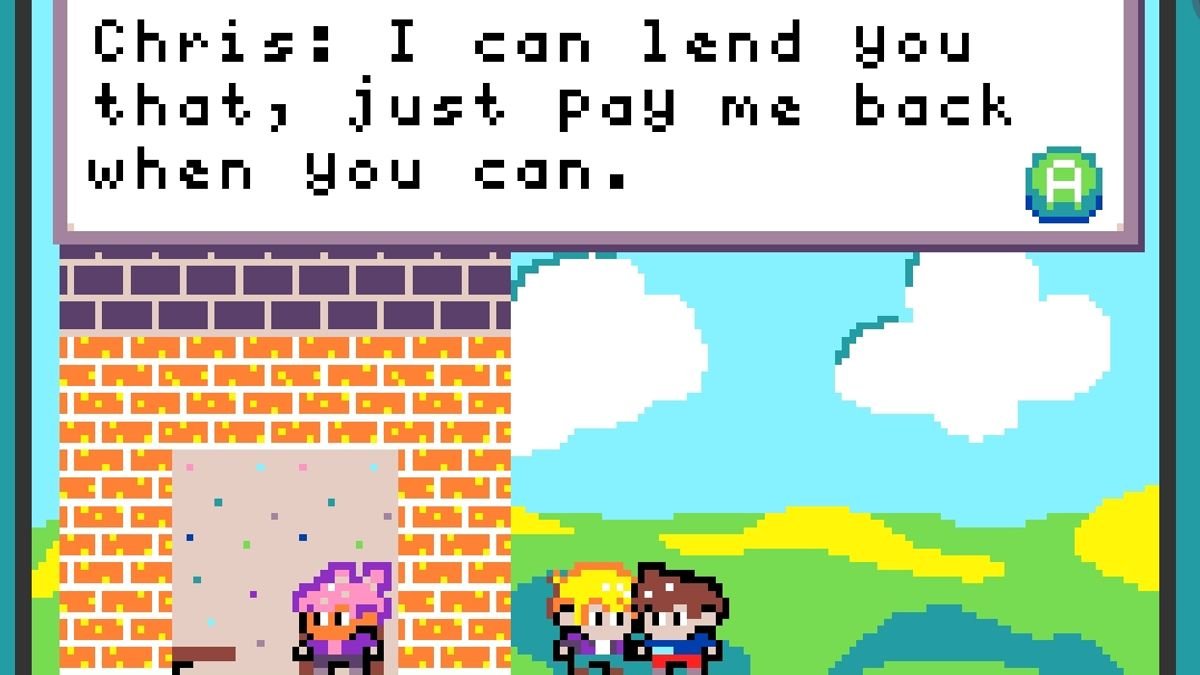
Interactive game aims to protect the next generation from loan sharksPublished 6 hours agoLast updated 6 hours agoChildren at Star Academy in Tunstall, Stoke-on-Trent are the first in the country using a new video game called ‘Beat The Loan Shark’ to learn about the dangers of illegal money lending.The game has been developed by Digital Arts Box, a Runcorn-based community interest company, and funded through the Stop Loan Sharks initiative, using money seized from convicted illegal lenders.Pupils at the school had the opportunity to try out the game, which aims to educate users on how loan sharks operate and exploit individuals who require quick financial assistance. Players engage with game mechanics that mimic the tactics of loan sharks, learning how they add multiple charges, eventually trapping victims in debt.Caroline Lewis, assistant principal at Star Academy, said participation in the game offered pupils a unique learning experience.”Our pupils had a fabulous afternoon learning about financial education through a fun interactive way using coding – computing is definitely the way to capture children’s attention.”The England Illegal Money Lending Team, known as Stop Loan Sharks, is actively promoting the initiative. Dave Benbow, head of the team, is optimistic about the educational impact of the game.”In the game, players quickly learn how a loan shark’s tactics work – adding charge after charge until you’re trapped in debt, with no realistic way to escape. It’s a fun, simple way to explain how illegal lenders operate, while also giving young people the chance to learn about computer coding and personalise the game themselves,” Benbow said.England Illegal Money Lending TeamLoan sharks or illegal lenders operate without authorisation from the Financial Conduct Authority (FCA), imposing arbitrary terms and aggressively collecting debts through intimidation. Signs of involvement with loan sharks include receiving no paperwork, repaying significantly more than borrowed, and experiencing threats or pressure over missed payments.Need support or advice?If you or someone you know is affected by loan sharks, confidential assistance is available 24/7 through Stop Loan Sharks at 0300 555 2222. A WhatsApp service operates from 9am to 8pm Monday to Friday at 07700 102773. Live Chat is also available at stoploansharks.co.uk.Hear all the latest news from across the UK on the hour, every hour, on Greatest Hits Radio on DAB, smartspeaker, at greatesthitsradio.co.uk, and on the Rayo app.
Attempted murder arrests after Hanley attack
Two men have been arrested on suspicion of attempted murder after another man was found with a serious injury to his head.The victim, in his 30s, was discovered on Hillcrest Street in Hanley, Stoke-on-Trent, after police were called, at 16:20 BST on Sunday, to carry out a welfare check on Bucknall New Road – about a five-minute walk away.He was taken to hospital where he remained in a serious but stable condition, Staffordshire Police confirmed.Police then went to a home on Wellington Street after reports that the attack had taken place there. Two men, aged 52 and 53, both from Stoke-on-Trent, were then arrested.

Family pay tribute to ‘wonderful’ teenager killed by fallen tree in park – AOL
Family have paid tribute to a “wonderful” teenage boy who was “tragically and unfairly” killed by a fallen tree in a park on Saturday.Brodan Dubickas, 15, died at the scene in Holmcroft Road, Stafford at 7.30pm while he was playing with his friends in the park.His parents and three siblings, Corey, Kayla and Amelia, put out a statement via Staffordshire Police on Monday.“He truly was the best of us. His kindness and generosity were unmatched, and he lit up a room with his humour and his smile. You won’t find any bad words said about him, he was loved by so many,” they said of the teenager.Dubickas was a talented pool player (Staffordshire Police)A fan of playing pool, Dubickas played competitively four nights a week for the Luck Penny or Staffordshire Bull, his family said. He also loved football, playing for Stafford Falcons and refereeing multiple times a weekend.“He was able to do all this whilst still prioritising spending time with family and friends.”He was described as a “wonderful big brother” whose three siblings were heartbroken to lose their eldest brother.“He was always there for them,” the family said.“As parents, are lives have been shattered and will never be the same. The pain is unbearable, and the hole that has been left can never be filled. His massive potential will now never be realised, and this is, in itself, a tragedy.Dubickas’ school put out a statement on Sunday (Staffordshire Police)“We have been overwhelmed by the support, generosity and love, sent from far and wide, to both the family and Brodan. The tributes have been vast and incredibly touching. This is a credit to our son, and it goes to show the impact Brodan was able to have on those around him in his short life. For which, we can only say thank you.”Dubickas’ old school, Tillington Manor Primary School, paid tribute on Sunday to the “kind-hearted, respectful” former pupil.“He was a truly special young man; kind-hearted, respectful and full of warmth. He approached school life with curiosity and determination, and his gentle nature and positive spirit left a lasting impression on both staff and pupils alike,” said headteacher Mrs K Brockhurst.“It is incredibly difficult to comprehend that a life with so much promise has been cut so short, and our whole community is deeply saddened by this loss.”Mrs Brockhurst continued: “Although Brodan had moved on from Tillington Manor, he will always remain a valued part of our school family. We know that many within our community will be feeling this loss deeply, and our thoughts are with everyone who knew and cared for him.“We will look to honour and remember Brodan in a way that reflects the impact he had on our school and community, and in liaison with his family, at the right time.”