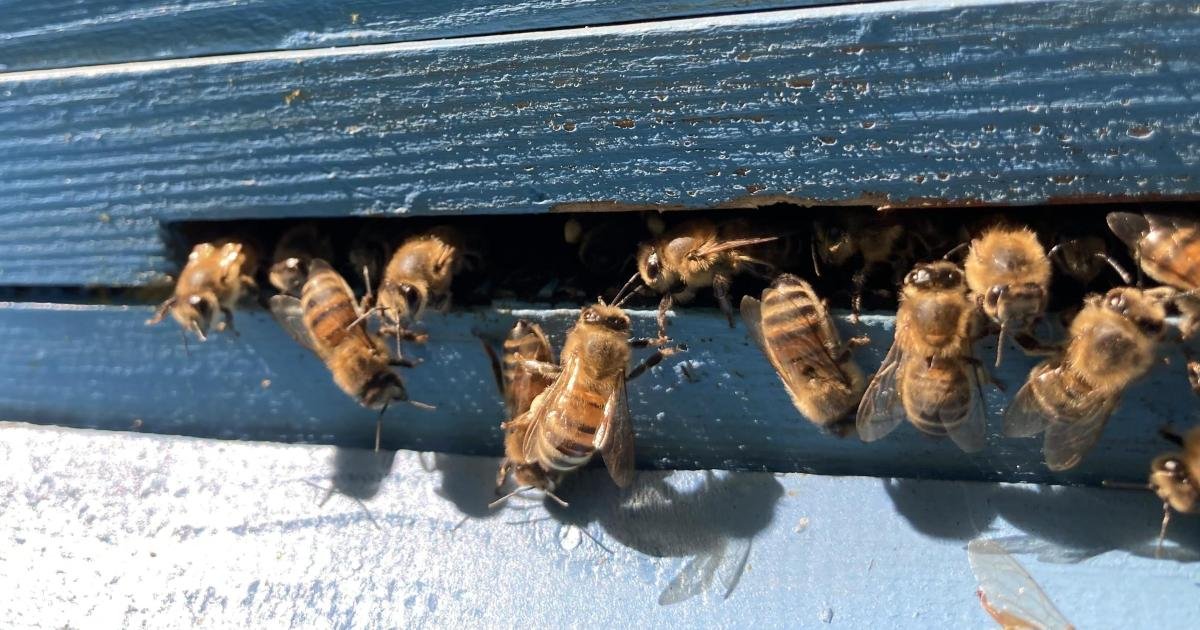
As spring develops into early summer, colonies of honey bees in Cambridgeshire reach their peak period of growth and activity.
The warmer temperatures, longer daylight hours, and abundance of flowering plants provide ideal conditions for bees to forage, reproduce, and store food for the months ahead.
Across the countryside, honey bees visit a wide variety of blossoms.
Oilseed rape fields, which are common in our region, provide a rich source of nectar and pollen.
Hedgerows filled with hawthorn, blackthorn, and wildflowers also attract large numbers of foraging bees.
In gardens, bees visit fruit tree blossoms, lavender, foxgloves, and many other flowering plants.
During this period, a healthy colony may contain about 40,000 bees.
Worker bees spend much of their time collecting nectar and pollen, while the queen focuses on laying eggs to increase the colony’s population.
The hive becomes a busy and highly organised community, with different bees carrying out specialised tasks.
These include nursing larvae, cleaning cells, guarding the entrance, and processing nectar into honey.
May and June are the main swarming months.
Swarming occurs when a colony becomes crowded and the old queen leaves with thousands of worker bees to establish a new home.
She leaves a queen cell with an egg, which will develop into a new queen to enable the original colony to thrive.
Beekeepers carefully monitor their hives during this time to manage swarms and maintain healthy colonies.
A swarm may often be seen clustering temporarily on a tree branch or fence before moving to a permanent nesting site.
The weather plays a crucial role in bee activity.
Warm, dry days allow bees to forage efficiently, while prolonged rain or cold temperatures can limit their ability to collect food.
Successful foraging now contributes significantly to honey production later.
This year, the Holt Island bees have already produced a record amount of honey, which the Friends of the nature reserve have eagerly awaited.
Honey bees are vital pollinators in our area, supporting both agriculture and natural ecosystems.
Their work helps pollinate crops, fruit trees, and wild plants, making them an essential part of the county’s rural landscape and biodiversity.