Spin and counter claims reveal underlying divide between council leaders and officers and commissioners over bin strike ‘deal’
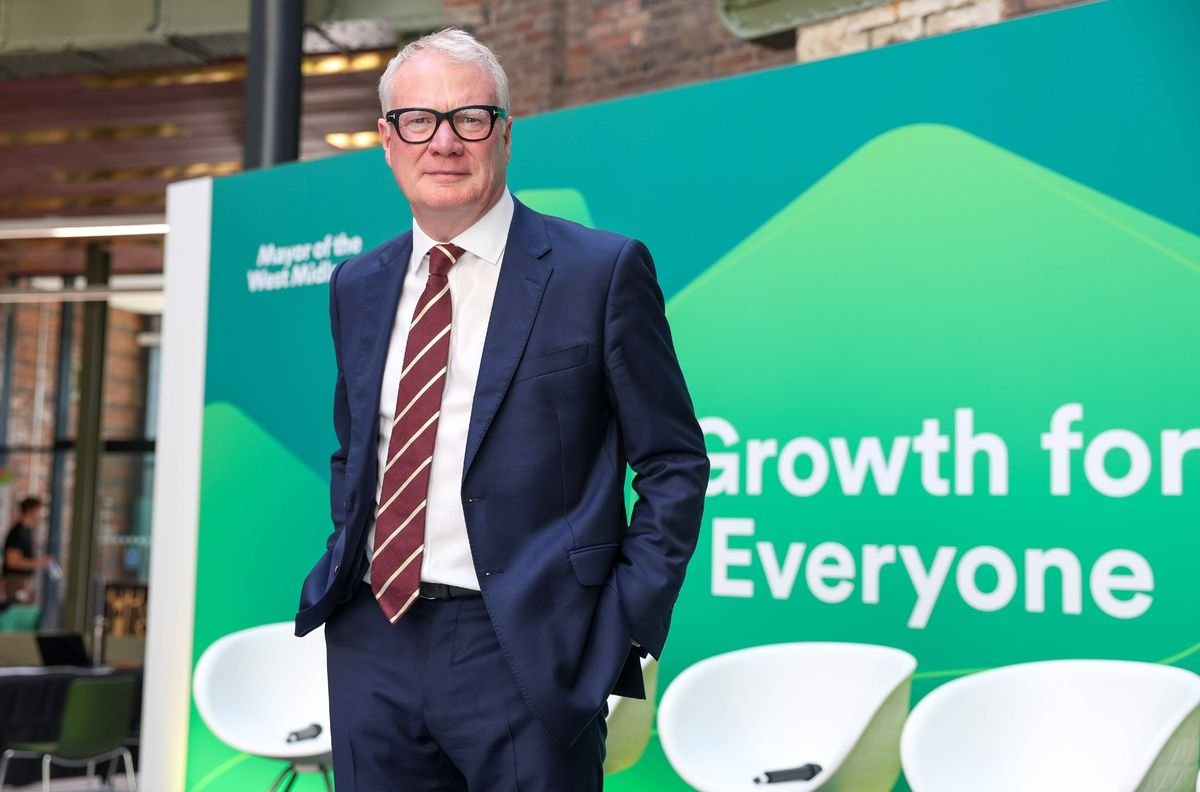
West Midlands Mayor Richard Parker (Image: Local Democracy Reporting Service)
West Midlands Mayor Richard Parker has today stood by comments strongly criticising Birmingham City Council over its handling of the bin strike – including a claim that its most senior officials and commmissioners had ‘not tried hard enough’ to end it.
In an unusually strident series of claims he put the blame on ‘very important people’ at the council for failing to get a deal done with bins union Unite.
Only when he intervened along with other Labour figures did an agreement of sorts get over the line, he claimed.
The council is led by managing director Joanne Roney and an executive team, but run by a Labour majority administration and with oversight from government-appointed commissioners.
Parker claimed officials had not met with Unite ‘for eight or nine months’ and that forced politicians to intervene.
READ MORE: Smiles, whispers and a buried warning – what bin strike ‘deal’ really means for Birmingham
He made the claims in an interview with ITV Central that was aired on Thursday. He was later unable to make time to further discuss the claims with BirminghamLive or answer our questions.
Nobody at the council has been willing to discuss the claims.
Mayor Richard Parker’s comments included:
- The process (to resolve the strike) had been undermined by ‘frustration, obfuscation and delay’ and marred by ‘a lack of scrutiny and transparency’.
- The council, led by executive officers and with oversight from government-appointed commissioners, had not met with Unite officials ‘for eight or nine months’, nor sought to.
- Criticising officers and government-appointed commissioners, Parker said: “I don’t think some very important people at the council have put enough work and effort into it. Almost eight or nine months passed without anyone engaging or re-engaging with Unite.
- “You’ll have to ask officers and commissioners why they didn’t put that work and that effort in… why they didn’t take what was needed as seriously and why they were not as committed to it as they should have been.”
He also told ITV Central that he ‘remained concerned’ that decisions were not being carried out with ‘rigour’ and that ‘too much responsibility for resolving the dispute lay with officers and commissioners’.
They were “under little or no scrutiny, didn’t operate in a transparent way and frankly suffer no jeopardy, and that’s the main underlying reason why this dispute has remained unresolved for so long.”
We have since asked him to clarify who he was blaming for the failings, and whether he had directly raised his concerns with the council’s executives, who he meets regularly. We are told he had raised concerns ‘with commissioners’ and would not be ‘naming names’ or ‘sharing private discussions’.
The PR spin battle
From the moment on Monday when the city council’s Labour leader John Cotton strode out into Victoria Square to tell local media that the end of the bin strike was ‘in sight’ thanks to an agreement reached between him and Unite following ‘months’ of negotiations, the questions started and the PR spin battle began.
Political opponents called it an election stunt, with polling day just a week away.
But Labour say the deal they have struck is a positive step to finally ending the debilitating strike, with little potential impact on the council’s finances.
Cock a hoop union officials and workers were proclaiming it as a deal nearly done as long as Labour are still running the council on May 8.
Several Labour insiders were eager to talk up the agreement and its importance, but said it should have been done ‘months ago’.
They made the case that officers and the commissioners at the council were to blame for stringing things out and letting down residents. Some suggested that the ‘truth would out’ within months and officials would be held to account.
One went so far as to suggest council officers or commissioners were positively obstructing a deal and that some in the council corridors of power favoured a hardline approach – including sacking belligerent strikers.
None were prepared to put their name to the claims and a council spokesperson has denied that any officials have pushed for or suggested dismissal.
On the council side, there has been frustration over the dramatic announcement of a ‘deal in sight’ by Labour, when in reality there is no ‘deal’, but instead an agreement around ‘ballpark’ arrangements.
By Wednesday, a figure of £200 million was being bandied about as the likely cost to the council of the Labour/Unite deal, almost certainly leaked from inside the council.
We have seen nothing to substantiate that. Our calculations suggest the one off cost of compensating affected workers could cost around £5 million, but the bigger bill might come from sex discrimination claims that will follow from other workers. However, given that only bin workers are affected by the downgradings and pay cuts, those are also expected to be limited.
What this means for Brummies and the council’s reputation
Despite the hyperbole, there has been no deal done yet to end the strike, and nor will there be until a new administration is in place, post May 7. They will have to meet and appoint a new leader on May 19 and then pour over the details of the agreement and potentially restart negotiations of their own.
Any deal would also have to go through due diligence, legal advisors, the commissioners and external auditors who are charged with ensuring the council delivers ‘value for money’. It would then have to be approved by a majority of councillors – and simultaneously get backed by Unite’s membership.
But assuming it is a good deal that councillors can get behind, the strike could soon be over.
What is clear, however, is that the past week has exposed a faultline of dysfunction and toxicity and reignited calls for the commissioners to be ousted from the council.
The story spun by those involved in the Labour agreement with Unite, and put on record by the mayor, is one that cuts to claims of division and mistrust at the highest level, one in which officers are obstructive and ‘not working hard enough’ to solve one of the city’s biggest reputational and public health crises.
It is also one where senior Labour politicians have apparently had to support officers publicly over the handling of the strike negotiations while lobbying against them privately.
BirminghamLive has sought to discuss the issue with commissioners, the Labour leader John Cotton, senior officers and the mayor but all have declined our requests or been too busy to talk to us.
Instead they have issued statements, as follows:
Birmingham City Council press office: “All lawful options to end this dispute have been considered. Officers have never recommended dismissal (of the workforce).
“Extensive efforts continue to be made to try to find a financially reasonable and lawful negotiated end to this dispute.”
Councillor John Cotton, about Richard Parker’s comments, said: “I would like to thank the Mayor for the constructive role that he has played in this breakthrough following months of frustration which means the end of the dispute is within sight.
“I remain committed to continue working with officers, who have been doing complex work to navigate a challenging situation, to deliver this deal after the election through the formal processes.”
Lead Commissioner Tony McArdle said: “Commissioners have long been concerned at the lack of contact between the Council and Unite. We have pushed the council to have a plan for resolving this dispute that would make negotiations with Unite viable.
“That pressure helped get the two parties to discussions at a political level. We will continue to assist the council in seeking a negotiated settlement to this dispute… We share the frustration that this has gone on for too long.”