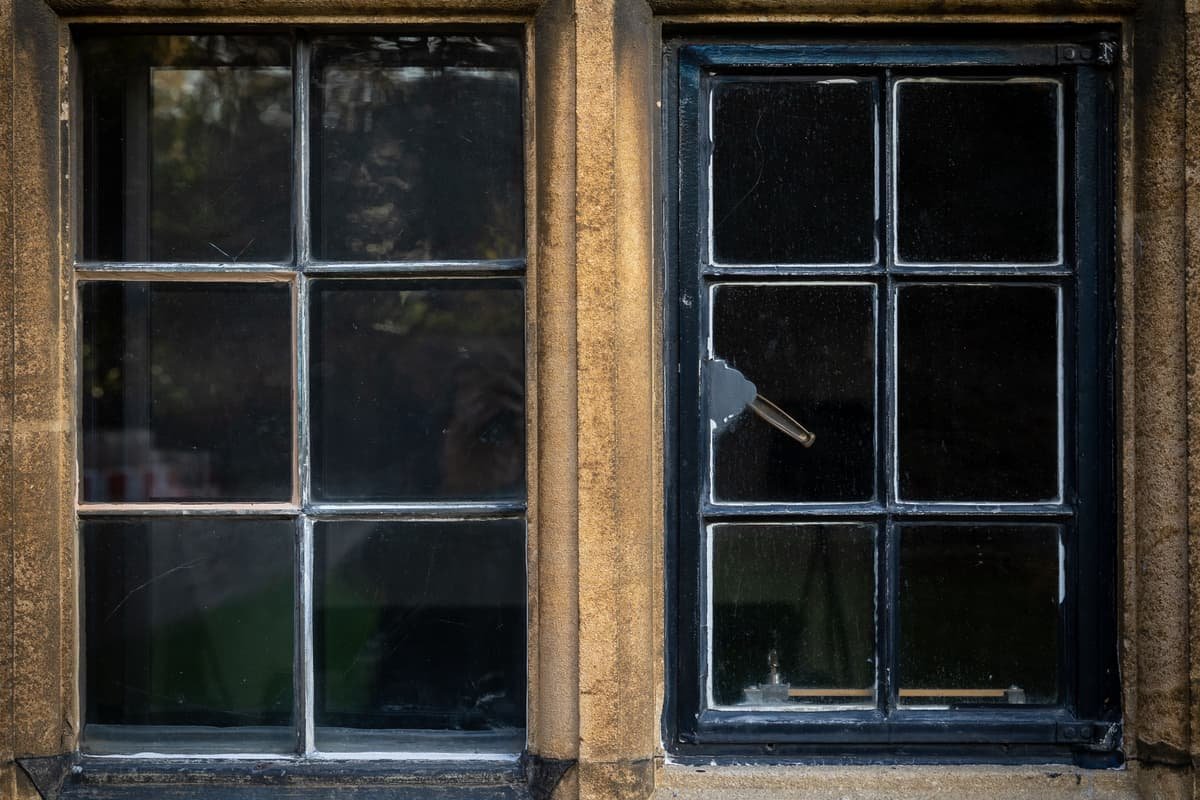
Police are asking people to close their windows and doors amid rise in burglaries linked to the warm weather.A local police force has urged residents in the area to close their windows and doors following rise of burglaries and attempted burglaries in the warm weather. Staffordshire Police said: “We’re asking people to make sure that windows and doors are secured wherever possible, especially if you are leaving the house or going to sleep at night.”The force said that thieves are looking for easy targets, especially as residents in Staffordshire are looking to cool amid the hot weather that has been common this summer. The force listed numerous examples of these sorts of crimes taking place. For example, yesterday (Monday, July 20), a Mazda was stolen from the driveway of a home on Moreton Lane, Kingsley, in the Moorlands. Police said that the suspect got in the house through a window and took the keys before leaving the scene in the stolen car at about 3.40am. In another case, a car was taken yesterday when suspects went inside a house on Elmwood Drive, Blythe Bridge. The suspects found the keys to a Ford Kuga and drove off in the car at about 2.20am. Later, the car was found abandoned with a flat tyre in the Caverswall area. The force said further incidents had taken place in Burrington Drive, Trentham; Princess Drive, Weston Coyney; Stanier Street, Fenton and Bridle Path, Werrington. Continue Reading
Blog

Staffordshire police warning as more burglaries take place due to warm weather

Samsung Galaxy Unpacked Live: Z Fold 8, Z Flip 8 Expected – CNET
Galaxy AI’s automated app actions support third-party app like Uber.Celso Bulgatti/CNETYou don’t need a crystal ball to know that Wednesday’s Samsung Unpacked event will heavily feature AI. It was certainly a big part of Samsung’s February Galaxy S26 event, where we saw a new Perplexity-powered browser, AI-powered call screening and photo editing tools. This time around, we can now glean a few clues about what’s coming.
Samsung said in its announcement that it will bring “more personal, adaptive experiences” to its devices. That’s certainly aligned with the personalized intelligence trend we’re seeing in the AI industry, particularly with Google, a longtime Samsung partner. Personal AI is exactly what it sounds like — it’s AI services and results that are tailored to your life and your needs.
What could this look like for you? It’s too soon to know for sure. But it’s likely that Samsung will upgrade its software so the Galaxy AI can access more of your information across apps and services. That way, it has more data to pull from, so it can customize its options to whatever it thinks you’ll like best.
Of course, very few people decide to buy a new phone purely because of its new AI. But that’s beside the point, at least according to Samsung, Google, Apple and every other major phone-maker. Samsung CEO TM Roh called the Galaxy S26 an “agentic AI phone,” after all.

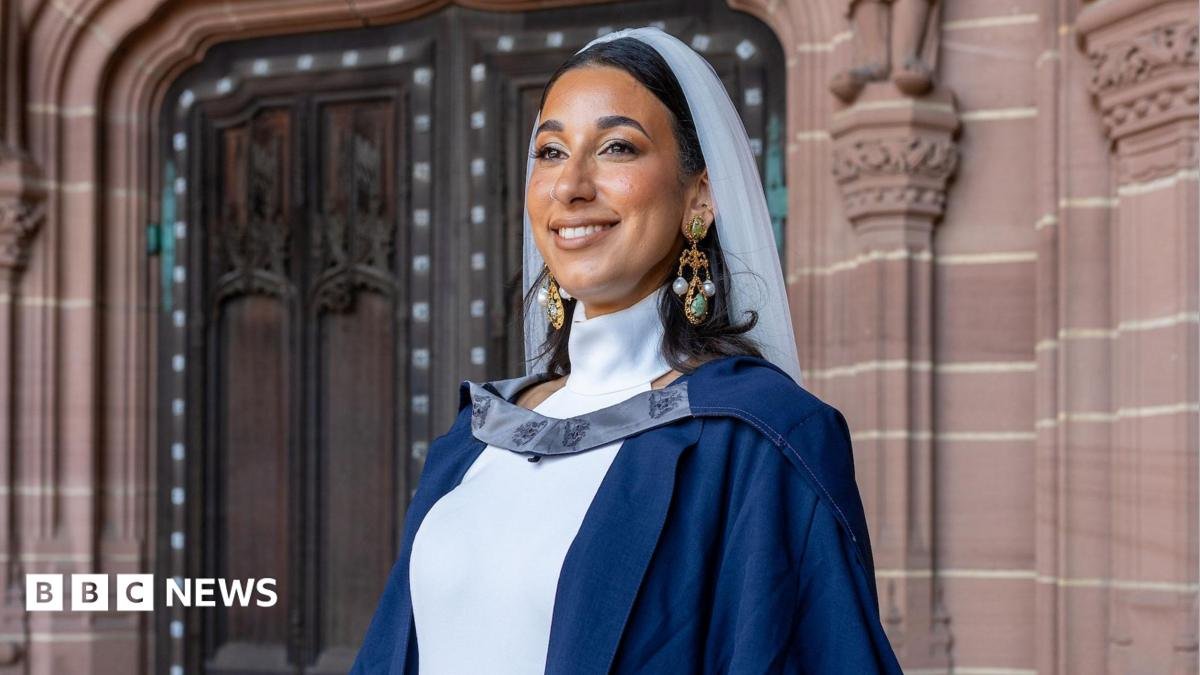
‘I got married and then graduated in crazy three hours’
The History of Art & Museum Studies graduate said the reason they decided to get married this year, after a seven-year engagement was “to celebrate all of our big life events”. “It’s been a turbulent few years for me and my family, so we wanted to celebrate our achievements in a big way,” she said.”It’s crazy the two ended up within three hours of each other but if felt right that they both happen on the same date, and it just makes the day even more memorable.”Nele’s groom Bradley was fully on board with the idea, she said.”Brad is incredibly supportive and has been ever since I decided to go to university as a mature student. “He loves that we get to celebrate all of life events and achievements, which makes our day even more memorable and special.”

UK to rebuild hypersonic target capability after decade
The UK is to rebuild its sovereign hypersonic target capability after a gap of more than a decade, with a £20 million contract awarded to Lockheed Martin UK and its small business partners, Defence Minister Luke Pollard has announced.
Speaking at the AGF Defence Summit at the Farnborough International Airshow, the Minister for Defence Readiness and Industry said the award forms part of a commitment to spend more on novel technologies and fill inherited capability gaps. “Today we’re awarding a £20 million pound contract to Lockheed Martin UK and their collaboration with SMEs to rebuild Britain’s sovereign hypersonic target capability, filling a gap of more than a decade,” he said, as quoted in the transcript of the speech. “This investment in advanced capabilities will need to test and strengthen our air defences. It will support our small businesses and around 60 skilled jobs in Bedfordshire and inject £2 million pounds into the supply chain including into multiple UK SMEs that will benefit.”
Hypersonic targets are the test articles against which air defence radars, interceptors and crews are proven, flying the speed and manoeuvre profiles of the threat weapons now proliferating, and the absence of a sovereign capability has meant reliance on allies for a class of test asset in heavy demand as every Western nation races to harden its defences against hypersonic and high-speed ballistic threats. The Bedfordshire jobs point to Lockheed Martin UK’s Ampthill site, and the Minister said the award signals “that defence is returning to some of the more demanding frontiers of aerospace,” as quoted in the transcript.
The contract is part of a wider innovation push Pollard set out in the speech, including the new ring-fenced annual defence innovation budget of £400 million and a target to spend at least 10 per cent of the annual equipment budget on novel technologies, policies he said are placing UK aerospace at the leading edge of autonomous combat air power. Across the Defence Investment Plan, he confirmed £5 billion is being invested in drones and other advanced uncrewed systems, an increase of £1 billion on previous plans.
The Minister, speaking the morning after the reshuffle that brought Wes Streeting to the Ministry of Defence, opened with the candour of a man awaiting news of his own position, joking that he had left his phone on loud at the back of the room in case the Prime Minister rang, and he trailed further announcements to come, telling delegates there was “good news coming on GCAP later today” and that the new Defence Secretary would have “an exciting announcement” on the timeline for the Storm Fighter uncrewed combat aircraft programme tomorrow.
The air and space portfolio he described spans the £31 billion four-year investment confirmed in the plan, Typhoon sustainment into the 2040s, the ground being laid for the F-35As compatible with NATO’s nuclear mission, and the jet trainer recapitalisation that will ultimately deliver new aircraft for the Red Arrows.Walsall sign Wycombe Wanderers defender on season-long loan
Lee Grant has made his eighth Walsall signing of the summer transfer window.Walsall have completed the signing of Wycombe Wanderers centre-back Declan Skura on a season-long loan. The 24-year-old featured six times for the Chairboys across all competitions last term – scoring his first EFL goal in a 4-3 defeat at League One champions Lincoln City in late April. Skura also made six appearances on loan at Yeovil Town in the National League earlier in the season, scoring once. In total, Skura has made 27 appearances for Wycombe, contributing one goal and three assists. He also gained further loan experience with Ebbsfleet United in the National League in 2024-25, where he played 17 times. Following academy spells with Chelsea and Reading, Skura launched his senior career in non-league with Hanworth Villa and Kingstonian. Wycombe Wanderers took him on trial in early 2023 and Skura was subsequently offered a contract with their development squad, after impressing in a trial match against Woking. Skura becomes the Saddlers’ eighth signing of the summer transfer window and joins fellow new recruit James Connolly in bolstering Lee Grant’s defensive options. Connolly along with goalkeeper Jed Ward, midfielders Sven Sprangler and Lewis Simper and strikers Andrew Dallas and Tai Sodje have signed on permanent deals. Isaac Moore, who arrived from Coventry City earlier this month, is the only other loan signing currently on the Saddlers’ books.Continue Reading
Charity Spotlight: The Myton Hospices – the charity providing free specialist palliative and end of life care across Coventry and Warwickshire
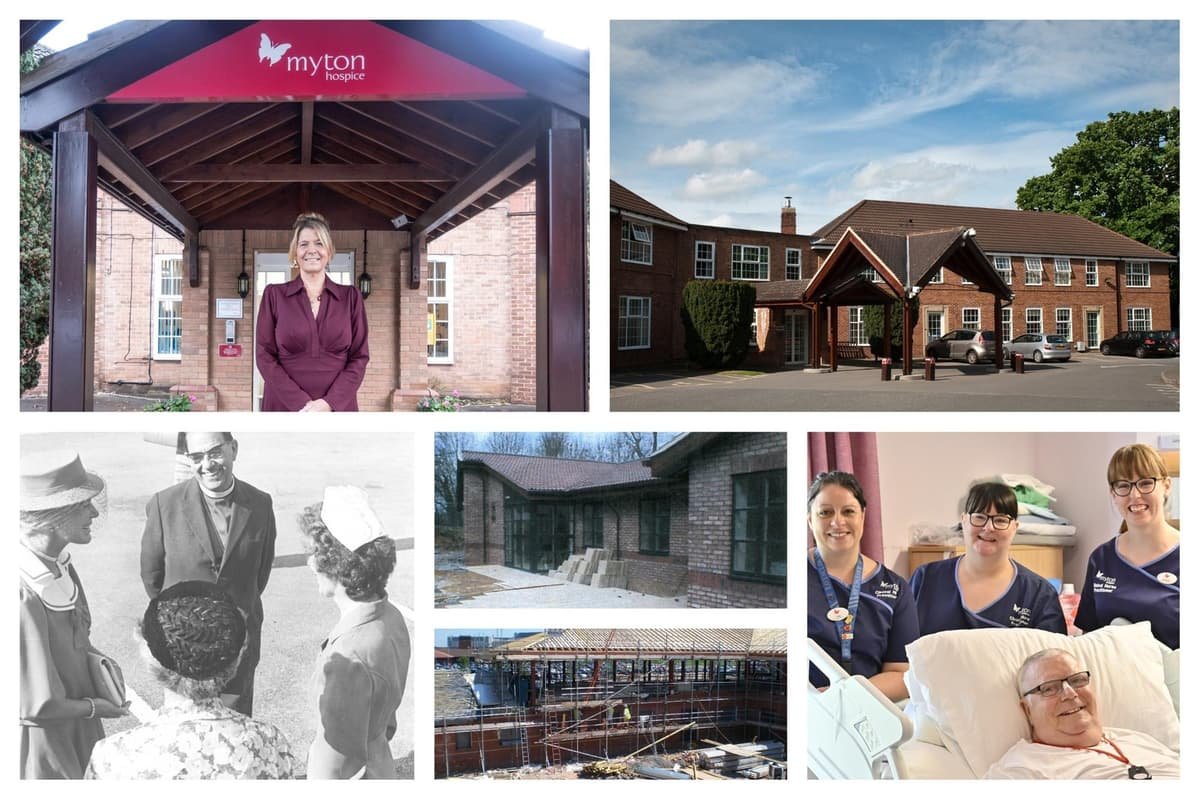
South Warwickshire is full of so many worthwhile charities and good causes. The work that many of these organisations do is often life-changing. That is worth shouting about. The Courier and Weekly News will be running a regular feature to shine a spotlight on the organisations in our area that help people in the community. This time, we spoke to Ruth Freeman, CEO of The Myton Hospices.The beginningThe Myton Hospices has been providing specialist palliative and end of life care across Coventry and Warwickshire for more than four decades.The charity’s story began in 1979, when the Bishop of Coventry established a committee to explore the possibility of creating a local hospice for people with life-limiting illnesses.The Myton Hospices has been providing specialist palliative and end of life care across Coventry and Warwickshire for more than four decades. Photos supplied by The Myton Hospices.Following a community fundraising effort, Myton Hamlet, a former children’s home, was purchased and turned into what is now Warwick’s Myton Hospice.The hospice was officially opened by The Duchess of Kent in September 1982.A day unit opened in Warwick in 1984, followed by a purpose-built inpatient unit in 1998 and a new day unit in 1999.Rugby’s hospice opened in 2002 after local people raised £1million, and Coventry’s hospice followed in 2009 after a £7million community fundraising appeal.Ruth Freeman, CEO of The Myton Hospices. Photo by The Myton HospicesToday, Myton supports people living with life-limiting illnesses from diagnosis through to the end of life, while also providing vital support for their families and loved ones.Ruth said: “Our vision is that everyone in Coventry and Warwickshire can live well towards the end of life and have the opportunity to experience a good, natural death the way they want it to be, where they want it to be and with their loved ones supported.“Everything we do is underpinned by our values of respect, professionalism, valuing every individual, and working together as One Myton.”How the charity evolvedDuchess of Kent officially opening Warwick Myton with Rev John Gibbs in 1982. Photo by The Myton HospicesSince opening, The Myton Hospices has evolved to meet growing demand and the changing needs of patients and families.Ruth said: “Alongside our inpatient units, we now provide a wide range of services both in our hospices and across the community, including Myton at Home, Patient and Carer Wellbeing services, Lymphoedema care, counselling and bereavement support, and education for healthcare professionals.“Our approach has also broadened.“Today, we care not only for people living with life-limiting illnesses but also for the families and carers around them, recognising that hospice care is about supporting the whole family through one of life’s most difficult times.”The Myton Hospice site in Rugby nearing completion in 2002. Photo by The Myton HospicesThe Myton Hospices now also has 25 charity shops, which helps generate vital income as well as providing another way for people to support the charity.Fundraising and awarenessEvery year, Myton supports more than 2,000 patients and their families but the charity, like many, is also under funding pressures.Ruth said: “We care for people living with a wide range of life-limiting illnesses, including cancer, heart disease, respiratory conditions, neurological conditions and organ failure.“Across our inpatient units we have 36 hospice beds, but due to funding pressures we can currently only afford to keep 25 open.“As the only hospice in Coventry and Warwickshire providing specialist palliative and end of life care and inpatient beds, demand continues to grow, and we have waiting lists on most days.”Building work taking place at the Coventry Myton Hospice site in 2008. Photo by The Myton HospicesHow Myton fundraises has also changed.Ruth said: “The funding landscape for hospices has changed dramatically and charities across the UK are facing unprecedented financial pressures.“Our costs continue to rise while statutory funding has failed to keep pace. It now costs more than £15million each year to provide our free services.“With less than 20 per cent of our funding coming from the NHS, we need to raise more than £12million annually through donations, fundraising, retail, lottery, legacies and community support.”She added: “We’re working hard to protect patient care, but the reality is that we currently have hospice beds standing empty, not because they aren’t needed, but because we don’t have the funding to open them.“We’re working alongside Hospice UK to campaign for fair and sustainable hospice funding, while continuing to rely on the incredible generosity of our community to help ensure no one faces the end of life without the care and support they deserve.”Community supportThe support shown by the community every year helps the charity continue to operate.Ruth said: “Myton was built by the community, and more than four decades later it continues to be sustained by that same community spirit.“We’re also incredibly fortunate to have around 1,300 volunteers who give their time across our hospices, shops, events and services.“Their commitment, alongside the generosity of our supporters, is truly invaluable.“Quite simply, without our community, there would be no Myton.”Next year, the charity is marking its 45th anniversary and Ruth said it will be a chance to reflect and strive forward.She said: “It is an opportunity to reflect on everything our community has achieved together and the thousands of families whose lives have been touched by hospice care.“While we’re proud of how far we’ve come, the demand for our services continues to grow.“We have waiting lists on most days and, heartbreakingly, some people die while waiting for a hospice bed, even though we have beds that remain closed because we cannot afford to staff them.“Our ambition is to open all 36 inpatient beds, reduce waiting times and reach more people earlier in their illness, ensuring everyone who needs specialist palliative and end of life care can access it when they need it most.“With the continued community support, we believe that vision can become a reality.”Ruth added: “Myton is a vital community asset, and protecting it is a responsibility we all share.“Whether it’s making a donation, taking part in an event, volunteering, shopping in one of our charity shops or helping raise awareness, every act of support makes a difference.“By supporting Myton, people are helping ensure compassionate, specialist hospice care remains available for families, now and for generations to come.”Continue Reading

Shoplifter who struck 10 times is banned from Co-ops in her home town
A shoplifter has been banned from Co-ops in her home town for two years.Alison Edwards, 53, of Parsons Lane, Littleport, was handed the Criminal Behaviour Order at Huntingdon Magistrates’ Court last Thursday (16 July), along with a 20-week prison sentence, suspended for 12 months.Alison Edwards, 53, of Parsons Lane, Littleport, was handed a Criminal Behaviour Order on 16 July barring her from Littleport Co-ops, along with a 20-week prison sentence, suspended for 12 monthsShe pleaded guilty to 10 counts of theft after stealing items including alcohol and food from Waitrose in Ely and the Co-op, in Main Street, Littleport, on 10 occasions between 1 June and 9 July.PC Alex Thake, from the spree offender team, said: “Shoplifting has a significant impact on businesses, staff and the wider community, and we will continue to take action against those who repeatedly commit these offences.“This order has been put in place to prevent further offending and protect local retailers who have been affected by Edwards’ behaviour.“We recognise that there can often be underlying issues which contribute to offending, and while that does not excuse criminal activity, we hope Edwards engages with the support available to her to help address those issues and prevent further offences in the future.”

Car crashes into block of flats in Leeds after police chase through city
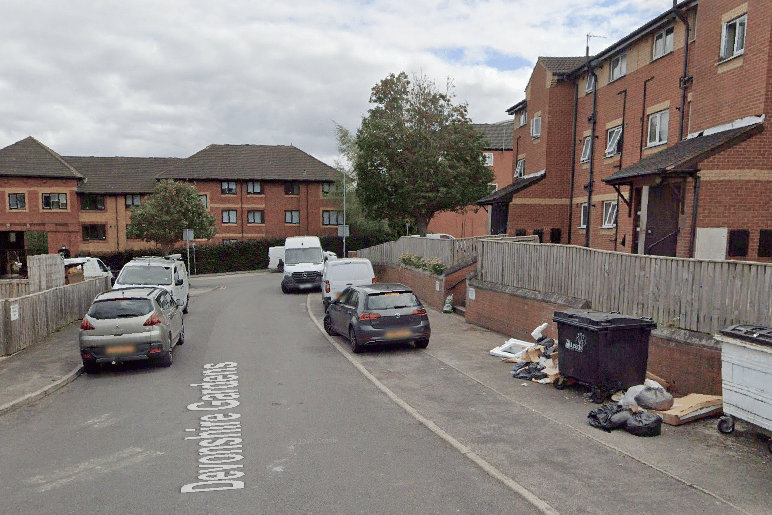
The car crashed into a block of flats on Devonshire GardensPolice are searching for the driver of a car that crashed into flats in Leeds.The car crashed into a block of flats on Devonshire Gardens. | GoogleShortly after 7.50pm on Sunday evening (July 19), the driver of a black Audi A4 made off from a marked police car on The Calls at the junction with Crown Point Road, Leeds.A police pursuit was authorised, but the pursuit was called off and officers lost sight of the vehicle a short time before it was involved in a collision with a block of flats on Devonshire Gardens in the Woodhouse areas of the city.“No one within the flats was injured and enquiries are ongoing to identify the driver of the vehicle,” a West Yorkshire Police spokesperson confirmed.Continue Reading
You can’t park there mate! Car on the rocks near Cannock
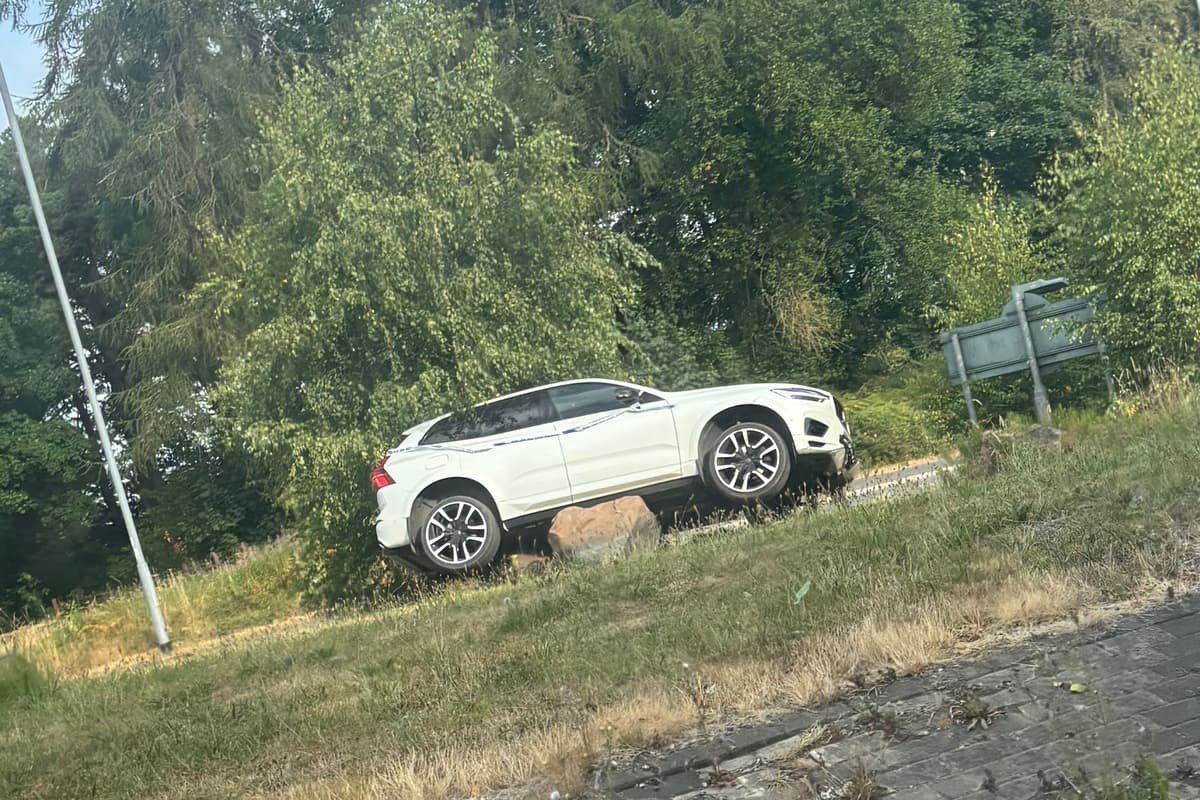
A car ended up atop rocks near a main road in StaffordshireA car driver found themselves between a rock and a hard place after the vehicle left the road and came to rest on a big rock.Car on the rocks near Cannock | Local LibraryPassing motorists couldn’t quite believe their eyes when they spotted the white car ‘parked up’ on the stone off the A34 Stafford Road at Pottal Pool between Cannock and Stafford over the weekend.The car has since been removed but images of it were shared widely on social media.Continue Reading

What’s failing? Our Prime Ministers or the UK?
Why have seven Prime Ministers come and gone in little more than a decade? Is Britain simply producing weaker political leaders, or is something much deeper going wrong?
In this video, I argue that the real story is not about personalities or competence. Instead, I suggest that the United Kingdom has been trying to govern with a political and economic model that effectively collapsed after the financial crisis of 2008.
The banking crisis did not just expose failures in the City of London. It also revealed the limits of an economic system built around finance, tax havens, neoliberalism and the legacy of Britain’s imperial past. Since then, every Prime Minister has inherited impossible political constraints:promises of growth without investment,
better public services without funding, and
national unity while the four nations of the UK increasingly pursue different political futures.I also explore why the constitutional settlement is beginning to unravel, why Westminster seems unable to respond, and why simply replacing one Prime Minister with another will not solve Britain’s problems.
If the UK is to thrive again, I argue that we need a new constitutional settlement, an economy that works for people rather than finance, and a new politics built around care and hope.This is the audio version:
The Debate Ammunition for this video is available here.
This is the transcript:I have now lived through sixteen Prime Ministers. Andy Burnham is the sixteenth, but the seventh in the last decade. And of those sixteen Prime Ministers, nine, like Andy Burnham, have arrived on the job without ever having won an election. There are lots of questions that arise from that, but the obvious and most important one, which many people are asking, is: are we now producing worse leaders because we seem to get through them at a rate of knots?
A poor Prime Minister, like John Major, who was generally considered to be second-rate, served for seven years in the 1990s and won a general election.
Now they don’t seem to be able to last two years at best. Liz Truss only managed weeks.
So, is there something deeply wrong with the people who are becoming Prime Minister, or is there something else that is deeper and more seriously broken in the UK? I think we need to look at that and answer that second question because it’s more important than the first.
I’m not talking here about competence. We know we have had good, bad, and indifferent Prime Ministers over my lifetime. Good ones? Well, most people would say Margaret Thatcher, certainly the most influential. Tony Blair won three general elections. In my lifetime, Harold Wilson won four, and so there are Prime Ministers who have, in their own terms, been highly successful.
There’ve also been the weak ones. I’ve already mentioned John Major. Jim Callaghan was another one. But Liz Truss, Rishi Sunak, Theresa May, Boris Johnson, they’ve been outright disasters. And as for Keir Starmer, well, his own party has turfed him out after two years, after winning what was called a landslide general election.
Competence is an issue, but I think there is something much more important to look at. It is not just the issue of competence that explains today’s instability. There is something more fundamental that has changed in the last decade or so, and I think it all changed after 2008. That was the real turning point as far as I’m concerned. The global financial crisis of that year changed far more than our banking system here in the UK.
It didn’t just change our economy either. It exposed deep weaknesses in the UK’s economic and political model. Those weaknesses were hidden before 2008. They’ve become more obvious as time has passed ever since, and now they’re impossible to ignore. Every Prime Minister since 2008 has inherited the legacy of that debacle, that meltdown, that failure of the City of London to manage its own affairs, and the subsequent need for the state to bail it out. And none of them has known what to do as a consequence. This is the failure that we are really talking about.
The reality was that the old British constitutional settlement was exhausted by 2008.
Britain had relied on the legacy of empire.
It had relied on the dominance of the City of London as the hub of finance, not for the whole world maybe, but a major part of it.
It had relied on tax havens to keep its old economic reach and to control large money flows that had previously come from colonies.
It had relied on a belief in British exceptionalism, and those foundations were all shattered in 2008.
The world turned on tax havens. The world realised that the City of London was not good for its word, and it was the government that had to bail it out. The world realised that we were no longer a major economic or colonial power. The illusions were shattered, and yet politicians still govern as though everything remains as it was before that crash happened.
But the reality is, there have been signs of this change. Let’s take one example. The union that underpins the United Kingdom is changing. Scotland has increasingly followed its own political path since 2008, and Wales is now doing the same. Northern Ireland has its own constitutional dynamic. And in all three of these countries, three of the four countries that make up the United Kingdom, there are governments now led by parties committed to leaving the United Kingdom.
That was unthinkable in 2008, and now it’s reality. What that means is that England can no longer assume one political future fits everyone inside this supposed United Kingdom, which feels anything but that the moment you leave England.
2008 also exposed the weaknesses in the neoliberal model. Whatever the upside had been before 2008, neoliberalism made everything worse at that time and since. Since 2008, governments have relied on austerity. Public services have steadily weakened. Inequality has grown. Living standards have stagnated. Hope has become harder to find.
But the neoliberal constraints have not been relaxed. British Prime Ministers since 2015, when all of these changes were becoming clear, have inherited impossible choices.
They promise growth, but they can’t change the economy.
They promise better services, but they can’t provide the investment required.
They promise unity, but the nations of the United Kingdom are drifting apart, and we’ve left the European Union.
They promised hope whilst managing decline.
No Prime Minister can succeed on these terms, but they are the ones that the neoliberal dogma requires of them. Neoliberalism has been designed to stop Prime Ministers functioning in the way that is necessary to ensure that they can govern this very weird combination of states that makes up the United Kingdom. Their task is now impossible within the framework in which we are sitting.
And let’s be clear, we have, as a consequence, a full-blown identity crisis in the UK. Britain no longer has a shared national purpose. The old political sentiment has run its course. We’ve seen that. We’ve seen the rise of Nigel Farage and his populist parties. We have seen the challenges to government that that has given rise to. We’ve seen the rise of the Greens.
The question is no longer: who governs? The question is, what is Britain? What should it become, and what does it want to achieve? That debate can no longer be avoided. But every single Prime Minister since 2010 has done their very best to avoid every aspect of those questions, denying the fact that there are questions which are more important than the ones they have chosen to look at, and that is why they’ve failed.
Any Prime Minister who does not talk about the issues that I’ve just outlined is going to fail.
We do need a different future.
We do need to talk about it.
We need a new constitutional settlement; we need to talk about that.
We might need to be a different country. And that issue is never addressed by Prime Ministers in Westminster. It might be in Scotland, Wales, and Northern Ireland, but not here.
And we need, at the same time, to recognise that whatever the state that emerges from this situation might be, it will have a very different place in the world.
We need, at the same time, an economy that works for everyone. An economy that works for everyone in England, in Wales, in Scotland, and in Northern Ireland, and what works for everyone in each of those places might be different.
Most of all, we need to replace neoliberalism because the dominance of finance within our economies only makes sense within the United Kingdom and only makes sense in a country dominated by the City of London. And it doesn’t seem as though any of the countries that make up the United Kingdom want such a structure anymore. We need a politics of care. We need an economics of hope.
Prime Minister number sixteen is not then the real story today. The real story is of a political settlement that has reached the end of the line. Its limits have been appreciated. We know we must move on. And we know that unless we confront that reality, Prime Minister number seventeen will face exactly the same crises as Prime Minister number sixteen, oh, and 11, 12, 13, 14, 15 have done as well.
Unless Andy Burnham realises this, Prime Minister number seventeen is waiting in the wings, looking for their chance to fail as he will unless he addresses these issues.
So, what is the next chapter?
The identity question has to be resolved. What country are we? We do need independence referendums to resolve that issue, and we need them more than once in some cases, because Wales might not be ready for independence now, but to pretend that this is a decision that can be made once and once only is quite ridiculous. We live in a fast-moving world. These decisions will change over time. We need to be able to address the reality of whether we are a single country or not.
Each of our nations does need to choose its own future. If it wants to be in the United Kingdom, so be it. That’s fine. Let the people decide. That’s the point. The age of one Westminster solution is, however, ending, whatever happens. There do need to be strong devolved governments, even if there isn’t independence, and politics must always put people before finance. Without a doubt, that is the biggest change that we need of all.
Every nation deserves the opportunity to build the future its people choose, and until Prime Ministers address that desire, we’re stuck in this continual flow of failed Prime Ministers, none of whom will put their heads above the parapet and ask the essential question: what are we going to do to address the problems we have? How many more will it take before we do finally get to the point where we will really talk about what is necessary? I would love it if Andy Burnham did this, but I’m not living in hope.
That’s my opinion. What’s yours? There’s a poll down below. Let us have your comments. Please do share this video. Please do like it. Please do subscribe and hit the bell button as well, because that will guarantee you continue to get messages from us. And if you’d like to make a donation to buy Tom and me coffee, that will be great.Poll
Loading …
PDF of articleThanks for reading this post.You can share this post on social media of your choice by clicking these icons:There are links to this blog’s glossary in the above post that explain technical terms used in it. Follow them for more explanations. You can subscribe to this blog’s daily email here.And if you would like to support this blog you can, here: