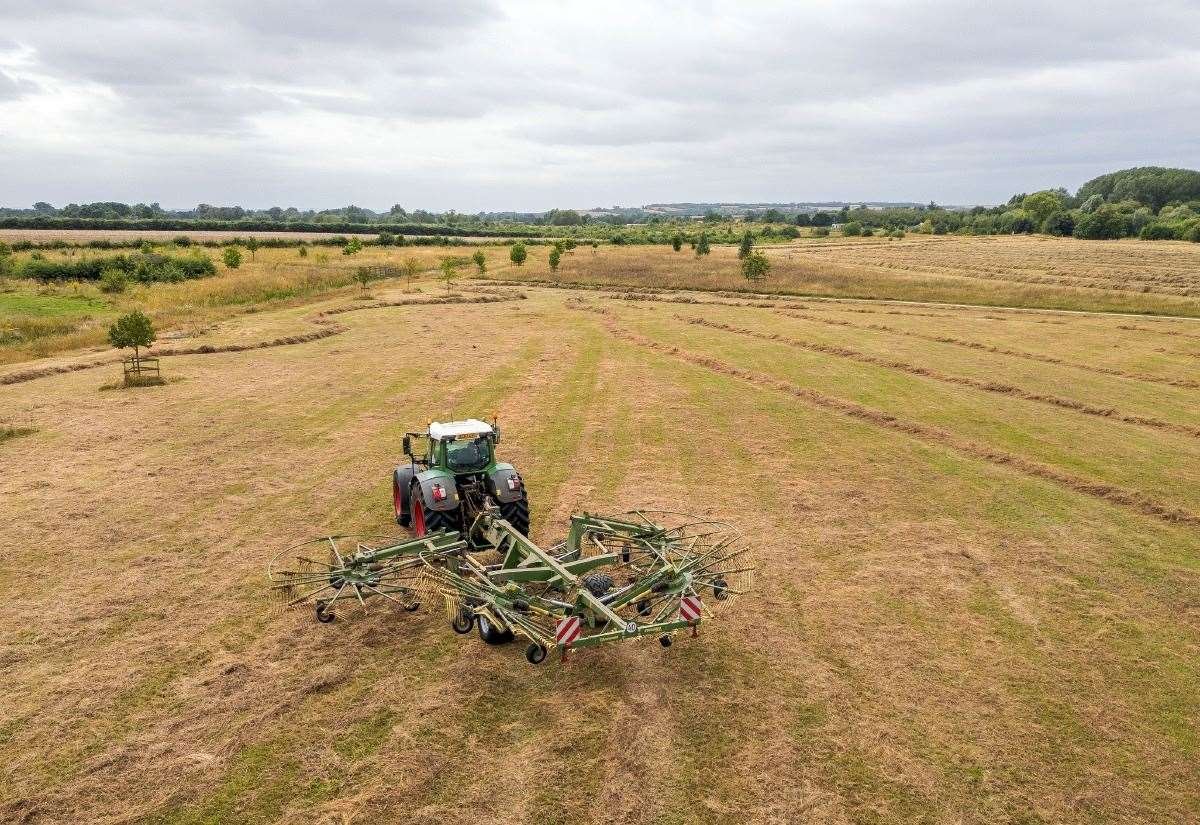
Nik Shelton, of the Wildlife Trust Bedfordshire, Cambridgeshire and Northamptonshire, writes about the importance of our grasslands. We’re heading into the peak months for meadows and grasslands, and there are some special places to visit near Cambridge to make the most of them. But what is a grassland and why are they so important?Trumpington Meadows nature reserve. Picture: Sarah LambertAt its simplest a grassland is, unsurprisingly, a habitat which is dominated by grass – but this definition hides a complex and fascinating diversity which is shaped by giant extinct animals, subterranean geology and human history. Internationally they can range from the Pampas grasslands of the Patagonian Steppe in South America to the mountainside chalk grasslands of the Swiss Alps. In our region we group them into types defined by the acidity of the soil – this leads to different species of specialist plants which in turn attract different butterflies and other insects.“We tend to categorise our grasslands into three types of habitats in our part of the world,” explains Wildlife BCN director of conservation, Matt Jackson.Sian Williams, left, and Rebecca Green carry out a rapid grassland survey at Houghton Meadows. Picture: Holly Wilkinson / Wildlife Trust BCN“They are calcareous grasslands, those which have an alkaline type soil; acid grasslands, those with an acidic soil; and then what we call neutral grasslands – or the posh scientific term is mesotrophic grasslands.“They are dependent on geology as to where they occur. So in our patch, in the southern part of Bedfordshire and Cambridgeshire we have chalk coming to the surface at reserves like Fleam Dyke and Pegsdon Hills. It is the same band of chalk which extends from the Chilterns. And then further north from that, we’ve got clay on top of limestone so you get much more free-draining calcareous grasslands as a result.A chalkhill blue at Fleam Dyke. Picture: Nik Shelton / Wildlife Trust BCN“Acid grasslands tend to be associated with rock formations like sandstone and we have those in the Greensand Ridge in Bedfordshire, for instance. A good example is the RSPB’s heathland reserve at The Lodge near Sandy. And we have acid grassland in the hills in southwest Northamptonshire.“Our neutral grasslands tend to be associated with the river valleys, and one of our rarer habitats are the floodplain meadows – places like our Houghton Meadows reserve near St Ives.”Houghton Meadows. Picture: Jenny Mackay / Wildlife Trust BCNMany of us were taught in school that ancient Britain was covered in one huge wild wood – so where did these grasslands come from? Well, the latest scientific thinking, based on studying fossil records, is that trees never truly covered our island. Large mammals like the extinct aurochs (an ancestor of today’s cows), giant elks and even early elephants would have kept areas free of trees, and other species adapted and evolved to live in the open spaces.An auroch – a now extinct speciesToday we use particular breeds of cows and sheep to continue their work, but we also cut and remove the grass at reserves like Trumpington Meadows to keep nutrient levels down so that wildflowers are not swamped by nettles and brambles.Trumpington Meadows is celebrating 10 years this month with a special event on June 21 where you can learn all about meadow species and their conservation as well as taking part in lots of fun family activities.Flowers at Trumpington Meadows. Picture: Wildlife Trust BCN“Over the past century species rich meadows have declined by 97 per cent – a huge loss,” says Matt. “Lots have been lost due to the decline of traditional farming techniques, but also development. And also if you don’t manage them, they will tend to convert to scrub and then into woodland – a process called succession. “Another issue for floodplain meadows in the modern world is river water quality – due to poor sewage control and farming practices our rivers now have a far higher phosphate content than they would have done naturally. So when they flood now, that phosphate comes out of the river and if we don’t do something about it those habitats move very quickly away from being flower rich meadows.”Fleam Dyke. Picture: Holly Wilkinson / Wildlife Trust BCNAnd it’s not just above the ground that matters – we now know that the roots in a healthy grassland habitat can reach down over four metres and store significant amounts of carbon.With a long and fascinating history, and benefits for people, wildlife and the climate we are working hard to protect grassland habitats in our region. Our Wilder Future Fund is focussing on meadows and grasslands over the coming months – head to wildlifebcn.org/wilderfuturefund to find out more and support our work.
Grasslands: Why they are so important