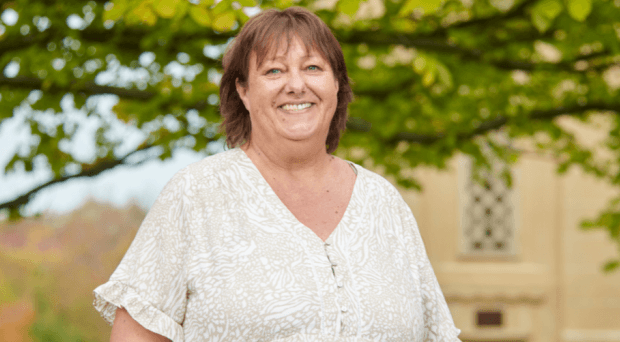
Kelly Bouzaid
The debate around the future of local government is one of the most important conversations our region has had in decades. It will influence how we plan for growth, invest in infrastructure, deliver services and represent our communities well into the future.
Yet, as I have watched the discussion unfold, I can’t help but feel we have become preoccupied with how local government should look, rather than what we want it to achieve.
Waipa CEO Steph O’Sullivan, left, with Chamber CEO Kelly Bouzaid
Business leaders understand that changing an organisational chart rarely changes organisational performance. Mergers, restructures and new governance models create opportunities, but they are not strategies in themselves. Without a clear vision and exceptional leadership, they simply become structural change. That is where I believe the conversation needs to evolve.
Whether Waikato ultimately retains its current structure, adopts a unitary authority or pursues another model is, in many respects, secondary. The more important question is this: What kind of region do we want the Waikato to become over the next 20 or 30 years?
Only once we can answer that question should we decide what governance model is best placed to deliver it.
To date, I have seen considerable discussion around options, governance frameworks and comparative models from elsewhere in New Zealand. What I have seen far less of is a compelling regional vision capable of uniting our communities around a common purpose.
Great leadership creates confidence. It brings diverse communities together, makes difficult decisions, builds trust and inspires people to think beyond district boundaries and electoral cycles. It asks what is best for the future prosperity of the entire region.
That is the leadership conversation I believe is currently missing.
From a business perspective, the outcomes are remarkably clear. We need infrastructure that keeps pace with growth, financially sustainable councils, responsive decision-making, efficient consenting processes and long-term investment that supports productivity and economic confidence. Businesses are not particularly interested in the logo on the council building; they are interested in whether the system delivers.
Cambridge is one of New Zealand’s fastest-growing communities and an increasingly significant contributor to the Waikato economy. Growth presents enormous opportunity, but it also places pressure on transport, housing, water, community infrastructure and the pace of decision-making. Whatever model emerges must preserve strong local representation while providing the strategic capability to respond to regional challenges.
The Cambridge Business Chamber is not advocating for a predetermined outcome. We are advocating for a robust, evidence-based discussion that objectively weighs the benefits, risks and long-term implications of any proposal.
Structural reform should only occur when there is compelling evidence that it will deliver demonstrably better outcomes for communities, businesses and ratepayers.
Ultimately, the success of local government will not be defined by the number of councils we have. It will be defined by the quality of the leadership we show, the courage to think beyond today’s challenges, and our collective willingness to build a shared vision for the Waikato’s future. In the end, the structure is simply the vehicle.
Kelly Bouzaid