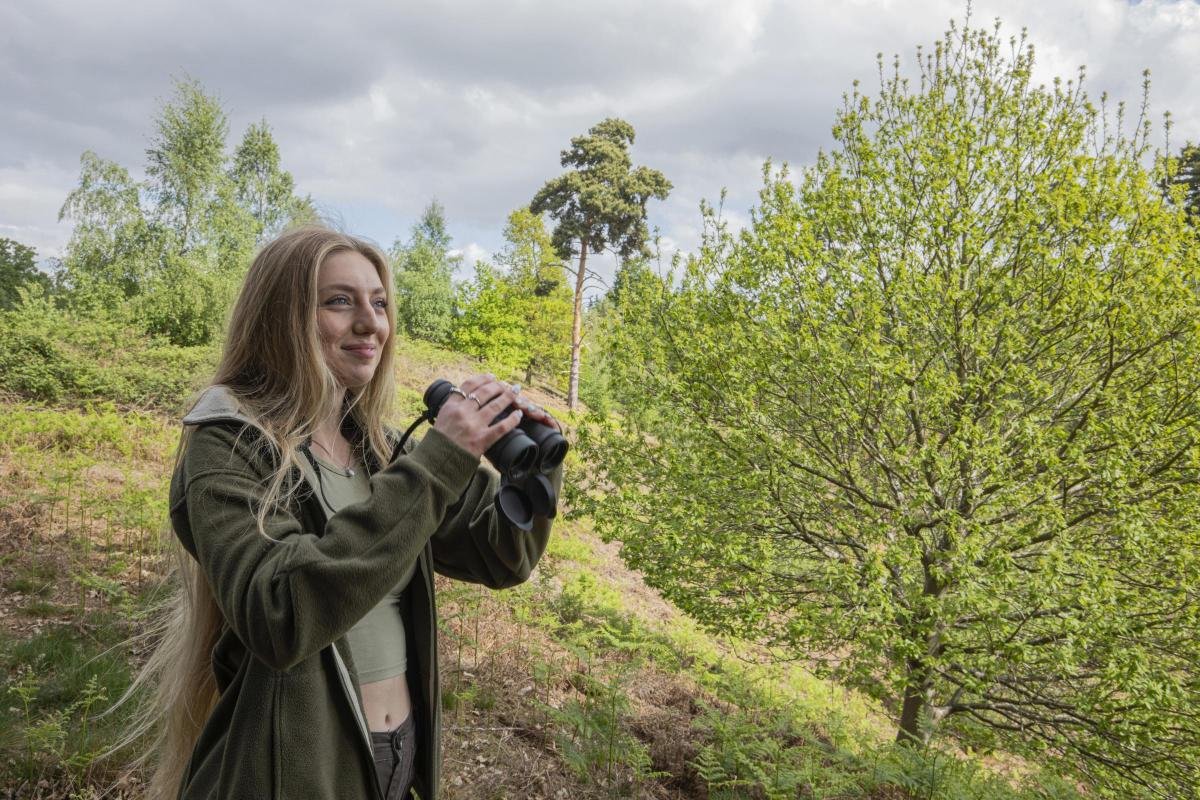
MY DAUGHTERS regularly send me photos of birds on WhatsApp.‘Look at these lads,’ one will caption a picture of crows foraging on a grass verge. ‘Mum I bet you wish you were here,’ the other will write, under a picture of a hopeful crow perched on a chair at her table at an outdoor café.So far this year I have received pictures including robins, herons, red kites, pigeons and parakeets, the latter who regularly raid the cherry tree outside my eldest daughter’s London flat – she often sends pictures of their bright green bodies and long tails twirling about in the branches. My youngest daughter sent pictures from a hide in Walthamstow Wetlands, where she and friend were observing the birdlife.My daughters are young adults, but have grown up with a keen interest in birds. They were raised in a home where the weekly bird food bill surpassed that of the food shop. While we were dining on budget brands, our garden visitors were tucking into premium seed mix and superior fat balls. It’s a garden, which continues to welcome all comers, including the much-maligned magpie, although crows always come first. We have all but hand raised at least ten families of crows, the latest of which is now feeding its young. And, of course, we have many small garden birds, who, as I often say, ‘eat us out of house and home’.I like that my daughters notice and enjoy watching birds. They are not birdwatchers in the official sense, more casual observers, but they can identify most birds they come across each day, and often comment on hearing birdsong around their city homes.I was pleased to read that research by the RSPB suggests more than 700,000 people aged 16 to 29 – collectively described as Gen Z – regularly enjoy watching birds in Britain, a more than tenfold rise since 2018. No longer seen as an older person’s pastime, birdwatching is now the second fastest-growing hobby for Gen Z after, bizarrely, jewellery making.Younger birders cite birdwatching as an easy, accessible, free way to break away from hours spent looking at screens, enabling them to relax, de-stress and improve their mental health.Here in Yorkshire, managers at RSPB Bempton Cliffs, one of the UK’s largest bird sanctuaries, say they have seen a “significant increase” in the number of younger visitors. Visitor manage Poppy Rummery said younger people increasingly understood the benefits of getting outdoors and experiencing nature.Great tit PAWhile birdwatching helps young people to break from technology, it does play a role in helping them to enjoy their hobby and give others an insight into it. Gen Zers are sharing their sightings and birding adventures on social media platforms like Instagram, TikTok, and Reddit. Special birding apps are growing in popularity, with AI helping young people learn to identify species. Apps like Merlin Bird ID allow users to record bird song with their phones, with the app telling them which birds are singing. I might try and have a go with that myself.The beauty of watching birds is that it doesn’t cost an arm and a leg. At a basic level, when you’re out and about all you need is your own eyes and ears. If you want to get up close and personal, a pair of binoculars – which come in a range of prices, or you can buy secondhand – is all you need.Watching birds is certainly a way of relieving stress. When I am working from home I can see the bird feeder beside the window and often find myself staring out, watching them coming and going. It’s an instant, therapeutic switch-off from the daily routine.
Birdwatching is the ideal de-stressing hobby for young people