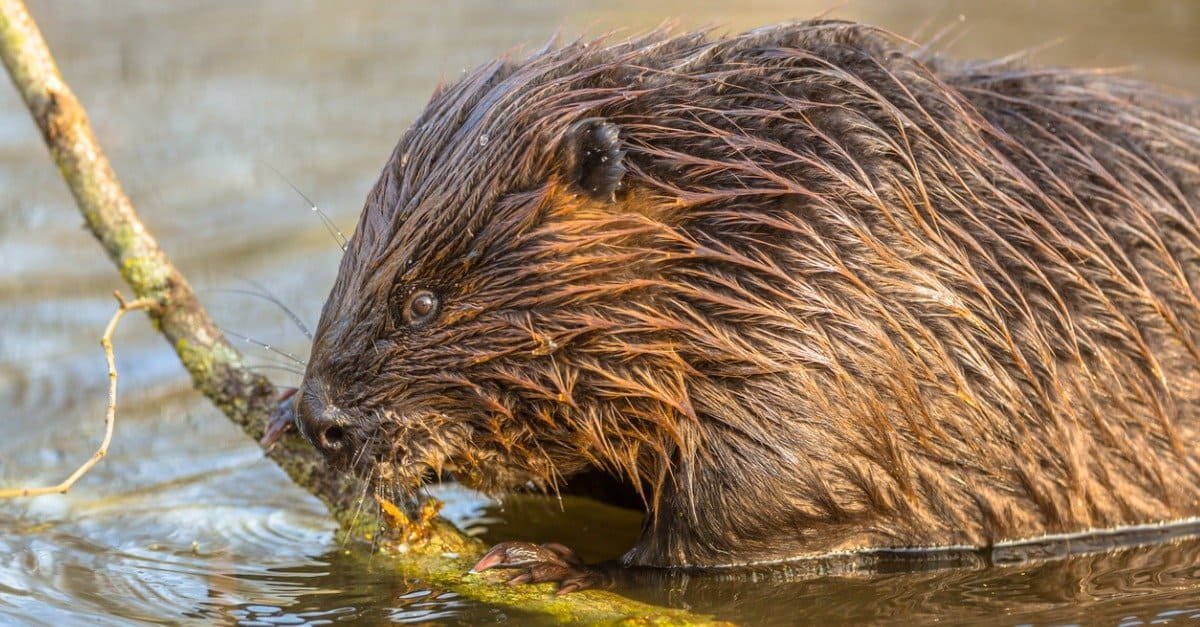
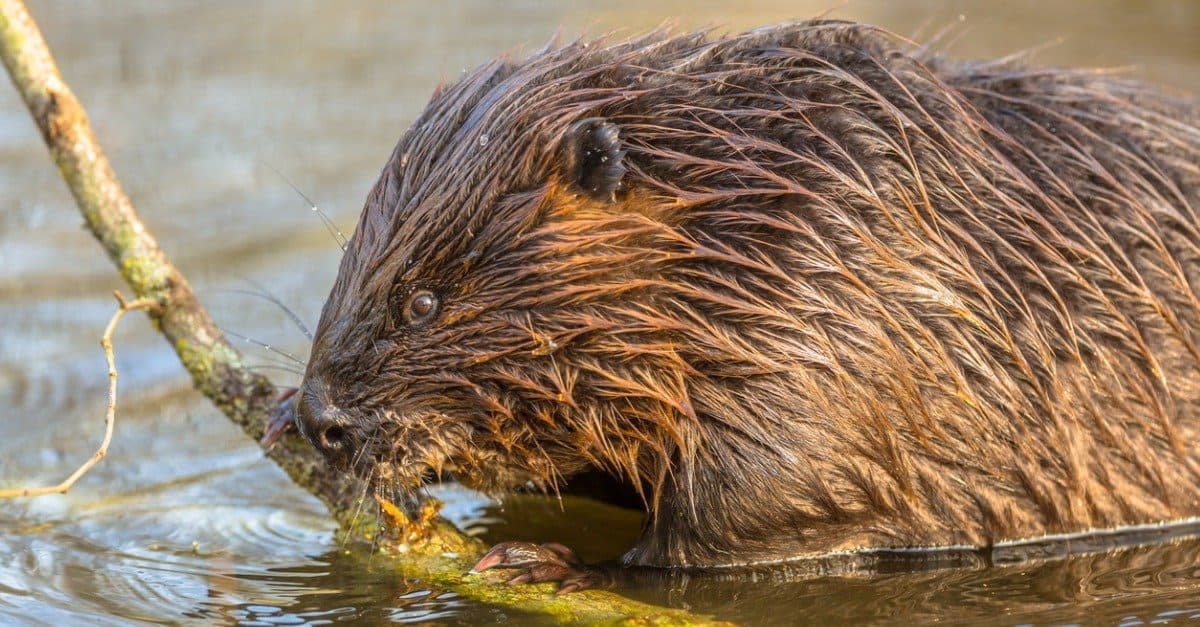
Eurasian beaver eating in water© iStock.com/CreativeNature_nl
Following years of careful preparation, the beavers are back in Bedfordshire (a county in the east of England). This is the first time in 400 years that these remarkable mammals have returned to the county’s rivers, marking a historic milestone for the area. Their presence is already demonstrating why the species is so vital for UK ecology.
About Britain’s Beavers
The UK beaver (Eurasian beaver) species is different from that found in the US. They look similar and lead similar lives, but the Eurasian beaver typically has fur that is a lighter shade of brown than its American cousins, and its tail is a little narrower.
Eurasian beavers (Castor fiber) are found in riparian habitats, close to freshwater and surrounded by wetland plants and woodland. They are the largest rodent in Britain and weigh up to 80 pounds or so. Their most distinctive feature is their flat, scaly, paddle-shaped tail, which can be up to 13 inches long.
What Happened to Britain’s Beavers?
The Eurasian beaver has a chequered history in the UK and indeed in many parts of Europe. The species likely evolved in the early Pleistocene era, around 3 million years ago. During the late Pleistocene ice age, they apparently disappeared from much of Europe and Asia, but later rebounded as the climate warmed.
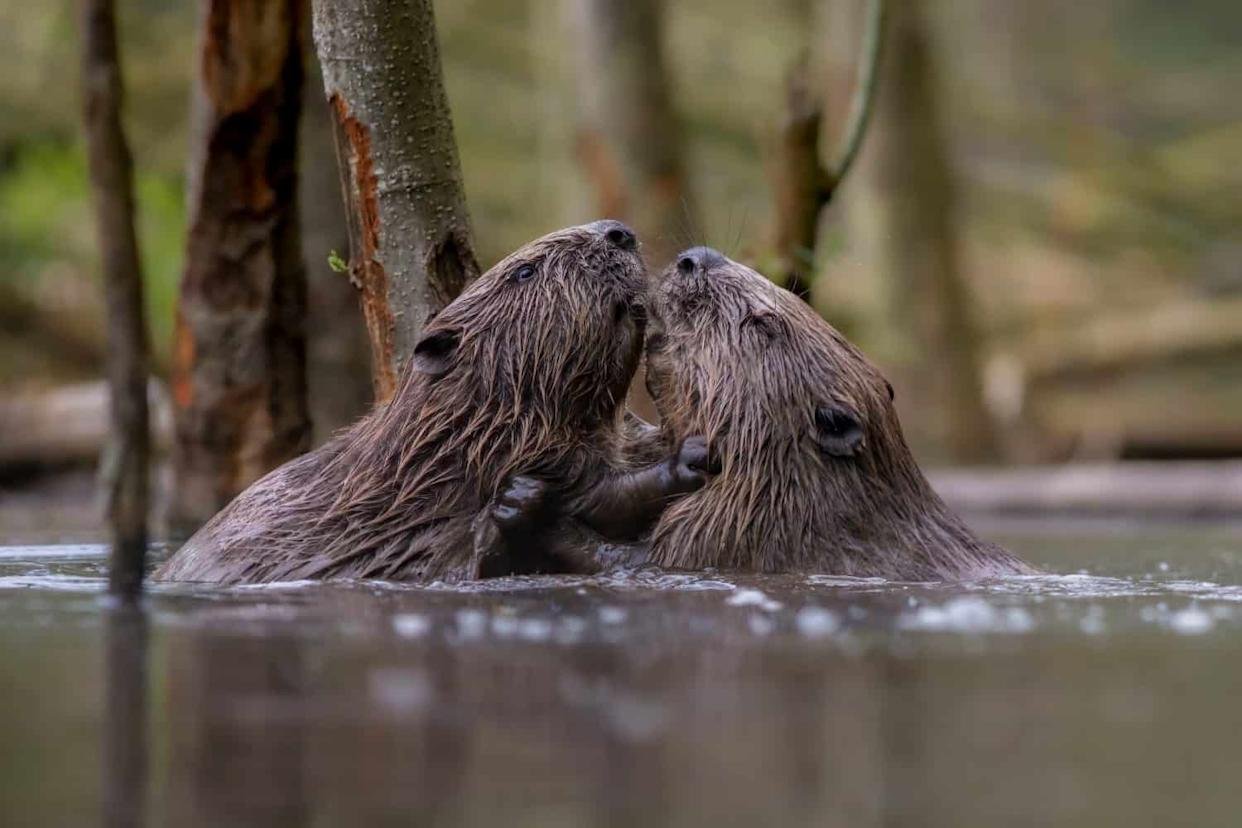
Beavers were over-hunted in Britain.
©Michal14/Shutterstock.com
More recently, they have been hunted throughout the UK and Europe for their fur, meat, and castoreum (an exudate produced to mark their territory and which was traditionally used in perfumes). This took a heavy toll on populations, and the last sighting of a British beaver was recorded in Loch Ness in the 1500s. It is possible, however, that a few small, isolated populations survived into the 1700s. No further sightings of live beavers were recorded until 2002, when the first official reintroduction occurred at a fenced wetland site.
Where in the UK Have Beavers Been Reintroduced?
There have been several fenced enclosure trials of beaver reintroduction in the UK. Two licensed free-living populations can be found on the River Otter and in Knapdale, Scotland. Several additional licensed wild populations now exist as beaver reintroductions have expanded in recent years.
Also, there are likely unlicensed free-living populations elsewhere. In 2019, beavers were granted protected species status in Scotland, and in 2022, the UK government officially recognised them as a native species. Beavers are a protected species in the UK, so they cannot be culled there without a license.
Why Release Beavers in Britain?
Beavers are widely recognised as ecosystem engineers. This means they modify their environment to create habitats and resources for other species. Beavers live in riparian habitats—transitional areas between terrestrial and aquatic ecosystems. In these partially wetland and partially woodland areas, they eat vegetation such as rhizomes, pondweed, ferns, and grasses.
In the winter, however, they switch to wood and tree bark. They prefer deep, slow-moving rivers or lakes, and if they can’t find them, they will create their own!
To do this, they build dams to slow down the flow of water and dig burrows into the riverbank. Alternatively, they will construct a ‘lodge’ from wood, twigs, and soil, where the beavers can hide from predators.
The Bedfordshire Beaver Release
The beavers have been released at Southill Estate in Bedfordshire under a Natural England license. It has taken two years to obtain the license and to prepare a purpose-built enclosure. The work was carried out in partnership with the Beaver Trust. The news release on their website describes how they “led on the [license] application, co-designed the main release pond, coordinated trapping operations, and oversaw the safe transfer of animals to [the] site.”
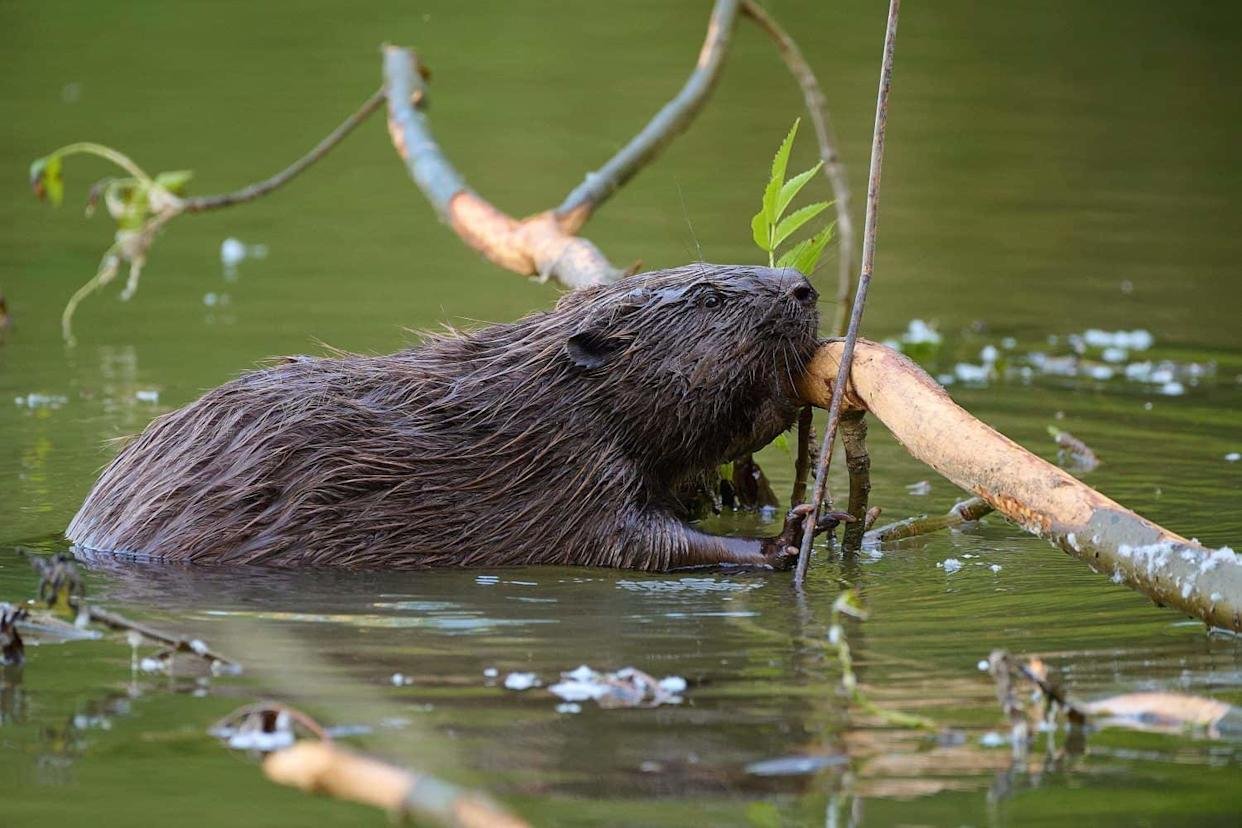
Beavers modify their habitats.
©Tomas Palsovic/Shutterstock.com
The estate team and specialist contractors carried out many modifications to create a suitable habitat, including pond creation, willow planting, and restoring a more natural hydrological flow and habitat complexity to an existing ditch.
During the first stage of the release, an adult male and two kits that had been humanely trapped under license from Scotland were introduced. A few days later, an adult female was introduced, who had spent 14 months being prepared for independent living at the Wildwood Trust.
Beavers and Land Management
The beaver release is part of a broader commitment to manage the land so that there is space for nature alongside productive land use. The project aims to achieve ecological restoration, which brings drought resilience to the wider estate. Bedfordshire is one of the driest counties in England.
When beavers build dams, they also create a mosaic of wetland habitats, including pools, channels, and standing deadwood. This process retains water in the landscape, benefiting both humans and wildlife. It also reduces peak water flows, lowering the risk of downstream flooding.
The benefits are already apparent: grey partridges are being seen in greater numbers, along with increases in wading birds, songbirds, and invertebrate communities.
This new beaver community will be closely monitored. Future offspring may even be trapped and relocated to additional licensed reintroduction sites.
The post England’s First Bedfordshire Beavers in 400 Years Are Already Changing the Land appeared first on A-Z Animals.