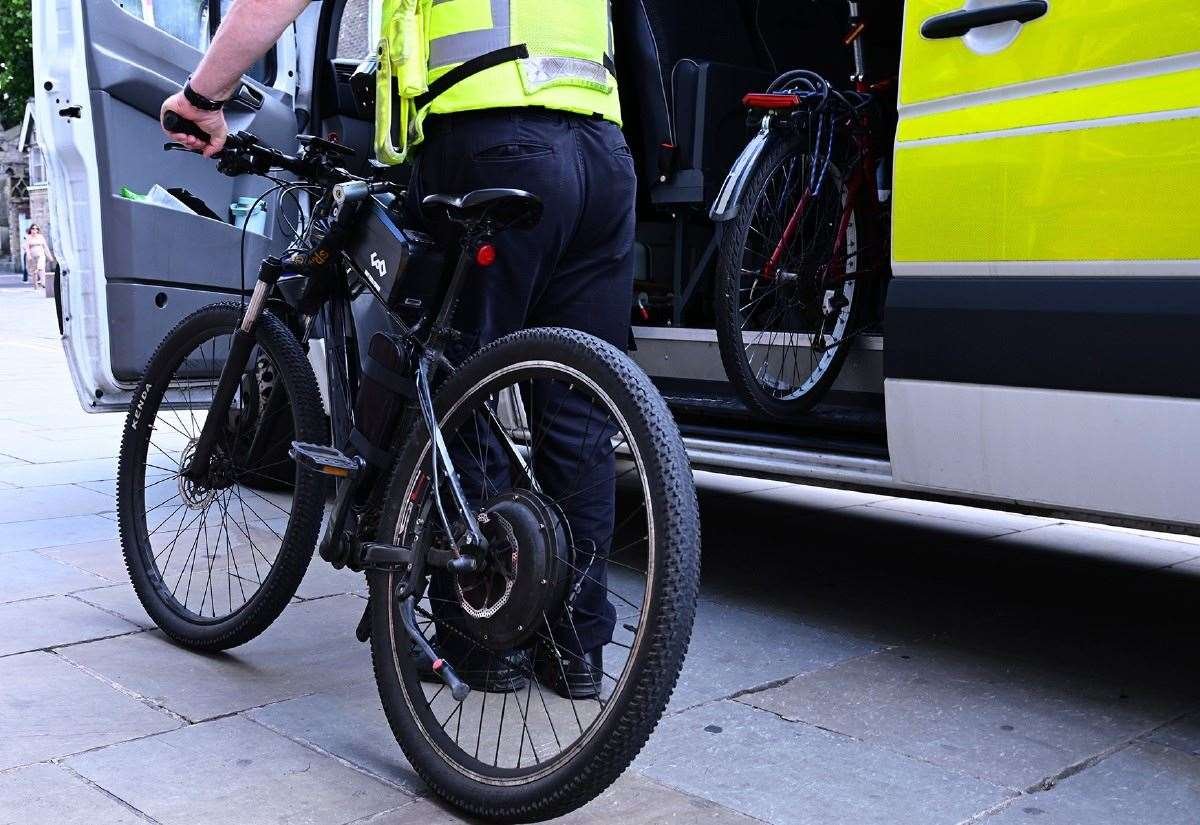
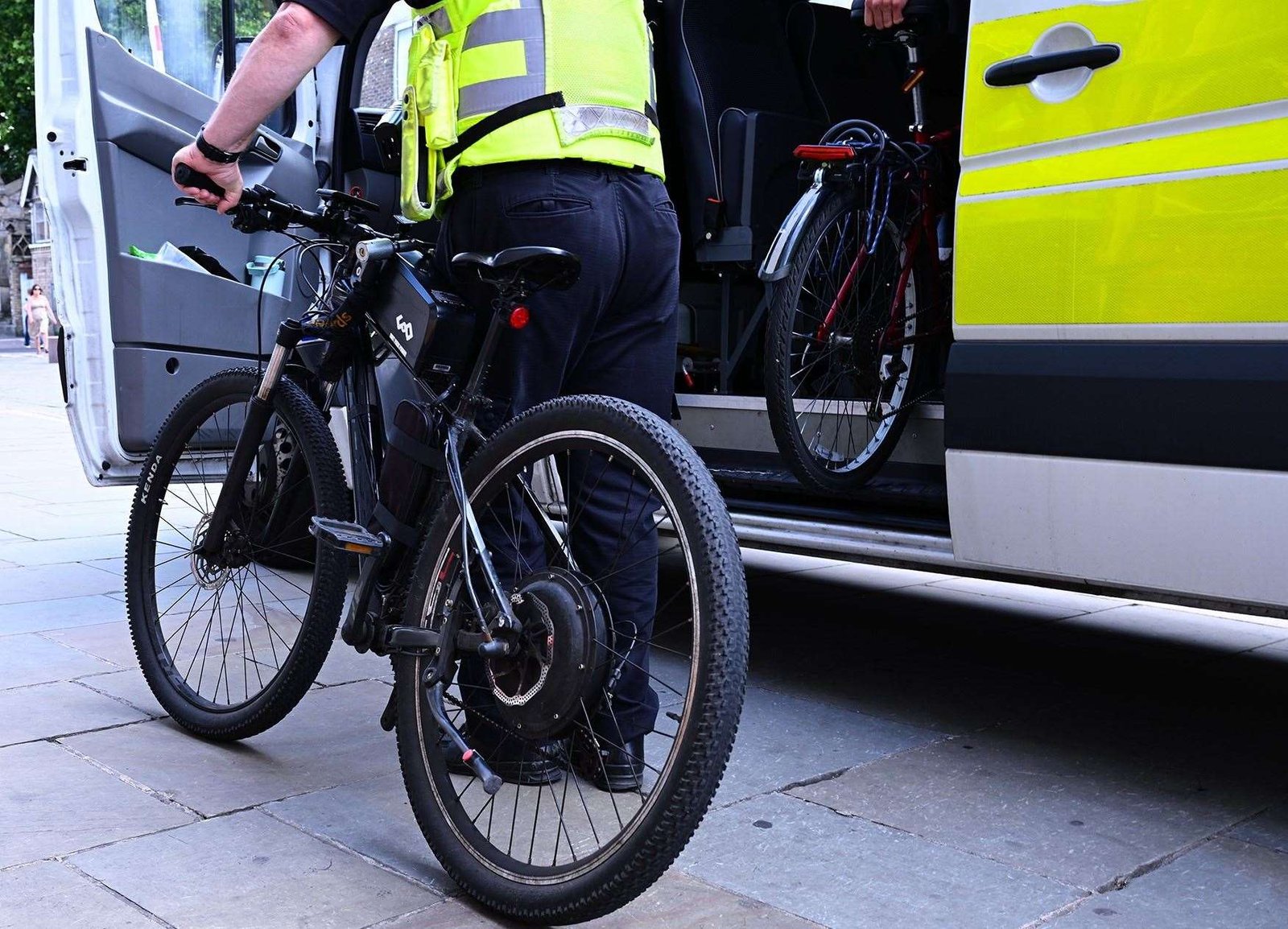
Police officers on electric bikes could become a regular sight as Hertfordshire Constabulary rolls out pilots across the county, in a bid to clamp down on anti-social behaviour.
In the past, e-bikes have been associated with phone thefts and anti-social behaviour, but the force could soon “fight fire with fire”.
The constabulary is also exploring the use of artificial intelligence (AI) in the future.

The developments were discussed at a meeting of the public health and community safety cabinet panel at Hertfordshire County Council offices on Thursday, April 23.
Cllr Matt Fisher (Green, St Albans Central), who sits on the police and crime panel, updated members about the most recent meeting held on February 5 at Stevenage Borough Council’s offices.
He said: “Residents were clear in their priorities; more neighbourhood policing, stronger road safety enforcement and tackling crimes like burglary and anti-social behaviour.”
Cllr Fisher also referred to a £1 million investment from Hertfordshire Constabulary alongside Bedfordshire and Cambridgeshire’s forces, in a project for all three to collaborate with Palantir Technologies to trial advanced data sharing and AI technology.
He added: “There were also positive discussions around sustainability, including fleet electrification and the practical use of e-bikes in neighbourhood policing.”
Cllr Ben Crystall (Green, Hertford All Saints) asked: “We see e-bikes being used a lot, particularly in anti-social behaviour and crime. For all the fantastic things that they offer people for cycling, they’re also being used by people in ways to help their criminal activities.
“I just wondered whether we know if they are being used by the police widely? Because it would seem that perhaps you do need to have e-bikes to catch people with e-bikes.”
Cllr Fisher responded that he had raised the issue during the meeting, adding: “Clearly, it makes obvious sense in terms of not only phone thefts on scooters and indeed more recently on e-bikes, but also you need to fight fire with fire in the sense that e-bikes are part of that.
“They are rolling out pilot studies across the county, so yes…there was progress there.
“It shares the same concern of the electrification of actual vehicles… that’s the infrastructure, the ability to charge and so on. Obviously, shifts change, and yet the car is still there, so it’s not like they charge overnight like normal residents would do. So, there are a few teething issues, the infrastructure and of course, the associated costs.
“In terms of Palantir, we did delve into that, and there was some concern about the concept of AI more than Palantir, I have to say. That is, it will obviously be used to identify patterns rather than necessarily making outright decisions.
“The panel were very keen to press that the police should be using these tools and this technology, but not making decisions that aren’t either supervised or guided by human input.”
Cllr Colette Wyatt Lowe (Conservative, Hemel Hempstead North East) asked: “You referred to the expansion of middle management. In my experience, we often find that the expansion of a middle management team does not always achieve greater efficiency. I just wonder what the basis for this is? Residents really want to see more visible policing and more policemen on their streets.”
Cllr Fisher responded: “Yes, we did raise that point, and it comes down to operational resilience in the notion that the police force is targeting chief inspectors to give that experience and that mentorship to the younger police officers. We’re finding Hertfordshire has got quite a young police force, and so there lies some operational risk in that in terms of experience.”
Cllr Allison Wren (Lib Dem, Herts Rural), vice-chair of the committee, asked about aims for increased foot patrols and whether the panel expected to be given plans on how this would be achieved.
Cllr Fisher replied: “[We’re] not expecting to receive dedicated plans, but the conversation did expand to ‘what does it mean?’ More officers on the beat, and it’s a case of taking the administration out of the equation so that police officers are on the street doing patrols rather than in an office following up with paperwork.
“About 26 officer places, if you like, were sort of engineered from cost savings, so that’s an extra 26 police officers that have come about from a shuffle in reducing admin and getting them on the beat. That doesn’t come across too well for a whole county, but it’s a step in the right direction.”
Elsewhere, Cllr Fisher also laid out the increase in the police precept of council tax. He said: “The panel approved a £15 increase to the police precept for 2026/27, and that’s taken a Band D property to £280 per year. This is the maximum allowed without a referendum driven by ongoing pressures, including pay, inflation and reduced reserves, which government funding does not fully offset.
“This will raise around £8.3 million, contributing to a £292 million policing budget, alongside the requirement to deliver nearly £7 million in savings, which obviously remains challenging.
“For residents, the impact is relatively modest, around two-thirds of households will pay around £15 or less per year, and the public consultation showed strong support with 68% in favour and over half willing to support a higher increase.”