A city centre post office that was damaged in a suspected arson attack has reopened a year after it was forced to shut.The shop at Midsummer Boulevard, Milton Keynes, has been totally renovated. It was due to reopen in November, but the date was pushed back after the Post Office said major repair work was needed. Thames Valley Police charged a 47-year-old man, from London, with arson with intent to endanger life in connection with the incident, who is next due in court in October.
Category: Bedford

Milton Keynes post office reopens a year after fire
Rough sleepers offered water, suncream and shade in the heat
Brenland has upped his support this week, handing out water, wet wipes, ice lollies, suncream, snacks and basic toiletries from The Bus Shelter Ipswich.Parked up in a sheltered spot in the town centre, it also offers the chance for shade and a cooling shower.”We just do what we can,” added Brenland, who founded the community interest company.”Members of the public are generally kind enough to make sure [rough sleepers] have got food and drink and the essentials, but it’s always nice to have a base that they can come to if they need to.”A 34-year-old man in Ipswich, who did not want to give his name, said he had suffered sunstroke twice in recent weeks.”It’s hard, especially with my fair skin,” he said. “It’s horrible.”

BOWLS – Warwickshire Women qualify for Walker Cup national finals
WARWICKSHIRE Ladies booked their place at the national finals of the Walker Cup after triumphing against three other counties.
The Warwickshire Women’s Bowling Association (WWBA) took on teams from Gloucestershire, Wiltshire and Worcestershire in the West qualifier at Devizes Bowls Club.
And Warwickshire thrashed Worcestershire 8-0 before beating Wiltshire 6-2 and thumping Gloucestershire 7-1 in a dominant display.
Matches featured pairs, triples and fours games as Lily Adams and Emily Kernick played the pairs and Dawn Horne, Michelle Meadowcroft and Kirsty Richards the triples.
And the squad of Liz Wooding, Anita Cowdrill, Tracy Wheeler, Moira Parsons and Jane Chedgzoy competed in the fours matches.
The WWBA also celebrated their 90th anniversary at Stoke Bowling Club in Coventry with a gala for more than 60 players and guests.
County president, Vanessa Brazier, thanked all the players, volunteers and supporters who had been a part of Warwickshire’s journey over the last 90 years.
Ladies too strong for Bedfordshire
Earlier this month, Warwickshire hosted Bedfordshire at Rugby Railway Bowls Club as the visitors won the rink one match 15-10 despite the best efforts of Liz Crowther and Pat Gagg of Lillington supported by Velisa Brown from Southam and Margaret Boldy from Wellesbourne.And Bedfordshire claimed a narrow 17-15 win on rink two as Janice White of Royal Leamington Spa, supported by Joy Cooke, Sherwood Park, and Christine Harding and Becky Lever, both Rugby Thornfield lost a closely-fought contest.
County president Brazier helped Warwickshire to a 17-12 win on rink three skippered by Jenny Wickens, Royal Leamington Spa with Linda Linney, Stratford, and Margaret Grosvenor, Avenue Coventry in support.
Warwickshire also triumphed on rink four as Stratford pair Elspeth Summers and Pam Jowers combined with Brenda Beere from the Grange and Pat Moore, Three Spires Bowling Club, to win 18-16 in a back-and-forth contest.
And Warwickshire continued their momentum on rink five as Maureen Edwards and Pat Lowe, Rugby Thornfield, Ginny Burns, Warwick Boat Club and Pippa Mace, Lillington claimed a 17-12 victory.
Warwickshire players Ann Hardwood, Nuneaton, Heather Tredgold, Southam, Anita Cowdrill and Dawn Horne, both Royal Leamington Spa, secured the highest winning rink with a dominant 19-8 success on rink six to celebrate a 96-80 victory overall.
Are you on Facebook?
Like or follow our Facebook page –
facebook.com/Rugby.Observer
to get daily news updates straight to your news feed.
Bedford Hospital MRI scanners out of action due to heatwave
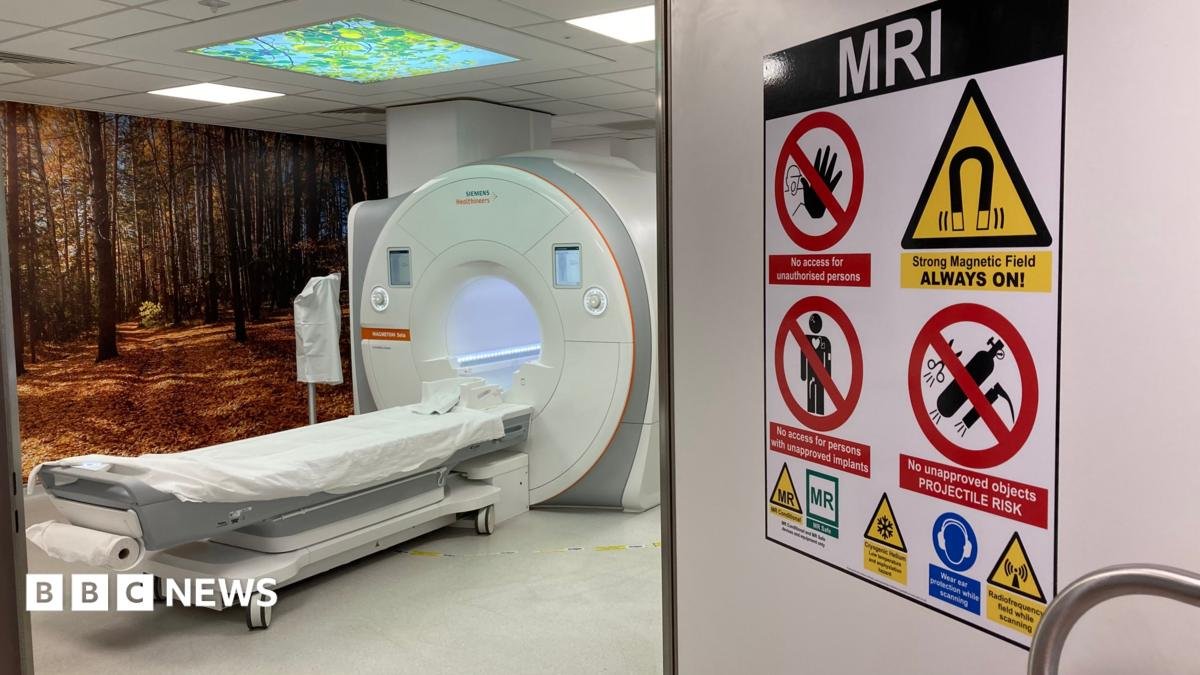
A hospital said some of its MRI scanners were “not operational” due to the current high level of heat and humidity.Scans at Bedford South Wing Hospital are being postponed as the MRI machines cannot be safely operated, Bedfordshire Hospitals NHS Foundation Trust said.A spokesperson added: “This is as a result of the older cooling systems at our aging site not being able to achieve the required temperature and humidity levels.”The trust is contacting patients affected by the delays and said it would reschedule appointments as soon as “the situation stabilises”.”Our scanners at the Bedford North Wing Community Diagnostic Centre (CDC) and our Luton and Dunstable University Hospital (L&D) sites are unaffected and remain fully operational,” the trust said.It apologised to everyone affected, and said any emergency MRI scans would be carried out at the CDC or L&D sites.”If you have not been contacted then please continue to attend your appointment,” the trust added.It comes after the Norfolk and Norwich University Hospitals NHS Foundation Trust declared a critical incident on Wednesday, saying its MRI cooling systems had been affected by the hot and humid weather.This led to hundreds of appointments being cancelled.Do you have a story suggestion for Beds, Herts or Bucks? Contact us below.

Sirius acquires three self-storage development sites
25 Jun 2026
By Lewis Berrill
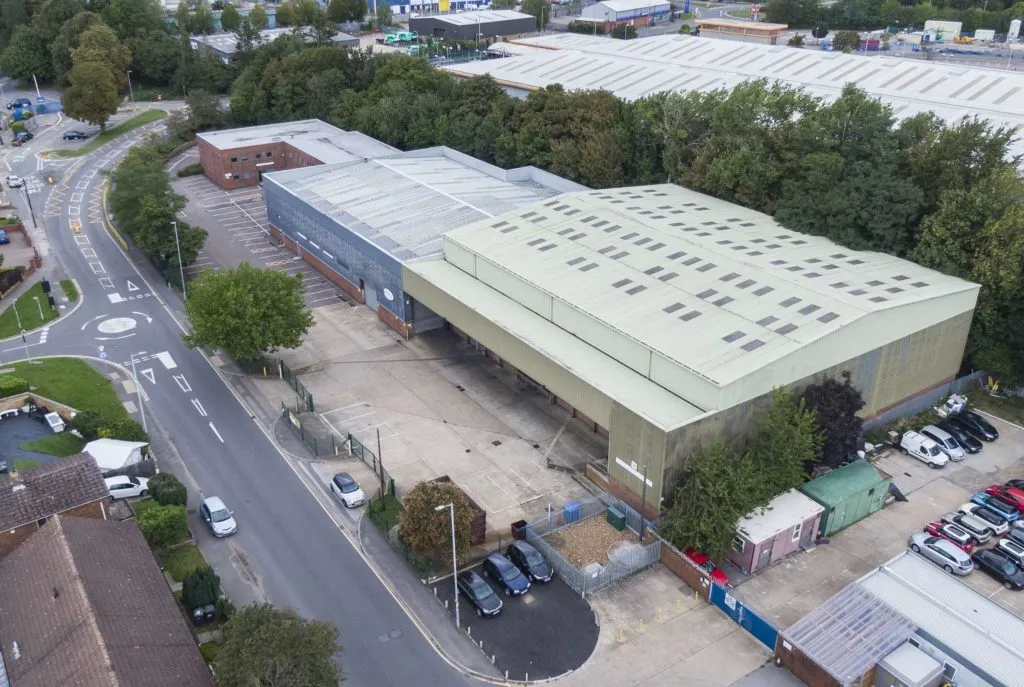
The industrial park owner and operator will develop automated self-storage facilities on the sites in Bedfordshire, Leicestershire and Merton, south London.Already registered or subscriber? Please log in to continue reading
Want to keep reading?
Unlock your free article — Your gateway to Property Intelligence
Register FREE and enjoy one complimentary article every month, packed with:
Daily market briefings so you act faster on deals and developments
Finance insights to manage risk and spot opportunities.
Expert analysis that informs strategy and builds credibility
Sector-specific intelligence to identify risks and opportunities.
Legal and compliance updates to stay on the right side of regulation.
People moves to keep you connected with industry leaders.Ready for more? Subscribe today for unlimited
access to the UK’s most trusted property intelligence.Rail industry reacts to RAIB update on Bedfordshire crash
Follow us on Google
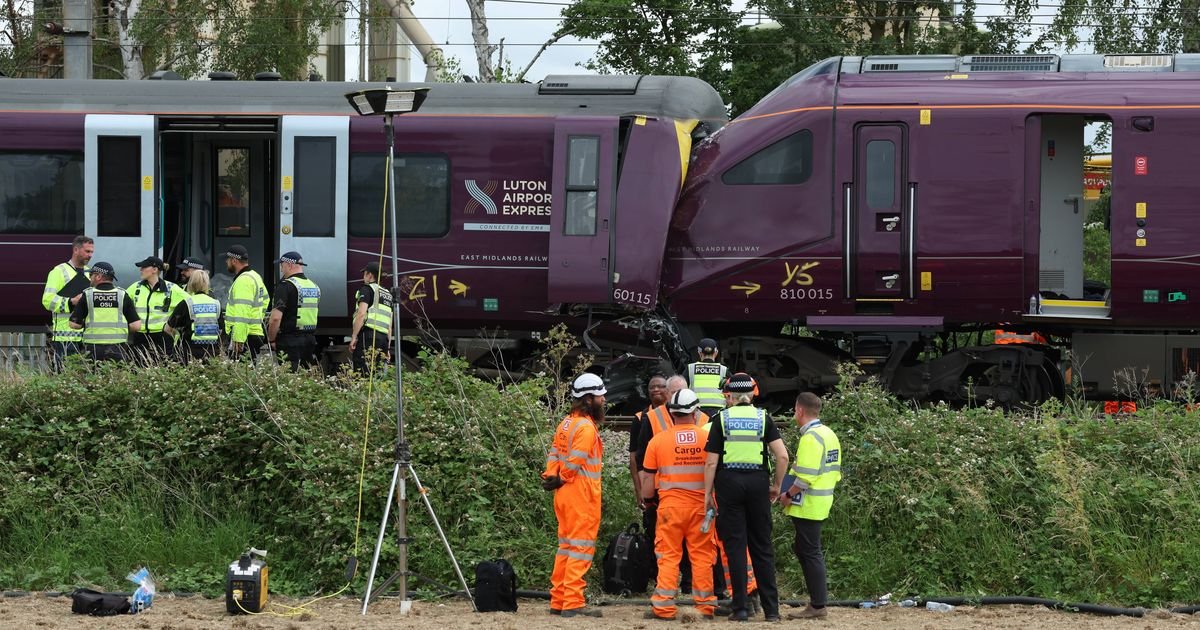
Britain’s rail industry is beginning to outline its safety response after the Rail Accident Investigation Branch (RAIB) issued a preliminary update into the fatal collision between two East Midlands Railway passenger trains near Bedford in Bedfordshire, an incident that left one driver dead and around 100 people injured.
Get the latest news straight to your inbox!
RAIB sets out early picture of Bedfordshire collisionThe RAIB’s update, published this week, provides the first structured account of the events leading up to the 19 June collision near Elstow, just south of Bedford. Publicly available information indicates that a southbound East Midlands Railway service from Corby to London St Pancras struck the rear of another London-bound train that had come to a stand on the same line.The branch’s early findings describe how the second train passed a red signal protecting the route ahead before colliding with the stationary train at speed. Data from on-train systems and signalling records is being used to examine the sequence of signals displayed, the braking profile of the moving train and any technical anomalies in the train or trackside equipment.The RAIB update confirms that investigators are examining the performance of the signalling and train protection systems, the way traffic was being regulated on the busy Midland Main Line, and the actions of railway staff in the minutes before impact. The branch is also assessing how the design of the trains and the condition of the track influenced the pattern of damage and injuries.While the document stops short of drawing conclusions, it highlights a series of lines of inquiry that will shape the industry’s technical response, including signal overrun risk, rear-end collision protection and communication between control staff and drivers on intensively used corridors.Network Rail and operators focus on signalling and traffic managementNetwork Rail and East Midlands Railway have both indicated through public statements and service updates that they are working closely with RAIB and the Office of Rail and Road while the investigation continues. According to published coverage, engineers have been scrutinising signal sighting, interlocking logic and the way trains were sequenced through the Bedford corridor at the time of the crash.Operational briefings released since the update show that temporary restrictions and additional checks are in place on sections where trains converge onto the fast lines south of Bedford. These interim measures include closer monitoring of train regulation decisions, extra validation of route setting in signalling centres and reinforcement of rules covering movements behind failed or delayed trains.Industry commentary suggests that operators are also reviewing driver training on signal awareness and degraded-mode working, looking at how real-world traffic patterns and late-running services are represented in simulators. Several rail safety specialists have noted that the Bedfordshire crash occurred on a route that routinely handles densely timed intercity and commuter traffic, increasing the importance of robust traffic management tools.Infrastructure managers have drawn parallels with lessons from previous RAIB cases on overspeeding and signal adherence, where recommendations led to changes in control room procedures and use of data from train protection systems. Those earlier findings are now being revisited in light of the Bedfordshire collision to check whether further adaptations are required.Regulators link Bedfordshire update to wider safety themesThe RAIB update arrives against the backdrop of its wider programme of investigations into recent collisions and derailments across Britain. The branch’s annual reporting for 2024 highlights recurring themes such as adhesion problems, infrastructure condition and the importance of clear operating rules when systems do not behave as expected.Regulators and safety bodies are using the Bedfordshire case to underline that rear-end collisions, although rare, remain a critical risk in a modern railway that depends heavily on signalling integrity and human decision-making. Publicly available briefings from the Office of Rail and Road indicate that existing work on signal overrun protection, driver vigilance and real-time data sharing between trains and control centres is being cross-checked against the circumstances described in the RAIB update.Some technical commentators have pointed to recent RAIB reports into other collisions, including those involving track fastening failures and low wheel rail adhesion, as evidence that safety recommendations increasingly cut across traditional boundaries between operations, rolling stock and civil engineering. The Bedfordshire investigation is now seen as another test of how effectively different parts of the industry can respond in a coordinated way.Analysts note that the rapid publication of a preliminary update, just days after the crash, reflects a broader trend towards faster communication of emerging safety findings, intended to support early risk mitigation while full reports are still in preparation.Level crossing and corridor risk management back in focusAlthough the Bedfordshire collision did not involve a road vehicle, the RAIB’s update has prompted renewed discussion of how mixed-traffic corridors and interfaces such as level crossings are managed as traffic grows. Recent documents from Network Rail on level crossing risk, published separately from the Bedford investigation, show that collisions between trains and road vehicles, as well as an increase in near misses, continue to feature in national safety statistics.Industry specialists argue that the Bedfordshire crash reinforces the need to consider corridor risk as an integrated whole, rather than treating signalling, crossings, lineside access and timetable planning as separate issues. In practice this can mean re-examining how close together trains are scheduled, how quickly routes can be changed in response to disruption and what additional protections are in place when one train is stopped on the line ahead of another.Commentary in technical media suggests that route studies on the Midland Main Line are likely to look again at the configuration of crossovers and the balance between capacity and resilience. Questions being raised include whether further automatic protection measures could help to reduce the consequences of a signal being passed at danger in circumstances similar to those outlined in the RAIB update.Local concerns about disruption and diversionary routes south of Bedford, reflected in regional news reports, are also feeding into discussions about how major incidents are managed on busy intercity corridors that have limited alternative paths for long-distance and commuter services.Next steps as RAIB prepares full reportThe RAIB update makes clear that investigators expect to continue gathering evidence on site and from railway systems for several months before issuing a full report with formal safety recommendations. That document will examine the interaction between human factors, technical systems and organisational decisions in more detail, including any underlying factors that may have increased the risk of a collision.In anticipation of those recommendations, rail companies and regulators have started internal reviews to identify changes that can be implemented quickly if RAIB highlights similar concerns to those raised in other recent investigations. These range from refresher briefings for drivers and signallers to the potential acceleration of planned upgrades to signalling and train protection technology on intensively used routes.Industry bodies with a remit for standards and training are also signalling that they will use the Bedfordshire findings to inform future guidance. Published material suggests that particular attention is likely to be paid to route knowledge, communication protocols when trains stop unexpectedly on running lines, and the way control centres manage conflicting demands for punctuality and safety during disruption.For passengers, the most visible short-term impact remains continuing disruption between Bedford and Luton while the damaged trains and infrastructure are recovered and repairs completed. Longer term, the RAIB’s full report is expected to play a significant role in shaping how Britain’s railways balance capacity pressures with the need to keep rear-end collision risk as low as reasonably practicable.

Days of M1 closures for Hertfordshire, Beds and Bucks start tonight
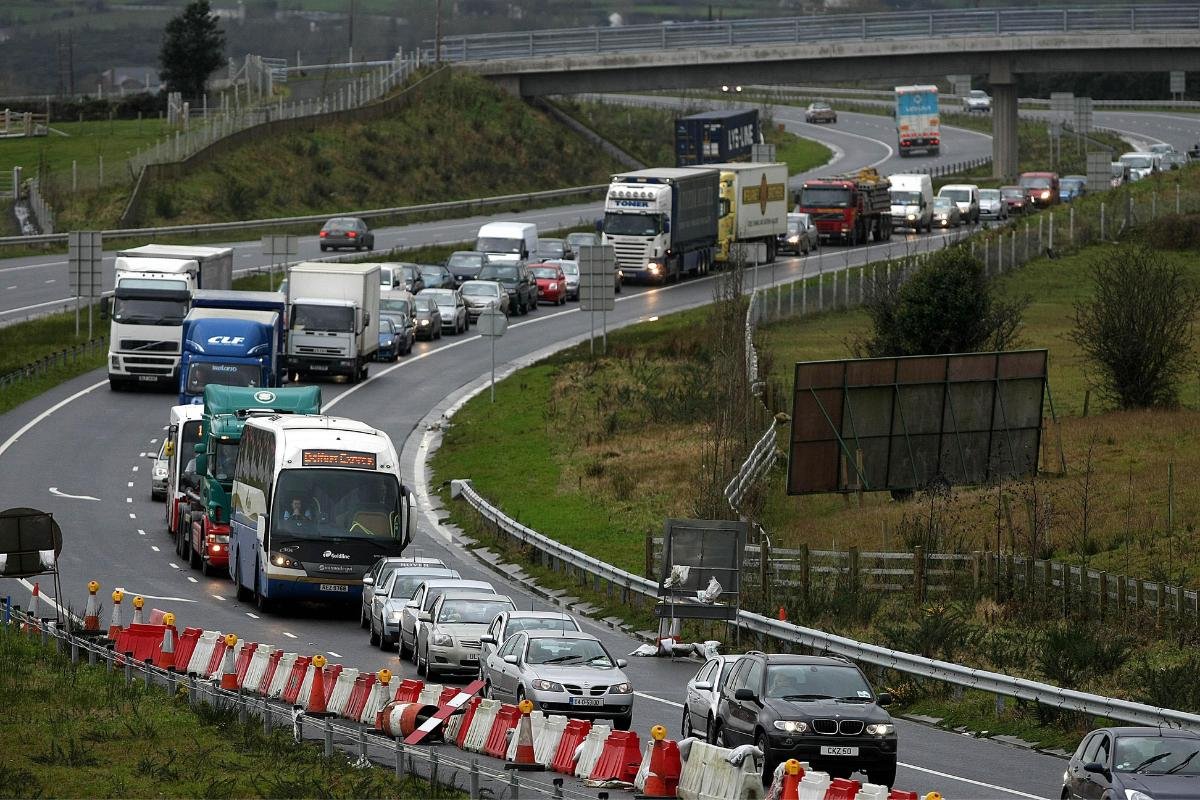
A round of planned maintenance closures for the M1 starts tonight.The works across Hertfordshire, Bedfordshire, and Buckinghamshire are part of National Highways’ monthly essential fixes and will take place over four consecutive nights.Each closure will last from 10pm on the date indicated until 5am on the following day.“Please check the details below and plan ahead,” National Highways East said. “Thank you for your patience while we carry out the work.”See the closed section for each night and the associated diversion route below:Wednesday (June 24) – Junctions 9 to 11a northboundNorthbound traffic will need to leave the M1 at junction 9, near Flamstead in Hertfordshire. It will be diverted via the A5183 to the A505 and A5 to rejoin the motorway at junction 11a.Those trying to join the motorway at junction 10 will be diverted southbound to junction 9 and then have to follow the northbound diversion. Anyone trying to join at junction 11 will be diverted via the A505, to the A5, and can then rejoin at junction 11a.Thursday (June 25) – Junctions 11a to 14 northboundRead moreSet of M1 closures for Herts, Beds and Bucks starts tonightMotorway closures to look out for near Watford as works restartMotorway closures set for next two weeks as Christmas run-in beginsThe diversion will be via the A5 to the A505, A4146, V6, and A4146 before rejoining at junction 14.Those joining at junction 13 will be diverted via the A421 to join the northbound diversion.Friday (June 26) – Junctions 14 to 11a southboundA map of the diversion route has been shared online as below:Saturday (June 27) – Junctions 11a to 9 southboundMotorists will need to leave at junction 11 and then follow a diversion via the A5, A505, and A5183 before rejoining at junction 9.Those joining at junction 10 will be diverted northbound to junction 11 and then have to follow the A505 and A5183 before rejoining at junction 9.

European Energy sells 15 MWac Trinity Hall Solar Farm in Bedfordshire to AlphaReal-managed entity
European Energy has completed the sale of Trinity Hall Solar Farm—a 15 MWac operational solar park in Bedfordshire, UK—to Elm Solar Holdings Limited, an entity established for funds managed by Alpha Real Capital LLP. The facility was energized earlier this year, following construction that began in the second half of 2024. European Energy will retain asset management responsibilities for the park under its new ownership.
Sale Completed as Project Reaches Commercial Operation
The transaction marks the close of a full development cycle for European Energy. Trinity Hall Solar Farm, a 15 MWac solar park in Bedfordshire, was energized earlier in 2025 after construction began in the second half of 2024. Elm Solar Holdings Limited—an entity established for funds managed by Alpha Real Capital LLP—is now the incoming owner. European Energy will continue providing asset management services despite the ownership transfer.
Nordea provided project financing, while Burges Salmon acted as legal adviser to European Energy. The involvement of established financial and legal institutions reflects the structured nature of the deal and the growing maturity of the UK solar market as an investment destination.
Divestment Follows European Energy’s Develop-to-Sell Model
The sale aligns with European Energy’s stated business approach: develop, construct, and operate renewable energy projects before transferring ownership to long-term investors. Capital recycled through that process flows back into new development activity.
Deputy CEO Jens-Peter Zink described the project as a clear illustration of that strategy. “Trinity Hall Solar Farm is an example of the projects European Energy develops through the entire value chain, from project development and permitting through to construction and operation,” he said. “With construction completed and the facility now operational, the project is ready for its next phase under new ownership.”
European Energy continues expanding its UK renewable energy portfolio, where rising demand for low-carbon electricity is generating sustained opportunities for active developers.
Long-Term Power Purchase Agreement Underpins Contracted Revenues
Offtake from Trinity Hall Solar Farm is secured through a corporate power purchase agreement—a structure that provides contracted revenues to Elm Solar Holdings Limited and reduces its exposure to short-term wholesale price volatility.
Long-term PPAs are playing an increasing role in supporting new renewable generation capacity across the UK. Developers gain revenue certainty; corporate buyers get a mechanism to meet their sustainability commitments. Operational assets backed by such agreements continue to draw institutional capital, particularly from investors seeking grid-connected projects with predictable cash flows as renewable infrastructure matures as an asset class.
Community Benefit Fund Established Alongside the Project
During the development and construction phase, European Energy UK established the Trinity Hall Solar Farm Community Benefit Fund. It was created to reflect the company’s long-term presence in the local area.
Local organizations and community groups can apply through the fund for support that directly benefits residents near the solar farm. The initiative signals European Energy’s commitment to community engagement not just during construction but across the asset’s longer operational life.
UK Solar Sector Context and European Energy’s Broader Track Record
Trinity Hall Solar Farm is expected to supply renewable electricity to the UK grid for decades, adding to a growing base of operational solar capacity in a market where policy support and corporate demand for clean power continue to encourage investment.
The sale strengthens European Energy’s track record of developing, financing, constructing, and divesting renewable energy projects across Europe. Taking a project from permitting through to a completed institutional sale demonstrates real operational depth. Transactions like this one—combining an operational asset, contracted revenues, and institutional ownership—show how private capital is moving into the sector as national energy transition goals gain urgency.
Local Organizations Will Also Benefit
Trinity Hall Solar Farm is a 15 MWac operational solar park in Bedfordshire, sold by European Energy to Elm Solar Holdings Limited and managed by Alpha Real Capital LLP. European Energy developed and constructed the project and will continue to provide asset management services. The park is supported by a corporate PPA, providing contracted revenues under new ownership. Nordea financed the project; Burges Salmon advised European Energy on legal matters. A community benefit fund was established to support local organizations near the site.Kelly is an experienced writer with 15 years of experience exploring the big stories that shape our world, from tech breakthroughs and space exploration to climate, energy, and the fascinating quirks of science. She has a talent for turning complex ideas into sharp, memorable insights that stay with readers long after they’ve finished reading.

CRDOne Earns Top High Growth Honour at 2026 Bedfordshire Business Awards
A year of strong business performance has seen Bedford digital agency CRDOne crowned High Growth Business of the Year at the 2026 SME Bedfordshire Business Awards.
The recognition follows a period of sustained expansion for the company, which was also shortlisted for Business of the Year among organisations employing fewer than 50 people. The awards were presented at The Marquee in Bedford on 18 June.
Founded five years ago, CRDOne has grown its team from three members to seven over the past year while increasing its client base to more than 30 businesses across the country. The agency specialises in digital marketing and web design services focused on delivering measurable outcomes.
Its client success stories include helping a local ecommerce company achieve a 45% increase in traffic and revenue, contributing to nearly £1 million in online sales. The agency has also supported Gadget GoGo’s rise within the tech recycling sector and delivered work for automotive manufacturers Renault, Citroën and Genesis.
“This recognition means a lot to our team,” said founder Carl Darnell. “The support and trust of our clients have been the biggest factor behind our growth, and we’re grateful for the long-term relationships we’ve built.”
The agency has also remained active within the business community, recently supporting an event at the Red Bull Technology Campus in Milton Keynes attended by more than 50 entrepreneurs and business owners.
The High Growth Business award reflects CRDOne’s achievements in expanding its team, increasing revenue, retaining clients and contributing to local business development.
“We’re still focused on the same goal,” Carl said. “Helping business owners understand marketing and use it to grow their companies more effectively.”
CRDOne continues to partner with ambitious businesses across Bedfordshire and beyond, helping them turn marketing investment into tangible commercial success.
Bedford train crash update with 53 in hospital and eight in critical condition
Eight individuals are battling for survival in hospital following a train collision in Bedfordshire. Over 100 casualties were admitted to hospital and a major incident was declared on Friday (June 19) after two locomotives collided near Elstow in Bedfordshire.Emergency services were alerted shortly after 5.15pm to reports that two East Midlands Railway trains had crashed. Personnel from the British Transport Police (BTP), Bedfordshire Police, National Police Air Service alongside local firefighters and paramedics rushed to the scene.
The BTP confirmed this evening that 53 individuals were still receiving hospital treatment on Monday, with eight in a critical state. Authorities acknowledge this figure is “likely to continue to change” as the situation develops.
READ MORE: {{title}}
Train driver Shaun Burton, 60, perished in the collision. Through police, his relatives expressed: “We are devastated by his loss. Our thoughts are also with those affected by this incident.”
Dave Calfe, general secretary of train driver union Aslef, told the BBC: “We are all heartbroken by the death of Shaun Burton, which leaves a hole in the lives of his family, friends and colleagues that will never be filled.”100 people were hospitalised following the crash(Image: Jamie Lashmar/PA)
Deputy Chief Constable Stuart Cundy, from the BTP, said: “First and foremost, the thoughts of everyone at BTP are with the driver Shaun Burton’s family and colleagues, and all those injured and affected by the collision on Friday.”
Dep Ch Const Cundy went on to state that the investigation is being treated as a “priority” for the BTP, with the senior investigating officer collaborating closely with the Rail Accident Investigation Branch to determine what occurred. He confirmed that personal belongings have been retrieved from the trains.
Emergency services were called to the scene on Friday(Image: PA Wire/PA Images)
The officer added: “Friday evening witnessed an awful incident that presented complexities and challenges for all those who responded. I have been humbled by the actions of passengers and staff who were on the trains, and by the professionalism of our officers, the wider emergency services and partners.
“The recovery operation is now underway, and work continues this week to remove the damaged trains and carriages and allow the railway to reopen.”
Anyone affected by the incident is urged to get in touch with the BTP.
Ensure our latest stories always appear at the top of your Google Search by making us a Preferred Source. Click here to activate or add us as your Preferred Source in your Google search settings.